
About Filippo Cortesi
Lived 1876 – 1947 (aged 70). Filippo Cortesi was an Italian catholic priest and catholic bishop.
Filippo Cortesi (8 October 1876 – 1 February 1947) was the Apostolic Nuncio to Argentina from 19 October 1926 to 4 June 1936, the Apostolic Nuncio to Poland from 24 December 1936 to 1 February 1947. Cortesi earlier served as nuncio to Paraguay in the interim. Cortesi was the only nuncio to Poland never to become a cardinal.
Biography As nuncio to Paraguay, Cortesi arranged a prisoner exchange between Paraguay and Bolivia during the Chaco War in 1934. As nuncio in Buenos Aires, Cortesi presented the Supreme Order of Christ, the highest papal order, to Argentine President Agustín Pedro Justo on behalf of Pope Pius XII later that year.
On 30 April 1939, on the eve of the German invasion of Poland, Cardinal Secretary of State Luigi Maglione sent a message—worded by Mussolini and personally approved by Pius XII—to Cortesi supporting the return of Danzig to Germany. Cortesi replied by cable, questioning the wisdom of such a concession, but Maglione ordered him to pass it on to the Polish president. Cortesi arrived in Rome on 22 June with noncommital replies from all five countries involved in the mediation, and met with Maglione over the mediation and also the rift between Polish and German Catholics. On June 26, Cortesi met with Pius XII personally to convey the negative reactions of President Ignacy Mościcki and Foreign Minister Beck to Pius XII's proposal to transfer Danzig to Germany. Cortesi's relaying of Pius XII's proposal to give Danzig to Germany was long remembered in Poland, particularly when the Communist government came into conflict with the pope after the war.
Cortesi fled his Warsaw nunciature on 5 September, following the Polish government-in-exile and arriving in Bucharest. The Vatican received word from Cortesi on 22 September from Bucharest, having been "completely cut off from the Catholics in Poland". At that time, all the Polish bishops—with the exception of Cardinal August Hlond, the primate of Poland (who was at that time expected to return soon)—were still in their bishoprics. Pius XII recognized the government-in-exile "with as much formality as is possible under the circumstances" on 7 October, aided by the "convenient fact" that Cortesi was due to retire and could not return to Warsaw in any case. The New York Times reported that Cortesi "will not return to Warsaw even if a new Polish state is formed, but will return to Rome and await his almost certain elevation to the Cardinalate". Alfredo Pacini was appointed chargé d'affaires while the government-in-exile remained in Paris, and William Godfrey took over as chargé d'affaires once the government-in-exile was forced to move to London in 1940.
The Vatican attempted to get the Nazis to greenlight Cortesi's return—as an apostolic visitor (a step below recognition of sovereignty). On 1 November 1939, Orsenigo's authority was formally extended to Poland.
Episcopal succession Having consecrated Zenobio Lorenzo Guilland to the episcopacy, Cortesi is in the episcopal lineage of Pope Francis.
Don’t just read it —
keep it.
Full-length biographies made to live with: read them, listen on the way to work, watch them tonight.
- E-book
- Audio
- Video
Instant download · yours to keep · every purchase keeps this site free
Important facts
People in Filippo Cortesi's life
Named in this biography and alive at the same time


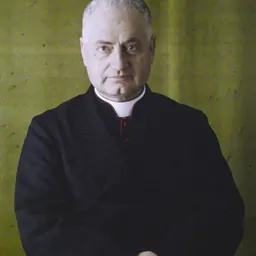
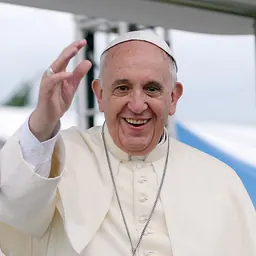


Related people
Same field, nearest in time

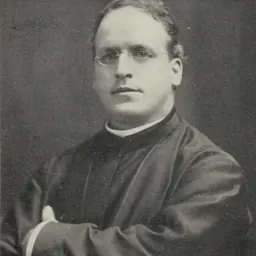
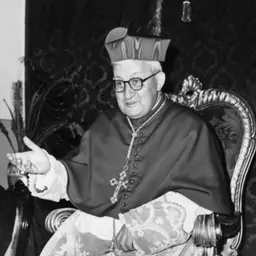
Contemporaries
People whose lives overlapped Filippo Cortesi's

Frequently asked questions
Who was Filippo Cortesi?
Apostolic Nuncio to Poland (1876-1947)
When was Filippo Cortesi born?
Filippo Cortesi was born on 8 October 1876 in Alia.
When did Filippo Cortesi die?
Filippo Cortesi died on 1 February 1947 in Rome.
What was Filippo Cortesi's occupation?
Filippo Cortesi was a catholic priest and catholic bishop.
What nationality was Filippo Cortesi?
Filippo Cortesi was Italian.
Sources & further reading
Cite this page
APA: Biography.guide. (2026). Filippo Cortesi. https://biography.guide/filippo-cortesi/
MLA: "Filippo Cortesi." Biography.guide, https://biography.guide/filippo-cortesi/.
Chicago: "Filippo Cortesi." Biography.guide. https://biography.guide/filippo-cortesi/.
Data last updated: 2026-09-20 · Spot an error? Report a correction.
Page generated 2026-09-27 05:21 UTC