About Filippino Lippi
Lived 1457 – 1504 (aged 46–47). Filippino Lippi was an Italian painter.
Allegory of Music (c. 1500), tempera on panel, 61 × 51 cm. Gemaldegalerie, Berlin, Germany
Filippino Lippi (probably 1457 – 18 April 1504) was an Italian Renaissance painter mostly working in Florence, Italy during the later years of the Early Renaissance and first few years of the High Renaissance. He also worked in Rome for a period from 1488, and later in the Milan area and Bologna.
He worked in oils, tempera and fresco, mostly painting religious subjects, with a few portraits and secular allegories or scenes from classical mythology.
Biography Filippino Lippi was born, probably in 1457, at Prato, Tuscany, the illegitimate son to Lucrezia Buti and the painter Fra Filippo Lippi. The couple had both broken vows of celibacy, and though after Filippino's birth they received a papal dispensation to marry (arranged by Lorenzo di Medici), Vasari says that they never did. Filippino's sister Alessandra was born in 1465.
Filippino first trained under his father in his workshop. They moved to Spoleto, where Filippino served as workshop assistant during the construction of Spoleto Cathedral. When his father died in 1469, Filippino was aged twelve and was among the assistants to his father who completed the frescoes with Storie della Vergine ("Life of the Virgin") in the cathedral.
Filippino later completed his apprenticeship in the workshop of Botticelli, who had been a pupil of Filippino's father. In the 1472 records of the Painters' guild it is noted that Botticelli had only Filippino Lippi as an assistant, and that he was living in his master's house. The two artists often worked together on the same project. The shared works include the panels belonging to a later dismantled pair of cassoni, the panels being now divided among the Louvre, the National Gallery of Canada, the Musée Condé in Chantilly, and the Galleria Pallavicini in Rome. Works by Botticelli and Filippino from these years include many paintings of the Madonna and Child which are often difficult to distinguish from one another.
Filippino's early solo works greatly resemble those of Botticelli, but perhaps with less sensitivity and subtlety. The first ones (dating from 1475 onward) were attributed to an anonymous "Amico di Sandro" (i.e. "Friend of Botticelli"), a term introduced by Bernard Berenson in 1899, though by 30 years later Berenson's "lists" ascribed most of them to Lippi. Eventually Lippi's style evolved, becoming more personal and effective during the period 1480–1485. Works of this early period include: the Madonnas of Berlin, London, and Washington, D.C., the Journeys of Tobia of the Galleria Sabauda, Turin, the Madonna of the Sea of the Galleria dell'Accademia, Florence, and the Histories of Ester.
Together with Perugino (another pupil of his father), Ghirlandaio, and Botticelli, Filippino Lippi worked on the decoration of Lorenzo de' Medici's villa at Spedaletto. On 31 December 1482, he was commissioned to decorate a wall of the Sala dell'Udienza of the Palazzo Vecchio in Florence, a work never begun.
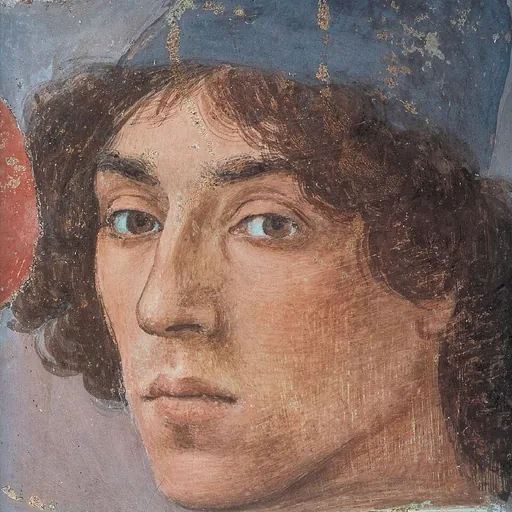
Soon after, probably in 1483–84, he was called to complete Masaccio's decoration of the Brancacci Chapel in the Santa Maria del Carmine di Firenze, that had been left unfinished when the artist died in 1428. There Filippino painted Stories of Saint Peter, in the following frescoes: Quarrel with Simon Magus in face of Nero, Resurrection of the Son of Teophilus, Saint Peter Jailed, Liberation, and Crucifixion of Saint Peter. Filippino's self-portrait at age twenty-five is at the right hand portion of the central panel, Disputation with Simon Magus and Crucifixion of St. Peter (see detail at info box).
Filippino Lippi's work on the Sala degli Otto di Pratica, in the Palazzo Vecchio, was completed on 20 February 1486. It is now in the Uffizi Gallery. At about this time, Piero di Francesco del Pugliese asked him to paint the altarpiece with the Apparition of the Virgin to St. Bernard, which is now in the Badia Fiorentina, Florence. This is Filippino Lippi's most popular painting: a composition of unreal items, with its very particular elongated figures, backed by a phantasmagorical scenario of rocks and almost anthropomorphic trunks. The work is dated to 1485–1487.
Major works Madonna with Child, St. Anthony of Padua and a Friar (before 1480)—Tempera on panel, 57 × 41.5 cm, Museum of Fine Arts, Budapest The Coronation of the Virgin (c. 1480)—Tempera on panel, 90.2 × 223 cm, National Gallery of Art, Washington, D.C. Tobias and the Angel (c. 1480)—Tempera on panel, 33 × 23 cm, National Gallery of Art, Washington, D.C. Three Angels with Young Tobias (1485)—Oil on panel, 100 × 127 cm, Galleria Sabauda, Turin Portrait of an Old Man (1485)—Detached fresco, 47 × 38 cm, Uffizi, Florence Self-portrait—Detached fresco on flat tile, 50 × 31 cm, Uffizi, Florence Portrait of a Youth (c. 1485)—Panel, 51 × 35.5 cm, National Gallery of Art, Washington, D.C. Signoria Altarpiece (Pala degli Otto) (1486)—Tempera on panel, 355 × 255 cm, Uffizi, Florence Apparition of the Virgin to St. Bernard (1486)—Oil on panel, 210 × 195 cm, Church of Badia, Florence Annunciation with St. Thomas and Cardinal Carafa (1488–1493)—Fresco, Santa Maria sopra Minerva, Rome Madonna with Child and Saints (c. 1488)—Oil on panel, Santo Spirito, Florence St. Jerome (1490s)—Oil on panel, 136 × 71 cm, Uffizi, Florence Apparition of Christ to the Virgin —Oil on panel, 156.1 × 146.7 cm, Alte Pinakothek, Munich Adoration of the Magi (1496)—Oil on panel, Uffizi, Florence Madonna and Child with Saints (1498)—Fresco, 239 × 141 × 71 cm, Museo Civico, Prato Allegory (c. 1498)—Oil on panel, 29 × 22 cm, Uffizi, Florence Allegory of Music (Erato) (c. 1500)—Tempera on panel, 61 × 51 cm, Staatliche Museen, Berlin Crucifixion, c. 1501— tempera on panel, 31.2 × 23.4 cm, Museo Civico, Prato Mystic Marriage of St. Catherine (c. 1501–1503)—Panel, Basilica di San Domenico, Bologna Madonna and Child, St. Stefan and St. John the Baptist (1502–1503)—Tempera on panel, 132 × 118 cm, Museo Civico, Prato Deposition (1504, finished by Perugino in 1507)—Oil on panel, 333 × 218 cm, Galleria dell'Accademia, Florence
School works Following works are permitted to be cited as Filippino's school works. the Madonna, Child and St. John—tondo, Keglevich collection, Budapest, Cenacolo di S. Apollonia—Florence the Virgin giving her girdle to St. Thomas—Florence St. Anthony Abbot—Florence
Gallery
Don’t just read it —
keep it.
Full-length biographies made to live with: read them, listen on the way to work, watch them tonight.
- E-book
- Audio
- Video
Instant download · yours to keep · every purchase keeps this site free
Important facts
People in Filippino Lippi's life
Named in this biography and alive at the same time


Related people
Same field, nearest in time


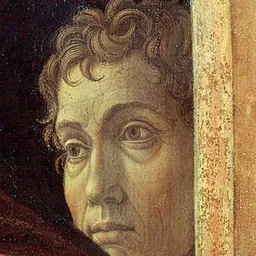
Contemporaries
People whose lives overlapped Filippino Lippi's
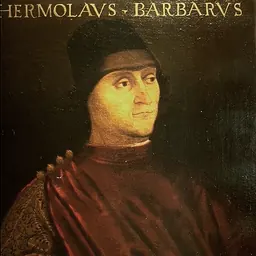


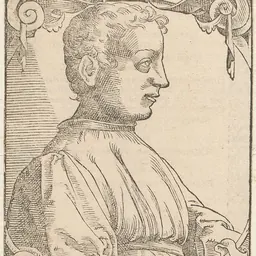
Frequently asked questions
Who was Filippino Lippi?
Italian painter (1457–1504)
When was Filippino Lippi born?
Filippino Lippi was born in 1457 in Prato.
When did Filippino Lippi die?
Filippino Lippi died on 18 April 1504 in Florence.
What was Filippino Lippi's occupation?
Filippino Lippi was a painter.
What nationality was Filippino Lippi?
Filippino Lippi was Italian.
Sources & further reading
Cite this page
APA: Biography.guide. (2026). Filippino Lippi. https://biography.guide/filippino-lippi/
MLA: "Filippino Lippi." Biography.guide, https://biography.guide/filippino-lippi/.
Chicago: "Filippino Lippi." Biography.guide. https://biography.guide/filippino-lippi/.
Data last updated: 2026-09-22 · Spot an error? Report a correction.
Portrait: Wikimedia Commons · author & licence
Page generated 2026-09-27 05:03 UTC