
About Filipp Braylyan
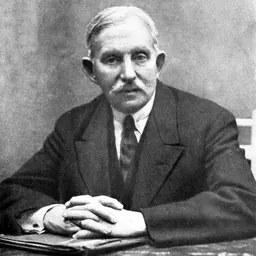
Lived 1901 – 1973 (aged 71–72). Filipp Braylyan was a Russian military leader and military personnel.
Filipp Vasilyevich Braylyan (; 3 July 1901 – 30 July 1973) was a Soviet Army major general who held divisional commands during World War II.
Conscripted into the Red Army in the early 1920s, Braylyan rose through a series of command and staff positions to regimental command before Germany invaded the Soviet Union. He commanded a regiment in the retreat through Ukraine in 1941 and after breaking out of encirclement was appointed commander of the 349th Rifle Division, which he led in the Barvenkovo–Lozovaya offensive of January 1942. Seriously concussed a few months later, Braylyan was posted to command the 34th Guards Rifle Division in March 1943 after recovering. He led the division in the fighting on the Mius-Front and the advance through the Donbass and Ukraine during 1943 and 1944. After falling ill in May 1944, Braylyan commanded officer training courses until his retirement in the late 1950s.
Early life and prewar service
A Ukrainian, Filipp Vasilyevich Braylyan was born to a family of poor peasants on 3 July 1901 in the village of Tribusovka, Kamyansky volost, Olgopol uyezd, Podolia Governorate. Braylyan had five brothers, including two killed in World War II. His younger brother Fyodor rose to lieutenant colonel in the artillery. He received a fourth grade education. From a young age Braylyan worked as a hired laborer for local landowners and kulaks in his village until 1917, when he began working on his father's farm. Braylyan married local Irina Orishak, who became a teacher, and they had two sons.
Conscripted into the Red Army on 15 August 1922, he was sent to Kharkov, where he served as a Red Army man and ward supervisor at the 2nd Kharkov Military Hospital. Braylyan entered the Kharkov Combined School for Red Starshinas in September 1923. Upon his graduation on 15 September 1926, he was posted to the 299th Rifle Regiment of the 100th Rifle Division of the Ukrainian Military District as a platoon commander. Braylyan rose to commander and politruk (political instructor) of the commandant's platoon of the division headquarters in May 1928, and in November 1929 returned to the 299th Rifle Regiment at Belaya Tserkov, commanding a training platoon and later a machine gun company.
Braylyan was shifted to the division headquarters in Berdichev in May 1932 to become chief of the 4th Staff Section. He was moved up to the 8th Rifle Corps headquarters in Zhitomir in February 1935, receiving the rank of captain when the Red Army introduced personal ranks later that year. With the corps headquarters, Braylyan served as chief of the 2nd and 4th Staff Sections. After completing the Vystrel course between February and July 1937, he was appointed assistant to the chief of the 1st Staff Section of the corps. Braylyan, then a major, rose to senior assistant to the chief of the 1st Staff Section of the 1st (Operations) Department of the headquarters of the Zhitomir Army Group of the Kiev Special Military District on 19 September 1938. He commanded the 286th Rifle Regiment of the 96th Rifle Division from January 1939, leading it in the Soviet invasion of Poland. During the latter, the unit advanced into present-day western Ukraine as part of the 6th Army. The regiment was based in Ustishki-Dolyny after the end of the invasion, and took part in the Soviet occupation of Bessarabia in June 1940, after which it was based at Skole. Braylyan was promoted to lieutenant colonel on 10 October. From 1 March 1943 Colonel Braylyan conducted significant work for the cohesion and preparation of units of the 34th Guards Rifle Division for forthcoming battles.
On 17 July 1943 Comrade Braylyan, despite the division being significantly understrength in personnel, skillfully organized and carried out the breakthrough of the strongly fortified zone of the enemy on the western bank of the Mius in the region of the village of Dmitryevka, inflicting heavy losses on the enemy in personnel and equipment, lodging up to 10 kilometers into the depth of the German defense, taking several important commanding heights and eliminating the enemy from the settlement of Stepanovka.
The numerically superior enemy, supported by a significant amount of tanks, methodically counterattacked the units of Comrade Braylyan, up to a hundred aircraft methodically bombed the combat formations of the unit. Comrade Braylyan skillfully and courageously organized the repulse of the enemy attacks and inflicted significant casualties on him.
Being heavily sick with swollen legs, Comrade Braylyan refused to be sent to the hospital for treatment, and remained in the ranks commanding the division. Braylyan led the division in the Donbass Strategic Offensive of August. In the latter, Braylyan's troops liberated the towns and cities of Yenakiyevo, Yasinovataya, Krasnogorovka, Guliaipole, and Orekhov. For its performance in the liberation of Yenikiyevo the division received the name of the city as an honorific, and Braylyan was promoted to the rank of major general on 15 September. He was decorated with the Order of Kutuzov, 2nd class for his performance in the operation. After the end of the Donbass Offensive, the division and its parent army were shifted to the 4th Ukrainian Front, then the 46th Army of the 3rd Ukrainian Front. Braylyan led the division in the Melitopol offensive, the Battle of the Dnieper and the Soviet campaign in Right-bank Ukraine. As the Odessa Offensive culminated, on 17 April 1944, his division reached the Dniester, capturing a bridgehead on the opposite bank and holding it until relieved by units of the 5th Shock Army.
Braylyan fell sick and went to the hospital on 28 May, and in July was appointed to a rear post as chief of the Infantry Officers Improvement Courses of the Kharkov Military District. Postwar After the war, Braylyan continued to serve in his previous position, and on 21 August 1945 the courses were relocated to the Kiev Military District. He received a sharply negative performance evaluation in February 1946, which noted the weak state of his health and recommended he be sent to an improvement course: During the period of the organization of the courses he did not display resourcefulness and initiative, as a result of which barracks and training resources were not prepared for the reception of students and organization of normal training. The combat training of the students was constantly not at the proper level, and the quality of lessons unsatisfactory. The preparation of officer training staff was not at the center of General Braylyan's attention, as a result of which lessons were uninstructive. General Braylyan rarely personally led classes.
The tactical preparation of General Braylyan is insufficient. He used his practical war experience little, and he does not work enough to improve his military knowledge. General Braylyan requires solid training at the Improvement Courses at the Frunze Academy.
General Braylyan is disciplined, but insufficiently organized and self-possessed. Requests often border on rudeness and over-familiarity.
Politically aware. Morally stable. Often ill. Weak state of health. Loyal to the party of Lenin and Stalin and the Socialist Homeland. Braylyan was dispatched to the Higher Academic Courses at the Voroshilov Higher Military Academy, which he completed between March 1946 to March 1947. Upon his graduation from the courses, he was appointed chief of the Carpathian Infantry Officers Improvement Courses, renamed the Combined Officers Improvement Courses of the Carpathian Military District in October. He was transferred to serve as chief of the Lvov Inter-District Officers Improvement and Preparation Courses in December 1956. Braylyan was retired at the age of 56 in September 1957, and died in Vinnytsia on 30 July 1973. Awards Braylyan was a recipient of the following decorations: Order of Lenin Order of the Red Banner (4) Order of Kutuzov, 2nd class Order of the Patriotic War, 1st class Medal "For the Victory over Germany in the Great Patriotic War 1941–1945"
Don’t just read it —
keep it.
Full-length biographies made to live with: read them, listen on the way to work, watch them tonight.
- E-book
- Audio
- Video
Instant download · yours to keep · every purchase keeps this site free
Important facts
Related people
Same field, nearest in time


Contemporaries
People whose lives overlapped Filipp Braylyan's



Frequently asked questions
Who was Filipp Braylyan?
soviet Army major general
When was Filipp Braylyan born?
Filipp Braylyan was born on 7 September 1901 in Trybusivka.
When did Filipp Braylyan die?
Filipp Braylyan died in 1973 in Vinnytsia.
What was Filipp Braylyan's occupation?
Filipp Braylyan was a military leader and military personnel.
What nationality was Filipp Braylyan?
Filipp Braylyan was Russian.
Sources & further reading
Cite this page
APA: Biography.guide. (2026). Filipp Braylyan. https://biography.guide/filipp-braylyan/
MLA: "Filipp Braylyan." Biography.guide, https://biography.guide/filipp-braylyan/.
Chicago: "Filipp Braylyan." Biography.guide. https://biography.guide/filipp-braylyan/.
Data last updated: 2026-09-20 · Spot an error? Report a correction.
Page generated 2026-09-27 05:23 UTC