
About Filip Lazăr
Lived 1894 – 1936 (aged 42). Filip Lazăr was a Romanian composer and pianist.
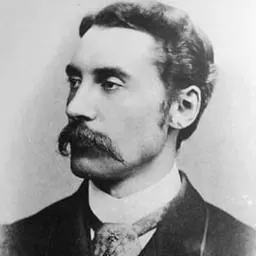
Filip Lazăr (6 May 1894 – 3 November 1936) was an avant-garde Romanian composer and pianist.
Life and career Lazăr was born in Craiova, Romania and died in Paris, France. At the Bucharest Conservatory (1907–1912) he studied piano with Emilia Saegiu, theory with Dumitru Georgescu Kiriac and with Alfonso Castaldi he studied harmony, counterpoint and composition. He studied for two years with Castaldi at the Leipzig Conservatory before touring as a pianist, playing much new music. From 1928 he was in France and Switzerland. He ventured from a Romanian nationalistic style into serialism and neo-classicism.
From 1925, important publishers in Paris (Durand, Salabert, Max Eschig and Heugel) and Vienna (Universal Edition) began printing the works of Lazăr and other Romanian composers such as Mihail Jora, Marcel Mihalovici and George Enescu.
In 1920 Lazăr was a founder-member of the Society of Romanian Composers. In 1932, along with Mihalovici, he was among the founders of the Triton society of contemporary music in Paris (1932–1939), and a member of its active committee.
Theatre music
1918 – La bouteille de Panurge, ballet, libretto by André Cœuroy 1928 – Les Images de Béatrice, op. 18, opera from The Cenci by Percy Bysshe Shelley, libretto by André Cœuroy
Symphonic music
1919 – Prelude, for orchestra 1921 – Romanian Suite in D, for orchestra 1924 – Divertissement on a simple theme, for orchestra 1925 – Suite Valaque, for small orchestra 1925 – "Gypsies", scherzo for full orchestra, played in Paris 1927, conducted by Serge Koussevitzky 1927 – Concerto Grosso, for orchestra, no. 1, op 17 1928 – Le Ring. Un round de 4 minutes, for orchestra no. 2 - a symphonic miniature inspired by a boxing match, played in Paris in 1930, conducted by George Georgescu 1931 – Musique pour Radio 1931 – Overture for small orchestra 1931 – Concerto No. 2, for piano and orchestra, op. 19 1934 – Concerto No. 3, for piano and orchestra, op. 23 1934 – Concerto No. 4, for percussion and 12 instruments, op. 24 – in 1935 premiered at the Triton concerts in Paris, conducted by Charles Munch, the next year played in Boston; Chamber concerto 1931 – Concerto Grosso No. 2, unfinished
Chamber music
1915 – Sonata in F for piano 1919 – Sonata in E minor for violin and piano 1924 – Suite I for piano 1925 – Suite II for piano Both suites played in Bucharest by Mme. Manya Botez. 1925 – Two Romanian folk dances for piano 1925 – Bagatelle for cello (or double bass) and piano (or orchestra) 1926 – Sonata III for piano 1927 – Bagatelle for piano 1929 – Sonata in A minor for piano, op. 15 1929 – Little pieces for children, op. 16 1934 – Trio for oboe, clarinet and bassoon 1935 – Trio for violin, viola and cello 1936 – Little suite for oboe, clarinet and bassoon; Trio for harps; Quintet for harps
Choral music
1924 – "Dor de crâng", folk songs for mixed voices 1924 – "Paparudele", 6-part folk songs for mixed voices
Vocal music
1926 – Two folk songs, for voice and piano ([Romanian] "Cuprinde: Mi-a trimis bădița dor"; "Dorule pribeag; Vai, mândruțo!") 1927 – Three pastorals, for voice and piano, lyrics by St. Octavian Iosif ([Romanian] "Cuprinde: Singurel ca un haiduc"; "Boii stau la jug supuși"; "Dragă codrule, te las!" ) Melody on a poem by Heinrich Heine for voice and piano Six melodies for voice and piano (or orchestra)
Biography V. Tomescu, Filip Lazăr, Editura Muzicală, București, 1963 [Romanian]
Don’t just read it —
keep it.
Full-length biographies made to live with: read them, listen on the way to work, watch them tonight.
- E-book
- Audio
- Video
Instant download · yours to keep · every purchase keeps this site free
Important facts
People in Filip Lazăr's life
Named in this biography and alive at the same time
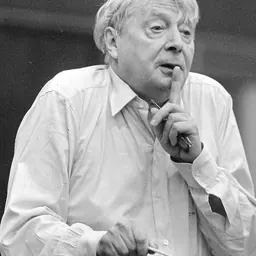
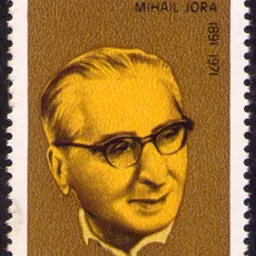




Related people
Same field, nearest in time

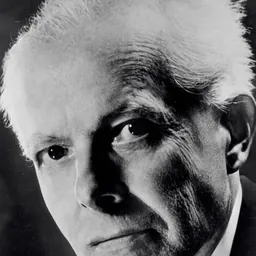

Contemporaries
People whose lives overlapped Filip Lazăr's
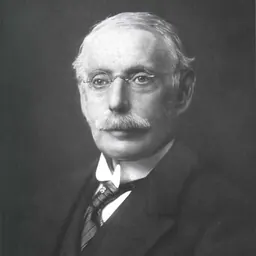
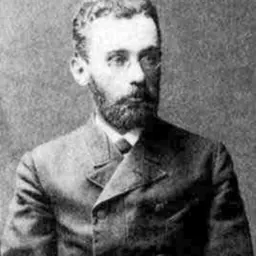
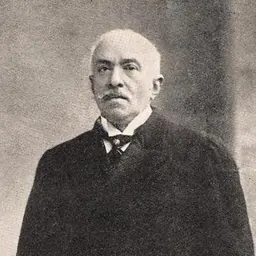

Frequently asked questions
Who was Filip Lazăr?
Romanian musician (1894-1936)
When was Filip Lazăr born?
Filip Lazăr was born on 6 May 1894 in Craiova.
When did Filip Lazăr die?
Filip Lazăr died on 3 November 1936 in Paris.
What was Filip Lazăr's occupation?
Filip Lazăr was a composer and pianist.
What nationality was Filip Lazăr?
Filip Lazăr was Romanian.
Sources & further reading
· DBpedia: Filip Lazăr (musician)
Cite this page
APA: Biography.guide. (2026). Filip Lazăr. https://biography.guide/filip-lazar-composer/
MLA: "Filip Lazăr." Biography.guide, https://biography.guide/filip-lazar-composer/.
Chicago: "Filip Lazăr." Biography.guide. https://biography.guide/filip-lazar-composer/.
Data last updated: 2026-09-20 · Spot an error? Report a correction.
Page generated 2026-09-27 05:03 UTC