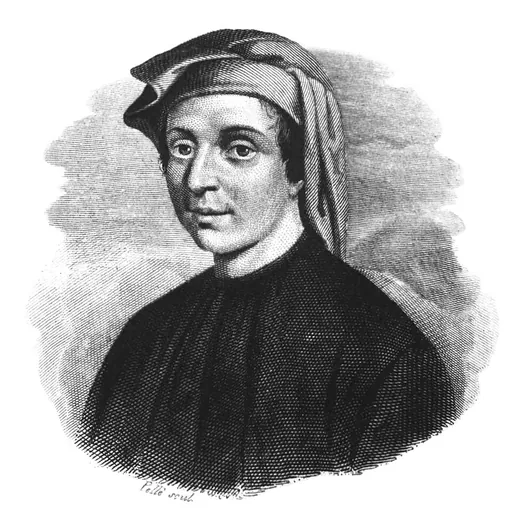
About Fibonacci
Lived 1170 – 1240 (aged 69–70). Fibonacci was a mathematician and master of calculations, known for Congruum, Fibonacci number and Formulas for generating Pythagorean triples.
Leonardo Bonacci, also Leonardo da Pisa ( – ), commonly known as Fibonacci, by granting him a salary in a decree that recognized him for the services that he had given to the city as an advisor on matters of accounting and instruction to citizens.
Fibonacci is thought to have died between 1240 and 1250, in Pisa.
Liber Abaci
In the (1202), Fibonacci introduced the so-called modus Indorum (method of the Indians), today known as the Hindu–Arabic numeral system, with ten digits including a zero and positional notation. The book showed the practical use and value of this by applying the numerals to commercial bookkeeping, converting weights and measures, calculation of interest, money-changing, and other applications. The book was well-received throughout educated Europe and had a profound influence on European thought. Replacing Roman numerals, its ancient Egyptian multiplication method, and using an abacus for calculations, was an advance in making business calculations easier and faster, which assisted the growth of banking and accounting in Europe.
The original 1202 manuscript is not known to exist.
In the Fibonacci sequence, each number is the sum of the previous two numbers. Fibonacci omitted the "0" and first "1" included today and began the sequence with 1, 2, 3... . He carried the calculation up to the thirteenth place, the value 233, though another manuscript carries it to the next place, the value 377. Fibonacci did not speak about the golden ratio as the limit of the ratio of consecutive numbers in this sequence.
Legacy Modern engraving of Fibonacci, not based on authentic sources. There are no known authentic descriptions or portraits of Fibonacci. In the 19th century, a statue of Fibonacci was set in Pisa. Today it is located in the western gallery of the Camposanto, historical cemetery on the Piazza dei Miracoli.
There are many mathematical concepts named after Fibonacci because of a connection to the Fibonacci numbers. Examples include the Brahmagupta–Fibonacci identity, the Fibonacci search technique, and the Pisano period. Beyond mathematics, namesakes of Fibonacci include the asteroid 6765 Fibonacci and the art rock band The Fibonaccis.
Works (1202), a book on calculations (English translation by Laurence Sigler, 2002) Practica Geometriae (1220), a compendium of techniques in surveying, the measurement and partition of areas and volumes, and other topics in practical geometry (English translation by Barnabas Hughes, Springer, 2008). Flos (1225), solutions to problems posed by Johannes of Palermo Liber quadratorum ("The Book of Squares") on Diophantine equations, dedicated to Emperor Frederick II. See in particular congruum and the Brahmagupta–Fibonacci identity. Di minor guisa (on commercial arithmetic; lost) Commentary on Book X of Euclid's Elements (lost)
Don’t just read it —
keep it.
Full-length biographies made to live with: read them, listen on the way to work, watch them tonight.
- E-book
- Audio
- Video
Instant download · yours to keep · every purchase keeps this site free
Important facts
more
Leonardo BonacciRelated people
Same field, nearest in time



Contemporaries
People whose lives overlapped Fibonacci's





Frequently asked questions
Who was Fibonacci?
Italian mathematician (c.1170–c.1240/50)
When was Fibonacci born?
Fibonacci was born in 1170 in Pisa.
When did Fibonacci die?
Fibonacci died in 1240 in Pisa.
What was Fibonacci's occupation?
Fibonacci was a mathematician and master of calculations.
What was Fibonacci known for?
Fibonacci was known for Congruum, Fibonacci number, Formulas for generating Pythagorean triples, Greedy algorithm for Egyptian fractions, Hindu–Arabic numeral system and Liber Abaci.
What nationality was Fibonacci?
Fibonacci's recorded nationality: Republic of Pisa.
Sources & further reading
Cite this page
APA: Biography.guide. (2026). Fibonacci. https://biography.guide/fibonacci/
MLA: "Fibonacci." Biography.guide, https://biography.guide/fibonacci/.
Chicago: "Fibonacci." Biography.guide. https://biography.guide/fibonacci/.
Data last updated: 2026-09-22 · Spot an error? Report a correction.
Portrait: Wikimedia Commons · author & licence
Page generated 2026-09-27 05:00 UTC