
About Feroz Nizami
Lived 1910 – 1975 (aged 65). Feroz Nizami was a Pakistani singer, composer and film score composer.
Feroz Nizami (born Ferozuddin Ahmad; 10 November 1910 15 November 1975) was a Pakistani film score composer, music director and classical singer.
He composed music for Bollywood films in British India and after partition, he remained actively involved in Pakistan film industry. He is primarily recognized as a music composer for a music blockbuster Indian film Jugnu (1947), which helped him to appear among the prominent composers in both India and Pakistan cinemas. His last composition in Bombay films was released in 1947, leading him to retain his position for more than twenty years in South Asia's music industry during the 1940s.
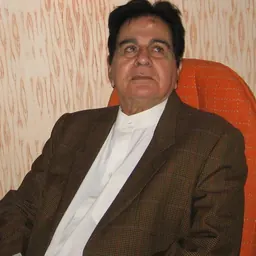
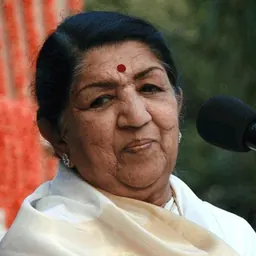
Before he returned to Pakistan while working in Indian films, he was referred to as "Ustad of Bombay" by the Indian artists such as Lata Mangeshkar, Mohammed Rafi, and Dilip Kumar. He also studied Sufism and Metaphysics. He was the brother of a Pakistani cricketer Nazar Mohammad and writer Siraj Nizami.
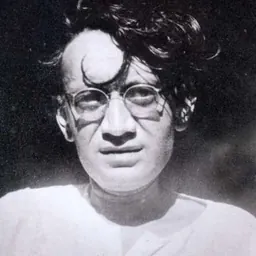
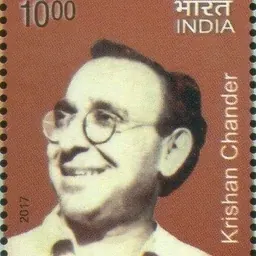
Feroz Nizami was originally working as a singer at a state-owned radio station at Lahore and was later transferred to the All India Radio and eventually at Delhi and later in Lucknow until he went to Bombay (now Mumbai) in search of career opportunities in bollywood. While working at the radio station, he had the opportunity to work with such people as Saadat Hasan Manto, Krishan Chander and another music director Khwaja Khurshid Anwar.
Career Prior to his debut in Urdu and Hindi films, Feroz received his training in classical music from the classical music teacher Ustad Abdul Wahid Khan of the Kirana gharana.
After the partition, he moved back to Lahore and started working as a music director in Pakistani film industry with his first film Hamri Basti (1949), which did not do well at the box office. However, four years later when Noor Jehan produced the Pakistani film Chann Wey, his compositions for the film were praised in the Indian subcontinent. In 1952, he scored music for Dopatta, the only high-grossing Pakistani film of the early 1950s.
Later work During the late 1950s, he used to teach classical music at the Alhamra Arts Council in Lahore, Pakistan.
Vishwas In the later years, he wrote more books on the subject such as Ramooz-e-Moseeqi and Israr-e-Moseeqi.
Death Feroze Nizami died on 15 November 1975 in Lahore, Pakistan. His death anniversary is observed by the Pakistanis every year, particularly in Lahore.
Don’t just read it —
keep it.
Full-length biographies made to live with: read them, listen on the way to work, watch them tonight.
- E-book
- Audio
- Video
Instant download · yours to keep · every purchase keeps this site free
Important facts
People in Feroz Nizami's life
Named in this biography and alive at the same time


Related people
Same field, nearest in time



Contemporaries
People whose lives overlapped Feroz Nizami's





Frequently asked questions
Who was Feroz Nizami?
Pakistani film score composer
When was Feroz Nizami born?
Feroz Nizami was born on 10 November 1910 in British Raj.
When did Feroz Nizami die?
Feroz Nizami died on 15 November 1975 in Lahore.
What was Feroz Nizami's occupation?
Feroz Nizami was a singer, composer and film score composer.
What nationality was Feroz Nizami?
Feroz Nizami was Pakistani.
Sources & further reading
Cite this page
APA: Biography.guide. (2026). Feroz Nizami. https://biography.guide/feroz-nizami/
MLA: "Feroz Nizami." Biography.guide, https://biography.guide/feroz-nizami/.
Chicago: "Feroz Nizami." Biography.guide. https://biography.guide/feroz-nizami/.
Data last updated: 2026-09-20 · Spot an error? Report a correction.
Page generated 2026-09-27 05:26 UTC