
About Fernão Pires de Andrade
Lived 1450 – 1552 (aged 101–102). Fernão Pires de Andrade was an explorer and diplomat.
Fernão Pires de Andrade (also spelled as Fernão Peres de Andrade; in contemporary sources, Fernam (Fernã) Perez Dandrade ) (d. 1552) was a Portuguese merchant, pharmacist, and diplomat who worked under the explorer and colonial administrator Afonso de Albuquerque. His encounter with Ming China in 1517—after initial contacts by Jorge Álvares and Rafael Perestrello in 1513 and 1516, respectively—marked the resumption of direct European commercial and diplomatic contact with China. (Even though there were Europeans in Medieval China, notably Marco Polo, that period of contact had been interrupted by the fall of the Yuan dynasty.)
Although de Andrade's mission was initially a success that allowed a Portuguese embassy to proceed all the way to Beijing, relations were soon spoiled by culminating events that led to an extremely negative impression of the Portuguese in China. This included acts of his brother Simão that enraged the Chinese, false reports of the Portuguese being cannibals of kidnapped Chinese children and true reports of their conquest of Malacca, a loyal Ming tributary state. Normalized trade and relations between Portugal and the Ming dynasty would not resume until the late 1540s and the 1557 establishment of Portuguese rule over Macau.
Andrade was referred to as a "Folangji" in Ming dynastic archives. Folangji comes from Franques or Franks, which was a generic name the Muslims called Europeans since the Crusades, and which spawned the Indian-Southeast Asian term ferengi. The Portuguese historian João de Barros (1496–1570) wrote that when a violent storm arose as Albuquerque's fleet entered the vast waters between Sri Lanka and Aceh, a ship commanded by Simão Martinho was sunk, but his entire crew was rescued by Fernão and taken aboard his ship. According to Barros, they fought against this ship for two days. The enemy crew employed tactics of lighting fire to its own ship as a means to burn Albuquerque's ships as they employed ramming techniques and close-range volleys of artillery. Although the ship surrendered; the Portuguese gained such an admiration for the junk and its crew that they nicknamed it O Bravo (The Brave Junk). The Portuguese crew pleaded with Fernão Pires to convince Albuquerque that the crew should be spared and viewed vassals of Portugal who were simply unaware of who they were actually fighting. Albuquerque eventually agreed to this. Barros also noted that while Fernão Pires was loading Southeast Asian spices onto his ship in Pacem (a kingdom in Sumatra) in order to sell or present them as gifts in China, two different kings were killed and their position usurped. Apparently the usurpation of kings caused little tumult or crisis in this state, as Barros noted any leader there was believed by the locals not to have divine right to rule if he was able to be killed by a royal kinsman. D'Albuquerque sent Jorge Álvares to explore northward; his expedition sailed along the coast of Guangdong in 1513 and hoisted a flag on "Tuen Mun island". This mission was followed up later that year by Rafael Perestrello, who later traded with Chinese merchants of Canton in 1516. He provided an enticing report to other Portuguese on the lucrative trade in China. This prompted Andrade to speed up the course of his mission while stalled in Malacca and debate with his crew on whether to go to China or Bengal.
Mission of Manuel I to China
Choosing the ambassadors Manuel I of Portugal, who commissioned Andrade's mission to China.
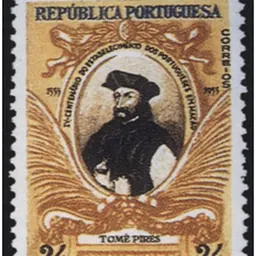
King Manuel I authorized a trade mission in 1517 when Andrade set sail with seven cannon-armed merchant vessels with a Muslim interpreter on June 17, 1517. Andrade had been chosen for this mission in Lisbon back in 1515, so that—as a pharmacist—he could investigate the types of pharmaceutical drugs used in East Asia for the benefit of the Portuguese and Europe. Tomé Pires, a royal apothecary who had also traveled to India and written a landmark work in 1515 on Asian trade, was chosen as the chief ambassador for the mission. After Andrade threatened to sail upriver without permission, the naval commander finally decided to let him pass, granting him pilots to assist his travel.
Andrade's brother and spoiled relations
Simão de Andrade, brother to Fernão Pires, sailed from Malacca to China with a small crew on three junks in August 1519. Simão immediately made a bad impression upon the Chinese when he built a fort at the center of Tuen Mun, an island designated for all foreigners to trade.
The greatest offense to the Chinese was the supposed kidnapping of children by the Portuguese so they could eat them. Simão continued to defy local Chinese laws at Ningbo, and when his men were cheated on a trade deal with a Chinese man in 1545, Simão sent a band of armed men into the town, pillaged it, and took local women and young girls as their captives. The outraged locals banded together and slaughtered the Portuguese under Simão.
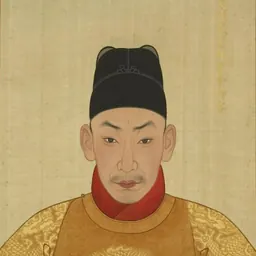
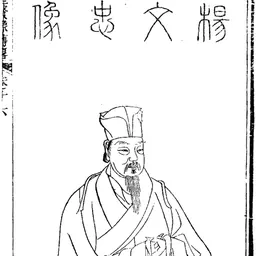
End of the mission The Zhengde Emperor, who accepted the Portuguese embassy but died before he could finalize relations with Portugal, hence dooming the embassy as conservative factions at court in Beijing were aligned against those who conquered the Ming's loyal tributary vassal in Malacca. The embassy party left behind in Canton in 1518 proceeded north in January 1520 with the rest of the Portuguese under Tomé Pires and Fernão Pires de Andrade. There were also reports sent to Beijing by Canton officials stating that the Portuguese were bothersome foreigners who sought to build their own trading post. The newly appointed Grand Secretary, Yang Tinghe, soon turned against the powerful eunuch influence at court, which had grown even more powerful under the Zhengde Emperor. Two of his ships were captured in a surprise Chinese attack, while the survivors escaped back to Portugal on the third ship (see Second Battle of Tamao). These encounters and others with the Portuguese brought the first breech-loading culverins into China, mentioned even by the philosopher and scholar-official Wang Yangming in 1519 when he suppressed Zhu Chenhao's rebellion in Jiangxi.
The prisoners of these sea battles were eventually executed in 1523 for crimes of "robbery in the high seas" and cannibalism, Tomé Pires died while living as a prisoner in China; Two survivors of this embassy were still alive around 1536, when they sent letters to Malacca and Goa detailing plans for how the Portuguese could capture Canton by force. In 1554, Leonel de Sousa—a later Governor of Macau— established positive relations through an agreement with Cantonese authorities and in 1557 the Ming court finally gave consent for a permanent and official Portuguese trade base at Macau. Although Fernão Pires de Andrade and his Portuguese comrades were the first to open up China to the West, another significant diplomatic mission reaching all the way to Beijing would not be carried out until an Italian, the Jesuit Matteo Ricci (1552–1610) ventured there in 1598.
Don’t just read it —
keep it.
Full-length biographies made to live with: read them, listen on the way to work, watch them tonight.
- E-book
- Audio
- Video
Instant download · yours to keep · every purchase keeps this site free
Important facts
People in Fernão Pires de Andrade's life
Named in this biography and alive at the same time




Related people
Same field, nearest in time


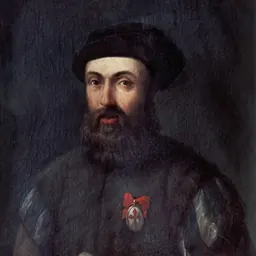
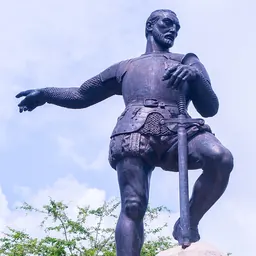
Contemporaries
People whose lives overlapped Fernão Pires de Andrade's
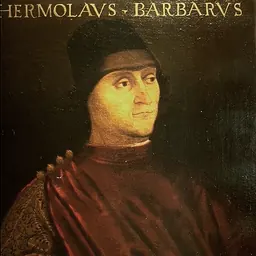

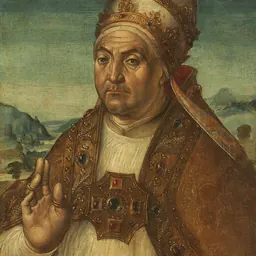



Frequently asked questions
Who was Fernão Pires de Andrade?
Portuguese merchant/pharmacist/diplomat
When was Fernão Pires de Andrade born?
Fernão Pires de Andrade was born in 1450 in Andrade, Pontedeume.
When did Fernão Pires de Andrade die?
Fernão Pires de Andrade died in 1552 in Ternate Island.
What was Fernão Pires de Andrade's occupation?
Fernão Pires de Andrade was an explorer and diplomat.
What nationality was Fernão Pires de Andrade?
Fernão Pires de Andrade's recorded nationality: Kingdom of Portugal.
Sources & further reading
· Wikipedia: Fernão Pires de Andrade
· DBpedia: Fernão Pires de Andrade
Cite this page
APA: Biography.guide. (2026). Fernão Pires de Andrade. https://biography.guide/fernao-pires-de-andrade/
MLA: "Fernão Pires de Andrade." Biography.guide, https://biography.guide/fernao-pires-de-andrade/.
Chicago: "Fernão Pires de Andrade." Biography.guide. https://biography.guide/fernao-pires-de-andrade/.
Data last updated: 2026-09-20 · Spot an error? Report a correction.
Page generated 2026-09-27 05:11 UTC