
About Fernando Novais
Lived 1933 – 2026 (aged 92–93). Fernando Novais was a Brazilian historian.
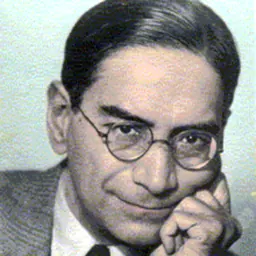
Fernando Antônio Novais (30 September 1933 – 30 April 2026) was a Brazilian historian, researcher, academic and writer. He was a Professor Emeritus at the University of São Paulo (USP) and a professor at the University of Campinas.
Background Novais was born in Guararema, a town in the interior of São Paulo, in 1933. His father, a school principal, was transferred to the town of Colina, where Fernando lived until he was seven years old. The family then moved to São José do Rio Preto. At 15, Fernando moved to the capital, São Paulo, studying the classical course at Roosevelt College. A lover of books and the humanities, he was greatly inspired by his history teacher to pursue a career in the field.
In 1958 he graduated in History from the Faculty of Philosophy, Letters and Human Sciences (FFLCH). During his history course, his greatest influence came from Professor Eduardo d'Oliveira França, who would become his doctoral advisor.
At the same institution, in 1961 he began what would become his doctorate thesis, Portugal e Brasil na crise do Antigo Sistema Colonial (1777–1808), defended in 1973, a work that became a reference in the field.
Career Novais assumed the chair of modern and contemporary history, The year after his departure from USP, he migrated to the Institute of Economics (IE) linked to the State University of Campinas (UNICAMP). He remained at the institution until 2003.
In 1996 he published, in collaboration with Carlos Guilherme Mota, A independência política do Brasil. He was the general organizer of the collection História da vida privada no Brasil, released in four volumes by publisher Companhia das Letras in 1997,
He taught at the University of Texas twice and participated in various debates and seminars at other American universities, such as Columbia University and the University of California.
In France he taught courses at the Institut des Hautes Études de l'Amérique Latine, linked to the University of Paris III (Sorbonne Nouvelle); in Belgium, at the UCLouvain; and, in Portugal, at the universities of Coimbra and Lisbon, where he lived for a year while conducting research for his doctoral thesis.
Major work The most impactful historiographical work of Fernando Novais is his doctoral thesis, Portugal e Brasil na crise do Antigo Sistema Colonial (1777–1808), defended in 1973. Due to its innovative nature in analyzing colonial trade and administration in its most intricate aspects, it laid the groundwork for a new understanding of the relations between Metropolis and Colony.
The work, seen as a classic that changed historiography in the country, Portugal e Brasil na Crise do Antigo Sistema Colonial continues to generate debate among historians; by analyzing Portuguese colonization in Brazil, Novais expands the interpretation of Caio Prado Júnior in Formação do Brasil Contemporâneo. Caio Prado viewed colonization as a 'chapter' of commercial capitalism's expansion, while Novais related it to the very process of forming this capitalism and the transformations experienced at the center of the system.
With the reformulation of basic history education curricula in the 1980s, Novais' interpretation of the colonial system crisis reigned hegemonically in textbooks for about two decades; until some challenges began to arise, especially from a group of historians from Rio de Janeiro. One of the main books contesting Novais is "O antigo regime nos trópicos: a dinâmica imperial portuguesa (séculos XVI-XVIII)”, by João Fragoso (Joao Luis Ribeiro Fragoso), Maria Fernanda Bicalho (Maria Fernanda Baptista Bicalho), and Maria de Fátima Gouvêa (Maria de Fatima Silva Gouvea), published in 2001, which questions the fact that the complexity of social hierarchies did not receive due attention in Novais' work. Aproximações, Estudos de História e Historiografia, Cosac Naify, 2005.
Awards In December 2010 he was awarded the commendation of the Order of Ipiranga by the Government of the State of São Paulo. At the ceremony, the honor was presented by the then-governor of São Paulo, Alberto Goldman (PSDB).
Don’t just read it —
keep it.
Full-length biographies made to live with: read them, listen on the way to work, watch them tonight.
- E-book
- Audio
- Video
Instant download · yours to keep · every purchase keeps this site free
Important facts
People in Fernando Novais's life
Named in this biography and alive at the same time





Related people
Same field, nearest in time

Contemporaries
People whose lives overlapped Fernando Novais's



Frequently asked questions
Who was Fernando Novais?
Brazilian historian, researcher, academic, and writer
When was Fernando Novais born?
Fernando Novais was born in 1933.
When did Fernando Novais die?
Fernando Novais died on 30 April 2026.
What was Fernando Novais's occupation?
Fernando Novais was a historian.
What nationality was Fernando Novais?
Fernando Novais was Brazilian.
Sources & further reading
Cite this page
APA: Biography.guide. (2026). Fernando Novais. https://biography.guide/fernando-novais/
MLA: "Fernando Novais." Biography.guide, https://biography.guide/fernando-novais/.
Chicago: "Fernando Novais." Biography.guide. https://biography.guide/fernando-novais/.
Data last updated: 2026-09-20 · Spot an error? Report a correction.
Page generated 2026-09-27 05:33 UTC