
About Fernande Decruck
Lived 1896 – 1954 (aged 57). Fernande Decruck was a French composer, pianist, music educator and organist.
Fernande Decruck (née Breilh) (25 December 18966 August 1954) was a French composer who composed over 40 works for the saxophone. Most well-known is her Sonata in C sharp minor for alto saxophone or viola, dedicated to Marcel Mule.
Life Fernande Breilh was born in the village of Gaillac in France to a local merchant. She began learning piano aged eight and studied at the Conservatoire de Toulouse. She was admitted to the Conservatoire de Paris in 1918 studying organ and composition. There she won prizes in harmony, fugue, counterpoint, and piano accompaniment.
Her studies in improvisation on organ led her to travel to America where she gave her first organ recitals in New York. Her husband, Maurice Decruck, a clarinetist, saxophonist and double-bassist, played both bass and saxophone with the New York Philharmonic. Maurice Decruck later became a music publisher, opening the company Les Editions de Paris. They married in 1924 and had three children, Jeannine Decruck (born 1925), Michel Decruck (born 1926) and Alain Decruck (born 1937). She moved to the United States with her family in 1928. Fernande Decruck later rejoined her husband in Paris in 1933. When Fernande returned to France, she began teaching harmony at the Conservatoire de Toulouse. Between 1937 and 1942 she lived in Toulouse with her children apart from her husband in Paris. During this period she continued to teach, compose and perform. In 1942 she moved back to Paris and many of her works were premiered between 1943 and 1947 including her Sonata in C♯ minor.
Fernande and Maurice Decruck were divorced in 1950 after several years of separation. She died of a stroke on 6 August 1954.
Deux berceuses pour quatuor de saxophones (1935) Composed in 1935 and dedicated to the Unknown Soldier and Donald Moore, Deux berceuses (two lullabies) was written for horn quartet and adapted by the composer for saxophone quartet.
Deux berceuses is in two movements: Mouvement calme et souple de berceuse Berceuse Héroïque
Sonate en ut♯ pour saxophone alto (ou alto) et orchestre (1943)
Full title as published by Costallat: "Sonate en ut dièze : pour saxophone alto mi-b (ou alto à corde) avec accompagnement de piano ou orchestre"
This Sonata is in four movements: ‘Très modéré, expressif’ Noël Fileuse Nocturne et Rondel
Les Trianons (1946)
Titled in full "Les Trianons, suite concertante pour clavecin ou piano et orchestre," the composition is a neo-Baroque suite concertante for harpsichord, named after the Grand Trianon and Petit Trianon within the Domaine de Versailles. It is dedicated to Marcelle de Lacour, professor of harpsichord at the Conservatoire de Paris.
Don’t just read it —
keep it.
Full-length biographies made to live with: read them, listen on the way to work, watch them tonight.
- E-book
- Audio
- Video
Instant download · yours to keep · every purchase keeps this site free
Important facts
People in Fernande Decruck's life
Named in this biography and alive at the same time


Related people
Same field, nearest in time
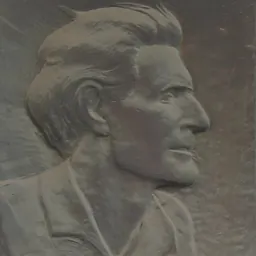

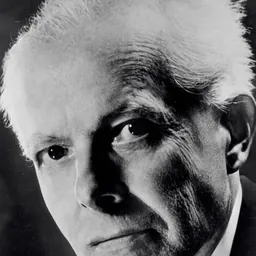



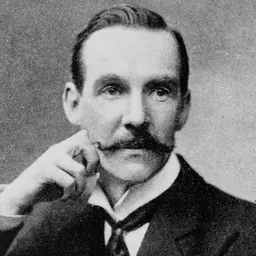
Contemporaries
People whose lives overlapped Fernande Decruck's

Frequently asked questions
Who was Fernande Decruck?
French composer (1896-1954)
When was Fernande Decruck born?
Fernande Decruck was born on 25 December 1896 in Gaillac.
When did Fernande Decruck die?
Fernande Decruck died on 6 August 1954 in Fontainebleau.
What was Fernande Decruck's occupation?
Fernande Decruck was a composer, pianist, music educator and organist.
What nationality was Fernande Decruck?
Fernande Decruck was French.
Sources & further reading
Cite this page
APA: Biography.guide. (2026). Fernande Decruck. https://biography.guide/fernande-decruck/
MLA: "Fernande Decruck." Biography.guide, https://biography.guide/fernande-decruck/.
Chicago: "Fernande Decruck." Biography.guide. https://biography.guide/fernande-decruck/.
Data last updated: 2026-09-22 · Spot an error? Report a correction.
Page generated 2026-09-27 05:29 UTC