
Ferdinand von Wrangel
Baltic German explorer and Russian admiral
About Ferdinand von Wrangel
Lived 1796 – 1870 (aged 73). Ferdinand von Wrangel was a Russian explorer, geographer, politician, land owner, military personnel and sailor.
Baron Ferdinand Friedrich Georg Ludwig von Wrangel (; – ) was a Russian statesman, naval officer and explorer of Baltic German origin. He was also an honorary member of the Saint Petersburg Academy of Sciences and a founder of the Russian Geographic Society. He is best known as the chief manager of the Russian-American Company and the governor of Russian settlements in Alaska.
Early life and education Wrangel was born in Pskov, into the Baltic German nobility of the Wrangel family and was a distant nephew of Generalfeldmarschall Friedrich von Wrangel.
He graduated from the Naval Cadets College in 1815. He participated in Vasily Golovnin's world cruise on the ship Kamchatka in 1817–1819 and belonged to the cohort of Baltic-German navigators who were instrumental in Imperial Russia's maritime explorations.
Career
Kolymskaya expedition He was appointed in 1820 to command the Kolymskaya expedition to explore the Russian polar seas. Sailing from St. Petersburg, he arrived at Nizhnekolymsk on 2 November 1820, and early in 1821 journeyed to Cape Shelagskiy on sledges drawn by dogs. He sailed afterward up Kolyma River, advancing about 125 miles into the interior, through territory inhabited by the Yakuts. On 10 March 1822, he resumed his journey northward, and traveled 46 days on the ice, reaching 72° 2' north latitude. He left Nizhnekolymsk on 1 November 1823, and returned to St. Petersburg on 15 August 1824. Prior to his departure for Russia's American colonies, he was married to Elisabeth Theodora Natalie Karoline de Rossillon, daughter of Baron Wilhelm de Rossillon.
He traveled to his post early in 1829, by way of Siberia and Kamchatka. After thoroughly reforming the administration, he introduced the cultivation of the potato, opened and regulated the working of several mines, and urged upon the home government the organization of a fur company. He promoted investment, and sent out missionaries. He began a survey of the country, opened roads, built bridges and government buildings. He made geographical and ethnographical observations, which he embodied in a memoir to the navy department. Recalled in 1834, he returned by way of Mexico and the United States, where he visited several cities.
In 1854 he re-entered active service and was made chief director of the hydrographical department of the navy
Writings An account of the physical observations during his first journey was published in German (Berlin, 1827), and also in German extracts from Wrangel's journals, Reise längs der Nordküste von Sibirien und auf dem Eismeere in den Jahren 1820-1824 (2 vols., Berlin, 1839), which was translated into English as Wrangell's Expedition to the Polar Sea (2 vols., London, 1840). The complete report of the expedition appeared as "Puteshestvie po severnym beregam Sibiri, po Ledovitomu Moryu, sovershennoe v 1820, 1821, 1822, 1823 i 1824 godakh" (2 vols., St. Petersburg, 1841), and was translated into French with notes by Prince Galitzin, under the title Voyage sur les côtes septentrionales de la Sibérie et de la mer glaciale (2 vols., 1841). From the French version of the complete report an English one was made under the title A Journey on the Northern Coast of Siberia and the Icy Sea (2 vols., London, 1841).
With regard to the question of the means by which animals find their way home from a long distance, a striking account, in relation to man, will be found in the English translation of the Expedition to North Siberia, by Von Wrangell. He there describes the wonderful manner in which the natives kept a true course towards a particular spot, whilst passing for a long distance through hummocky ice, with incessant changes of direction, and with no guide in the heavens or on the frozen sea. He states (but I quote only from memory of many years standing) that he, an experienced surveyor, and using a compass, failed to do that which these savages easily effected. Yet no one will suppose that they possessed any special sense which is quite absent in us. We must bear in mind that neither a compass, nor the north star, nor any other such sign, suffices to guide a man to a particular spot through an intricate country, or through hummocky ice, when many deviations from a straight course are inevitable, unless the deviations are allowed for, or a sort of "dead reckoning" is kept.
Namesakes
Wrangel Island, the arctic island north of Chukotka, named by Thomas Long after him. Wrangel had noticed swarms of birds flying north, and, questioning the native population, he determined that there must be an undiscovered island in the Arctic Ocean. He searched for it on the Kolymskaya expedition, but failed to find it. Wrangell Island, an island in the Alexander Archipelago, off the coast of Alaska Wrangell, Alaska, a city on Wrangell Island and one of the oldest non-native settlements in Alaska Fort Wrangel, a US Army base at Wrangell, originally Fort Stikine when under British control Wrangell Airport, an airport near Wrangell, Alaska Wrangell-Petersburg Census Area a census area containing Wrangell Island. Wrangell Narrows, a winding channel in the Alexander Archipelago Cape Wrangell of Attu Island, the westernmost point of Alaska (and the United States) Mount Wrangell, a volcano in Alaska Wrangell Volcanic Field, named after Mount Wrangell Wrangell Mountains, named after Mount Wrangell USS Wrangell (AE-12), named after Mount Wrangell Wrangell-St. Elias National Park and Preserve, named after Wrangell mountains Wrangellia, a geologic terrane of Southeast Alaska
Don’t just read it —
keep it.
Full-length biographies made to live with: read them, listen on the way to work, watch them tonight.
- E-book
- Audio
- Video
Instant download · yours to keep · every purchase keeps this site free
Important facts
more
F. P. von Wrangel, Admiral Ferdinand von Wrangel, Ferdinand Vrangel, F. P. Wrangell, Ferdinand Friedrich Georg Ludwig Wrangel, Von Wrangel, Admiral Vrangel, Baron Wrangell, F. P. von Wrangell, Ferdinand Petrovich Vrangel, F. von Wrangell, Baron Vrangel, Ferdinand Friedrich Georg Ludwig von Wrangel, Baron von Wrangell, Adm. Wrangell, Admiral von Wrangel, F. Vrangel, Baron Ferdinand Friedrich Georg Ludwig von WraPeople in Ferdinand von Wrangel's life
Named in this biography and alive at the same time
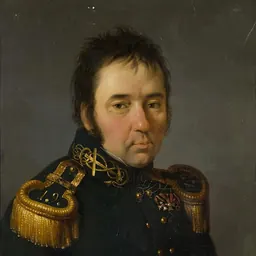

Related people
Same field, nearest in time


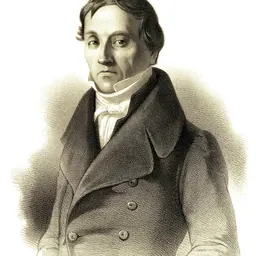
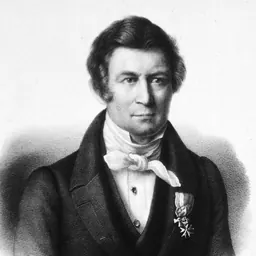
Contemporaries
People whose lives overlapped Ferdinand von Wrangel's





Frequently asked questions
Who was Ferdinand von Wrangel?
Baltic German explorer and Russian admiral (1797-1870)
When was Ferdinand von Wrangel born?
Ferdinand von Wrangel was born on 29 December 1796 in Pskov.
When did Ferdinand von Wrangel die?
Ferdinand von Wrangel died on 25 May 1870 in Tartu.
What was Ferdinand von Wrangel's occupation?
Ferdinand von Wrangel was an explorer, geographer, politician, land owner, military personnel and sailor.
What nationality was Ferdinand von Wrangel?
Ferdinand von Wrangel was Russian.
Sources & further reading
· Wikipedia: Ferdinand von Wrangel
· DBpedia: Ferdinand von Wrangel
Cite this page
APA: Biography.guide. (2026). Ferdinand von Wrangel. https://biography.guide/ferdinand-von-wrangel/
MLA: "Ferdinand von Wrangel." Biography.guide, https://biography.guide/ferdinand-von-wrangel/.
Chicago: "Ferdinand von Wrangel." Biography.guide. https://biography.guide/ferdinand-von-wrangel/.
Data last updated: 2026-09-27 · Spot an error? Report a correction.
Page generated 2026-09-27 05:16 UTC