
Ferdinand Lee Barnett
American journalist, lawyer, and civil rights activist
About Ferdinand Lee Barnett
Lived 1852 – 1936 (aged 84). Ferdinand Lee Barnett was an American lawyer, journalist and state's attorney.
Ferdinand Lee Barnett (February 18, 1852 – March 11, 1936) was an American journalist, lawyer, and civil rights activist in Chicago, beginning in the late Reconstruction era.
Born in Nashville, Tennessee, during his childhood, his African-American family fled to Windsor, Ontario, Canada, just before the American Civil War. After the war, they settled in Chicago, where Barnett graduated from high school, and then obtained his law degree from what is today Northwestern University School of Law. He was a founding editor of the African-American oriented The Chicago Conservator monthly in 1878. The third black person to be admitted to the practice of law in Illinois, he also became a successful lawyer.
In 1895, Barnett married Ida B. Wells, a fellow journalist and anti-lynching activist. In 1896, he became Illinois' first black assistant state's attorney. He was active in anti-lynching and civil rights causes and was called "one of the foremost citizens Chicago has ever had" by the Chicago Defender.
Early life Ferdinand Lee Barnett was born in Nashville, Tennessee, in 1852. Martha Brooks, born about 1825. His father, also named Ferdinand Lee Barnett, was born in Nashville about 1810 and worked as a blacksmith. He purchased his family's freedom the year Ferdinand was born. They lived in Nashville until about 1859, when they left the United States and moved to Windsor, Ontario, across the Detroit River from Detroit, Michigan. They wanted to avoid the reach of the Fugitive Slave Act of 1850, which had created incentives for slave catchers to kidnap free blacks and sell them into slavery.
The Barnett family returned to the US in 1869 after the American Civil War and the end of slavery, settling in Chicago, Illinois. Ferdinand was educated in Chicago schools,
Numbered among his cousins were Ferdinand L. Barnett and his brother Alfred S. Barnett. They were also journalists and lived in Omaha, Nebraska, and Des Moines, Iowa, respectively.
Barnett's father died in early February 1898. His mother died on November 11, 1908.
Conservator and early activism In December 1877, Barnett, along with co-editors Abram T. Hall, Jr. and James E. Henderson, organized the semi-monthly newspaper, the Conservator, the first edition appearing on January 1, 1878. Also among the editors and stakeholders was Iowan Alexander Clark. He moved to Chicago in 1884, where he served as an editor of the paper. (Clark was appointed as US ambassador to Liberia in 1891.)
The Conservator was a radical journal that focused on justice and equal rights, and Barnett was soon recognized as a local black leader. He was selected as a delegate to the May 1879 National Conference of Colored Men in Nashville, where he gave a noted speech calling for unity and education. and the national convention of the Timothy Thomas Fortune led Afro-American League in Chicago in 1890 where he was named secretary.
Legal and political career Barnett started practicing law around 1883. In 1892, he started a law partnership with S. Laing Williams. The pair split over Williams' affiliation with Booker T. Washington, whom Barnett frequently opposed.
The event inspired Wells, who began to research and speak out against lynchings. In 1893, Wells sued the Memphis Commercial for libel when the journal attacked Wells over her reports on the racism and injustice of lynching. It had been claimed that lynching, while not legal, was a natural result of the need for revenge of a community against perpetrators of violent crime and did not single out blacks. Wells' work showed the falseness of this narrative. Wells asked lawyer and activist Albion W. Tourgee to represent her on the case, but Tourgee refused, having largely retired from law (with the exception of his ongoing support of the case which would become Plessy v Fergusson). Tourgee recommended Wells contact Barnett, and Barnett agreed to take the case. This may have been Barnett's introduction to Wells, whom he would marry two years later. However, Barnett came to agree with the advice of Tourgee that the case could not be won, as a black woman would never win such a case heard by a white, male jury, and the case was dropped.
World's Fair In 1893, Barnett coauthored a pamphlet entitled "The Reason Why the Colored American is not in the World's Columbian Exposition – The Afro-American's Contribution to Columbian Literature". The exposition, held in Chicago, refused to include an African-American exhibit. The pamphlet was another early example of Barnett's personal and professional relationship with Wells.
Marriages and family The Wells-Barnett family, 1917 Mary and Ferdinand had two children, Ferdinand Lee and Albert Graham Barnett. Mary died in 1890 The younger Ferdinand Barnett served as Eighth Regiment supply sergeant in World War I. Albert Barnett became the city editor of the Defender in Chicago.
Wells remained in Chicago after the Columbian Exposition. In June 1895, she and Barnett married. The couple had four children, Charles Aked (1896), Herman Kohlsaat (1897), Ida B. (1901), and Alfreda M. Barnett (later Alfreda Duster) (1904). Charles was named for the English anti-lynching activist Charles Aked, and Herman was named for the owner of the Chicago Inter Ocean, Herman Kohlsaat, who supported the Conservator.
Later career From 1919 to 1930, Barnett and Wells lived in the Ida B. Wells-Barnett House, now a Chicago Landmark and National Historic Landmark Barnett was an active Republican, and his support for the party put him in line for public office. In 1896, he was put in charge of the bureau of information and education for blacks by the Republican National Committee.
Also in 1896, Barnett became the first black assistant state's attorney in Illinois; he was appointed by Cook County State's Attorney Charles S. Deneen on the recommendation of the Cook County Commissioner Edward H. Wright. In 1904 he was appointed as head of the Chicago branch of the Republican Party's Negro Bureau. This appointment was opposed by Booker T. Washington, who preferred Barnett's former partner, S. Laing Williams.
Municipal court judgeship controversy In 1906, Barnett was nominated as a judge in the new Municipal Court of Chicago, the first black candidate for a judgeship in Illinois. Barnett lost the election by 304 votes due to a lack of support by white If he had been elected, Barnett would have been the second black judge in a court of record after Robert Heberton Terrell of Washington, D.C. His most best remembered case was the defense with attorneys Robert M. McMurdy and Cowen of "Chicken Joe" Campbell. Although Campbell was convicted for the murder of Odelle B. Allen, his death sentence was commuted to life imprisonment by Governor Frank O. Lowden on April 12, 1918.
In the 1920s, Barnett and his wife supported Marcus Garvey and the Universal Negro Improvement Association. In the 1920s and 1930s, Barnett began to support the Democratic Party.
Barnett died aged 84 on March 11, 1936. He was buried alongside Ida B. Wells at Oak Woods Cemetery in Chicago.
Don’t just read it —
keep it.
Full-length biographies made to live with: read them, listen on the way to work, watch them tonight.
- E-book
- Audio
- Video
Instant download · yours to keep · every purchase keeps this site free
Important facts
Family & relationships
People in Ferdinand Lee Barnett's life
Named in this biography and alive at the same time

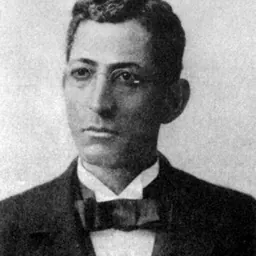

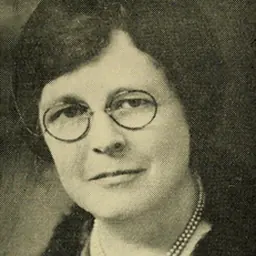
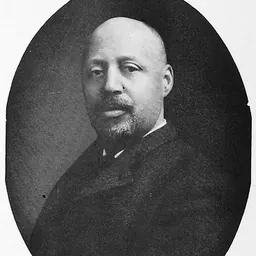

Related people
Same field, nearest in time
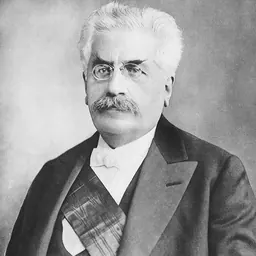

Contemporaries
People whose lives overlapped Ferdinand Lee Barnett's

Frequently asked questions
Who was Ferdinand Lee Barnett?
American journalist, lawyer, and civil rights activist
When was Ferdinand Lee Barnett born?
Ferdinand Lee Barnett was born on 18 February 1852 in Nashville.
When did Ferdinand Lee Barnett die?
Ferdinand Lee Barnett died on 11 March 1936 in Chicago.
What was Ferdinand Lee Barnett's occupation?
Ferdinand Lee Barnett was a lawyer, journalist and state's attorney.
What nationality was Ferdinand Lee Barnett?
Ferdinand Lee Barnett was American.
Sources & further reading
· Wikipedia: Ferdinand Lee Barnett
· DBpedia: Ferdinand Lee Barnett (Chicago)
Cite this page
APA: Biography.guide. (2026). Ferdinand Lee Barnett. https://biography.guide/ferdinand-lee-barnett/
MLA: "Ferdinand Lee Barnett." Biography.guide, https://biography.guide/ferdinand-lee-barnett/.
Chicago: "Ferdinand Lee Barnett." Biography.guide. https://biography.guide/ferdinand-lee-barnett/.
Data last updated: 2026-09-26 · Spot an error? Report a correction.
Page generated 2026-09-27 05:13 UTC