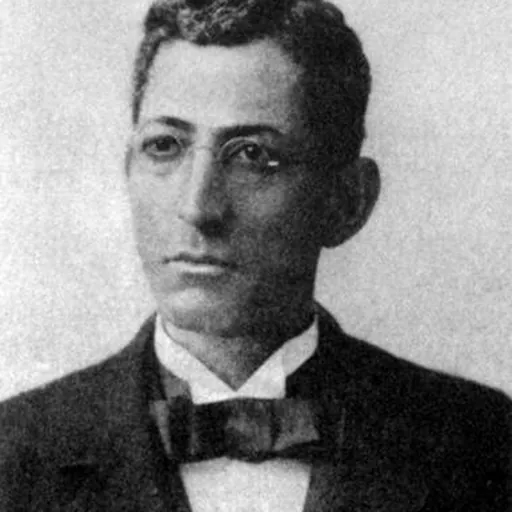
About Timothy Thomas Fortune
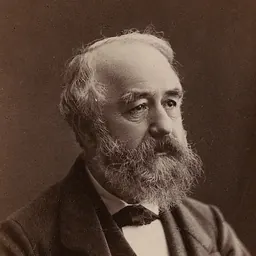
Lived 1856 – 1928 (aged 71). Timothy Thomas Fortune was an American writer, editor, political activist and journalist.
Timothy Thomas Fortune (October 3, 1856 – June 2, 1928) was an American journalist, newspaper publisher, orator, and civil rights activist who was best known as the managing editor of the The New York Age. Fortune was born into slavery in Marianna, Florida. Following emancipation, Fortune's father, Emanuel, got involved in Florida politics and secured Fortune a role as a page in the Florida Legislature, where he developed an interest in politics and a distrust of white politicians. During this time, he learned the printer's trade. In his late teens, he briefly attended Howard University, worked as a printer in Washington D.C., and got married.
Fortune moved to New York City around 1880 and took editorial oversight of the Rumor, which became The New York Globe. He quickly gained a reputation for his editorials, which followed him to subsequent publications the New York Freeman and the Age. Widely considered the best African American journalist of his age by his peers, Fortune wrote and spoke often of racial injustices suffered by African Americans, criticized politicians both Democratic and Republican, argued against monopolies and for class solidarity, and was a proponent of African Americans defending themselves with force, if needed, which gained him a reputation as an agitator. Praise was not universal for Fortune, and critics called him the "crank of the colored press" and "dangerous". He was a founding member of the National Afro-American League, National Afro-American Council, and National Negro Business League.
In the 1890s, Fortune developed a strong friendship with Booker T. Washington and helped promote his aims, which were often in conflict with Fortune's personal beliefs. Fortune edited and ghostwrote Washington's publications while writing for the Age. Despite his fame, Fortune's work as a journalist was never profitable and Washington propped up the Age with loans and paid stories. Fortune's health began to decline in the late 1890s and he developed a reliance on alcohol that continued to worsen through the 1900s. He suffered a mental health crisis in 1907 and sold his stake in the Age, coinciding with the end of his relationship with Washington.
Fortune was soon destitute and subsisted by freelancing for various publications in the United States. His health gradually improved through the 1910s and he assumed the editorship of the Negro World in 1923. He held the position until his death in 1928. Following his death, Fortune was eulogized as the "dean of Negro journalists" and his work as "the voice of the Negro".
Early life and education
Timothy Thomas Fortune was born a slave in Marianna, Florida, on October 3, 1856, to Emanuel and Sarah Jane Fortune, the third of five children. Emanuel and Sarah Jane were of African, European, and Native American descent. Fortune worked as a page for four legislative sessions, during which time he developed an interest in politics and a lifelong mistrust of white politicians, whom he had witnessed taking advantage of their African American (Contemporary sources and subsequent scholarship use a range of descriptors for African Americans, including "black", "Negro", "African American" and "colored".) Fortune briefly popularized the term "Afro-American". and worked at the Jacksonville Daily Union as a printer's devil. The same year, he was named a special customs inspector in Delaware. He briefly worked as a teacher in Duval and Madison counties but found conditions and pay unbearable. He returned again to the Daily Union, but found the post-Reconstruction environment of the American South intolerable, and moved his family to New York City around the turn of the decade. (Sources conflict on when precisely Fortune moved to New York.) Emma Lou Thornbrough's 1972 biography states the move occurred in 1881 Fortune's editorials covered an array of issues, including support for interracial marriage and the creation of a federal education bureau; criticism of racial segregation, Jim Crow laws, and the back-to-Africa movement; denouncements of monopoly, protective tariffs, and land grants to railroad companies; lamentations of court cases that eroded civil rights; and coverage of the worsening conditions for African Americans in the American South. Linguistically, Fortune's writing was geared toward a more educated audience and relied upon turns of phrase. He commonly utilized long sentences to contextualize a point, then followed them with short sentences to state his conclusions. Fortune was widely regarded as the most "brilliant and influential" African American journalist in the US and the Globe as the country's most powerful and influential African American newspaper. (Fortune framed this argument in an essay, "The Latest Color Line", published in The New York Sun and Liberia Bulletin in 1897.) The essay warns against the separation of "blacks" and "mullatoes" along the lines of skin tone and calls out the hypocrisy of proponents of black racial purity, including Alexander Crummell, John Wesley Cromwell, and Daniel Wallace Culp, all of whom married mulatto wives. Concluding the essay, Fortune writes, "No friend of the Afro-American race can fail to forget that the black and yellow people of the United States will have their problem of manhood and citizenship further complicated by a color line in a color line. They have enough trouble as matters now stand without borrowing more."
The Age never became a profitable venture and Washington became a financial lifeline for Fortune and the newspaper, paying the journalist for speeches, travel, and publishing content related to the Tuskegee Institute, as well as offering Fortune the occasional loan. (In a letter to the Brooklyn Daily Eagle, Fortune wrote, "I believe in law and the rule of law.) When the law does not protect me, as it does not in the South; when the officers of the law join with the lawbreakers to deprive me of 'life and liberty', as they do in the South every day in the week, what am I to do? Accept it all meekly, without protest or resentment, and crave that those who so abuse me let me live and kiss the hem of their garments? Slaves do that sort of thing, and are worthy to be slaves, but free men, American freemen! Who expects them to do it?" Fortune suggested the time may be right for African American emigration to the islands, a prospect rejected by local residents. His first two children died in infancy and Fortune doted on his daughter, Jessie. Another son, Stewart, died in 1889. His youngest child, Frederick, was born in 1891. His lack of funds led the home to be sold under court order in 1910.
Fortune was a member of the African Methodist Episcopal Church. He enjoyed roller skating, poetry, and cycling.
Selected works
Don’t just read it —
keep it.
Full-length biographies made to live with: read them, listen on the way to work, watch them tonight.
- E-book
- Audio
- Video
Instant download · yours to keep · every purchase keeps this site free
Important facts
People in Timothy Thomas Fortune's life
Named in this biography and alive at the same time




Related people
Same field, nearest in time




Contemporaries
People whose lives overlapped Timothy Thomas Fortune's




Frequently asked questions
Who was Timothy Thomas Fortune?
American writer, activist (1856–1928)
When was Timothy Thomas Fortune born?
Timothy Thomas Fortune was born on 3 October 1856 in Marianna.
When did Timothy Thomas Fortune die?
Timothy Thomas Fortune died on 2 June 1928 in Philadelphia.
What was Timothy Thomas Fortune's occupation?
Timothy Thomas Fortune was a writer, editor, political activist and journalist.
What nationality was Timothy Thomas Fortune?
Timothy Thomas Fortune was American.
Sources & further reading
· Wikipedia: Timothy Thomas Fortune
Cite this page
APA: Biography.guide. (2026). Timothy Thomas Fortune. https://biography.guide/timothy-thomas-fortune/
MLA: "Timothy Thomas Fortune." Biography.guide, https://biography.guide/timothy-thomas-fortune/.
Chicago: "Timothy Thomas Fortune." Biography.guide. https://biography.guide/timothy-thomas-fortune/.
Data last updated: 2026-09-23 · Spot an error? Report a correction.
Portrait: Wikimedia Commons · author & licence
Page generated 2026-09-27 05:05 UTC