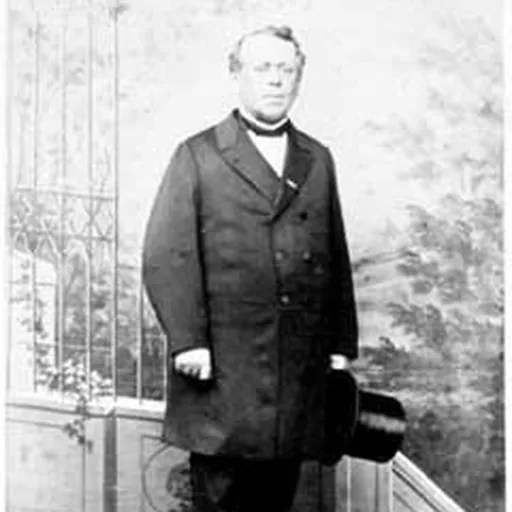
About Ferdinand Jühlke
Lived 1815 – 1893 (aged 77). Ferdinand Jühlke was a German gardener, writer, teacher, horticulture and pomology.
Ferdinand Jühlke (1 September 1815 – 12 June 1893) was a Prussian (after 1871 German) horticulturist. He devoted much of his career to teaching and also wrote a number of highly influential books on gardens and garden design, though it is fair to add that his influence was greater in the Prussian north of Germany than in the south.
Life Provenance and early years Johann Bernhard Ferdinand Jühlke, the third of his parents' three recorded sons together, was born on 1 September 1815 and baptised 16 days later, at Barth (Pomerania), in the extreme north of what would become Germany. Johann Martin Jühlke, his father, was a carpenter-joiner. The year of his birth was the year in which the entire province of Swedish Pomerania ceased to be Swedish and became part of Prussia, as part of the process whereby the nation-brokers at the Congress of Vienna confirmed the nation's recovery of "great power" status and the reversal of its near annihilation by the French Empire in 1806. Jühlke's parents divorced soon after he was born and his father remarried, following which the boys acquired a half-sister in 1818. In 1830 Jühlke embarked on a more formal training programme at the Greifswald Botanic Garden of the University of Greifswald, a short distance to the south-east. The young course director, Professor Christian Friedrich Hornschuch, was keen to combine academic and botanical instruction with the aesthetic and artistic aspects of horticulture, both in his approach to teaching and in the way he had the gardens arranged. Hornschuch only launched the course, formally, in 1831. As one of its first students, Jühlke complemented his course work with his own extensive programme of private reading and self-study.
During his time in Greifswald Jühlke developed a particular friendship with Johann Gottfried Langguth, the head gardener at the Botanic Garden between 1822 and 1855. Langguth, whom Professor Hornschuch also held in the highest regard, became for Jühlke an important longstanding counsellor and mentor.
Royal Agricultural Academy Eldena (1834-1854) Recommended by Professor Hornschuch, in 1834 Jühlke was offered and accepted the position of "Academic Gardener" at the Royal Agricultural Academy Eldena. He was thereby placed in charge of a prestigious teaching and research academy, newly established by the university on the site of a former monastery (which had fallen into ruin since dissolution in 1535). Over a number of years took the opportunity to build up a Botanic Garden and a Pomology academy. There was also scope to develop an extensive horticultural research facility. The facilities provided institutional and practical support for teaching horticulture and plant care, supported by students who created and helped maintain appropriate herbaria and plant collections. He also organised an extensive programme of plant breeding trials, testing out new cultivars and methods. He established and maintained close relations with major commercial garden businesses, nurseries and botanic gardens, from which he obtained plant samples and seeds in order to try out new varieties and form conclusions as to their suitability for the climate found in the North German coastal regions.
At the beginning of his time in charge the focus was simply on teaching students the practicalities of garden development and maintenance, with a focus on fruit trees and grafting techniques. During the winter term of 1843/44 Jühlke started providing students with lectures on horticulture, and in 1846 he took on the newly created teaching chair in Horticulture. This enabled him to establish the Department of Horticulture as a stand-alone facility at the academy. By this time Jühlke was also sharing his expertise in horticulture with numerous contributions to specialist journals, through engagement in agricultural associations and participation in exhibitions. He became involved with the "Baltischen Verein zur Förderung der Landwirtschaft" ("Baltic Association for the Support of Agriculture"), and in 1845 became a founder member of the "Horticultural Association of New Western Pomerania and Rügen", himself serving as secretary of the association till 1858.
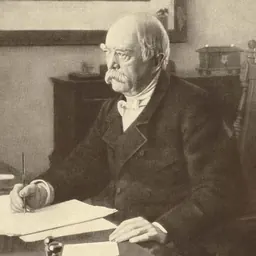
Fairly soon after taking over at Eldena, Jühlke met Otto von Bismarck, who had welcomed the opportunity to attend the Eldena Academy as part of his military service. As a young man Bismarck evidently believed that his future would involve inheriting and then improving and managing the extensive family agricultural estates on which he had grown up. Their meeting turned out to be the start of a life-long friendship. The men's surviving correspondence indicates that Bismarck would always retain a lively interest in horticultural matters, and that he would frequently seek advice on them from his former teacher at the Eldena Academy.
Following his arrival in Erfurt he also undertook a large amount of networking and voluntary work. In 1860, just two years after taking control of the C. Appelius business, he had been elected director of the Erfurt Horticulture Association. That same year, on 23 May, he was accepted as member of the city's Carl zu den drei Adlern Masonic lodge. He also became a member of the Erfurt city council and was appointed a district tax commissioner in respect of Land Tax
During these eight years in the private sector, Jühlke again found time for the occasional extended study trip abroad. The most extensive of these appears to have been in 1860, when he visited Austria, Bohemia, Moravia, Hungary and Silesia. He visited, in particular, various horticulture businesses in order to gather ideas for his own undertaking in Erfurt. Characteristically, he expended a huge amount of energy and commitment in developing his business, which evidently did not go unnoticed. In 1862 the king granted him the honour of becoming an [official] provider of royal garden supplies, seeds and plants. In June 1864 he was appointed Commissar of the Hamburg-based German Agriculture Society ("Deutsche Ackerbau-Gesellschaft") and elected president of the jury for agricultural products. Because of the huge international success of the exhibition, the Ministry for Agriculture conferred on Franz Carl Heinemann the title "Royal Prussian Director of Horticulture" ("Königlich Preußischer Gartenbaudirektor") later the same year.
As director at the Garden of the Royal Court, Jühlke's work involved planning, organising and supervising designs and redesigns for royal gardens and the gardens of the nobility. He also found his services were much in demand as a planner of numerous municipal and private gardens. Examples include the garden-park surrounding the villa in Eisenach of his friend, the Mecklenburg popular novelist and poet Fritz Reuter. During the 1870s and 1880s he designed several municipal facilities for Barth (his birth town), which at the time was undergoing rapid expansion as a commercial port and brewing town. In Stralsund, the regional capital nearby, he was instrumental in implementing a long-standing ambition of many city-folk by constructing an impressive network of public parks and landscaped walkways. The development was made possible by the decommissioning, for serious defensive purposes, of the city's massive ramparts which had been constructed and then progressively extended through the centuries during which Stralsund was much fought over (most recently) between Poland, Pomerania, Brandenburg-Prussia, Sweden, France and others.
Later years In 1880 Jühlke ended his teaching activities at the Royal Horticultural College. Two years later, on 26 October 1882 he accepted honorary membership of the Potsdam "Teutonia zur Weisheit" masonic lodge. On 1 April 1884 he celebrated fifty years of service in gardening and horticulture, and in 1891 the twenty-fifth anniversary of his service as director of the Garden of the Royal Court. On 1 July of that year, aged 75, he retired from his remaining positions. He died at Potsdam a little under two years later. Carl Ludwig was born on 6 September 1856, and initially studied law. He later reinvented himself as an "Africa explorer" and was killed - some sources use the word "murdered" - in Kismayo. The early loss of Jühlke's son was followed by a powerful letter of condolence from his long-standing friend, the horticulture enthusiast, Chancellor Bismarck. Margarethe was born in 1861.
Celebrations (selection)
Don’t just read it —
keep it.
Full-length biographies made to live with: read them, listen on the way to work, watch them tonight.
- E-book
- Audio
- Video
Instant download · yours to keep · every purchase keeps this site free
Important facts
Family & relationships
People in Ferdinand Jühlke's life
Named in this biography and alive at the same time

Related people
Same field, nearest in time



Contemporaries
People whose lives overlapped Ferdinand Jühlke's




Frequently asked questions
Who was Ferdinand Jühlke?
German gardener (1815–1893)
When was Ferdinand Jühlke born?
Ferdinand Jühlke was born on 1 September 1815 in Barth.
When did Ferdinand Jühlke die?
Ferdinand Jühlke died on 12 June 1893 in Potsdam.
What was Ferdinand Jühlke's occupation?
Ferdinand Jühlke was a gardener, writer, teacher, horticulture and pomology.
What nationality was Ferdinand Jühlke?
Ferdinand Jühlke was German.
Sources & further reading
Cite this page
APA: Biography.guide. (2026). Ferdinand Jühlke. https://biography.guide/ferdinand-juhlke/
MLA: "Ferdinand Jühlke." Biography.guide, https://biography.guide/ferdinand-juhlke/.
Chicago: "Ferdinand Jühlke." Biography.guide. https://biography.guide/ferdinand-juhlke/.
Data last updated: 2026-09-23 · Spot an error? Report a correction.
Portrait: Wikimedia Commons · author & licence
Page generated 2026-09-27 05:07 UTC