
About Ferdinand-Alphonse Hamelin
Lived 1796 – 1864 (aged 67). Ferdinand-Alphonse Hamelin was a French politician, naval officer and minister of Marine.
Ferdinand-Alphonse Hamelin (2 September 1796 – 10 January 1864), French admiral, was born in Pont-l'Évêque, Normandy. He was the nephew of Jacques Félix Emmanuel Hamelin, a successful rear admiral in the French Navy of the Napoleonic era.
Early career Hamelain went to sea in 1806 as cabin boy with his uncle, Jacques Félix Emmanuel Hamelin, on the frigate Vénus in the era of Napoleon and the French Empire. The Vénus was part of the French squadron in the Indian Ocean during the Mauritius Campaign of 1809-1811, and young Hamelin had an opportunity of seeing much active service. She, in company with another and a smaller vessel, captured the English frigate Ceylon in 1810, but was immediately afterwards captured herself by the Boadicea, under Commodore Josias Rowley (1765–1842). Young Hamelin was a prisoner of war for a short time.
Career after the First French Empire fell
He returned to France in 1811. On the fall of the Empire he had better fortune than most of the Napoleonic officers who were turned ashore. In 1821 he became lieutenant, and in 1823 took part in the French expedition under the Duke of Angoulême into Spain. In 1828 he was appointed captain of the Actéon, and was engaged till 1831 on the coast of Algiers and in the conquest of the town and country. His first command as flag officer was in the Pacific, where he showed much tact during the dispute over the Marquesas Islands with England in 1844.
He was promoted vice-admiral in 1848. During the Crimean War he commanded in the Black Sea, and co-operated with Admiral Dundas in the bombardment of Sevastopol on 17 October 1854. His relations with his English colleague were not very cordial. On 7 December 1854 he was promoted to admiral. Shortly afterwards he was recalled to France, and was named minister of marine.
His administration lasted till 1860, and was remarkable for the expeditions to Italy and China organized under his directions; but it was even more notable for the energy shown in adopting and developing the use of armour. The launch of the Gloire in 1859 set the example of constructing seagoing ironclads. When Napoleon III made his first concession to Liberal opposition, Admiral Hamelin was one of the ministers sacrificed. He held no further command, and died on 10 January 1864.
Don’t just read it —
keep it.
Full-length biographies made to live with: read them, listen on the way to work, watch them tonight.
- E-book
- Audio
- Video
Instant download · yours to keep · every purchase keeps this site free
Important facts
People in Ferdinand-Alphonse Hamelin's life
Named in this biography and alive at the same time
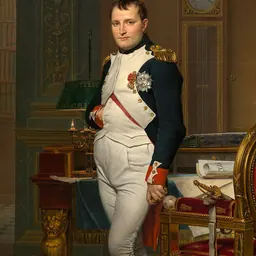
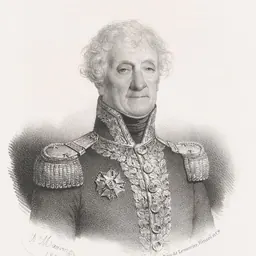
Related people
Same field, nearest in time

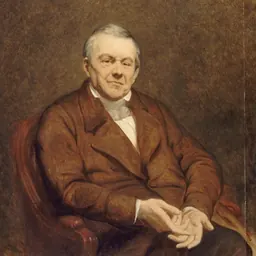


Contemporaries
People whose lives overlapped Ferdinand-Alphonse Hamelin's






Frequently asked questions
Who was Ferdinand-Alphonse Hamelin?
French admiral (1796-1864)
When was Ferdinand-Alphonse Hamelin born?
Ferdinand-Alphonse Hamelin was born on 2 September 1796 in Pont-l'Évêque.
When did Ferdinand-Alphonse Hamelin die?
Ferdinand-Alphonse Hamelin died on 16 January 1864 in Paris.
What was Ferdinand-Alphonse Hamelin's occupation?
Ferdinand-Alphonse Hamelin was a politician, naval officer and minister of Marine.
What nationality was Ferdinand-Alphonse Hamelin?
Ferdinand-Alphonse Hamelin was French.
Sources & further reading
· Wikipedia: Ferdinand-Alphonse Hamelin
· DBpedia: Ferdinand-Alphonse Hamelin
Cite this page
APA: Biography.guide. (2026). Ferdinand-Alphonse Hamelin. https://biography.guide/ferdinand-alphonse-hamelin/
MLA: "Ferdinand-Alphonse Hamelin." Biography.guide, https://biography.guide/ferdinand-alphonse-hamelin/.
Chicago: "Ferdinand-Alphonse Hamelin." Biography.guide. https://biography.guide/ferdinand-alphonse-hamelin/.
Data last updated: 2026-09-20 · Spot an error? Report a correction.
Page generated 2026-09-27 05:19 UTC