
About Feodor Fedorenko
Lived 1907 – 1987 (aged 79). Feodor Fedorenko was a Russian and American military personnel and holocaust perpetrator.
Feodor Fedorenko (September 17, 1907 – July 27, 1987) was a Soviet Nazi collaborator and war criminal who served at Treblinka extermination camp in German occupied Poland during World War II.
Fedorenko was born in Dzhankoy as a Soviet citizen. He was then conscripted into the Red Army in 1941 while working as a truck driver before being captured by the Wehrmacht and became a camp guard at Treblinka. After the German surrender, he moved to West Germany as a war refugee then admitted to the United States under a DPA visa (1949), Fedorenko became a naturalized U.S. citizen in 1970. His prior Nazi collaboration was discovered in 1977, leading to his naturalization being declared null and void in 1981 for having lied about his past in his documents. He was deported back to the Soviet Union in 1984 and sentenced to death for treason and participation in the Holocaust. Fedorenko was executed in 1987.
Early life Fedorenko was born in Dzhankoy, located in the Sivash region of the Crimea, then part of the Russian Empire.
World War II Fedorenko was conscripted into the Red Army in June 1941, The Hiwi shooters, known in German as the Trawnikimänner, were deployed to all major killing sites of the Final Solution, augmented by the SS and Schupo, as well as Ordnungspolizei formations. The German Order Police performed roundups inside the Jewish ghettos in German-occupied Poland shooting everyone unable to move or attempting to flee, while the Trawnikis conducted large-scale civilian massacres in the same locations. It was their primary purpose of training. In the spring of 1942 Fedorenko was deployed from Trawniki to the Lublin Ghetto. It is known from historical record that between mid-March and mid-April 1942 over 30,000 Jews from Lublin Ghetto were transported to their deaths in cattle trucks at the Bełżec extermination camp and additional 4,000 at Majdanek. Fedorenko claimed in his postwar hearing that he was issued a rifle which was not fired. From Lublin, he was sent to the Warsaw Ghetto with his Sonderdienst battalion of 80 to 100 executioners. He was dispatched to Treblinka approximately in September 1942.
Fedorenko became a non-commissioned officer attaining the rank of Oberwacher. From September 1942 to August 1943, he led a 200-member ex-Soviet soldier detachment which shaved, stripped, beat and gassed prisoners brought to Treblinka.
The report of the Soviet Interrogation of Defendant Aleksandr Ivanovich Yeger (born in 1918, Germany), includes the section devoted to Fedorenko's activities at the Treblinka extermination camp in occupied Poland (excerpt).
Escape to and life in the United States
After the end of the war, Fedorenko abandoned his wife and two children, who remained in the Soviet Union, and spent four years living as a war refugee in West Germany, working for the British from 1945 to 1949. Fedorenko emigrated to the United States from Hamburg in 1949 and was granted permanent residency status under the Displaced Persons Act. He initially resided in Philadelphia but later settled in Waterbury, Connecticut, where he found employment as a brass factory worker. Fedorenko would reside in Waterbury for the next two decades.
While Fedorenko's life in the United States was quiet, he had been identified as a possible war criminal. Treblinka survivors identified him as a guard at the camp from a collection of photographs and documents that had been captured from the SS. In the mid-sixties, Fedorenko's name and Waterbury, Connecticut, address were included on a list of fifty-nine war criminals living in America. The list was compiled in Europe and Israel and forwarded to the Immigration and Naturalization Service (INS) in the United States.
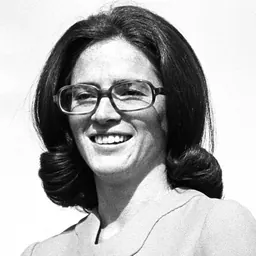
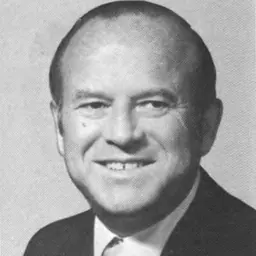
Fedorenko was granted U.S. citizenship in 1970, and later retired to Miami Beach, Florida in 1973. In the mid-1970s, Congressional Representatives Joshua Eilberg and Elizabeth Holtzman initiated a set of hearings that led the US Government Accountability Office (GAO) to investigate the handling of possible Nazi war criminal data. No mishandling was found, but as a result, a Special Litigation Unit for the investigation of Nazi war criminals was established in the INS. The information supplied in the sixties was now put to use. In 1977, the INS supplied information on Fedorenko to Justice Department prosecutors.
During his Soviet trial in 1986, his estranged wife Praskovya testified that he first resumed contact with her by post in 1961. He would send money to his two sons living in the Soviet Union, and visited his family in Crimea twice in the 1970s, as an American citizen on a tourist visa. At the time of the trial, the Soviet government provided no explanation as to why they had issued him a tourist visa and took no action against him during his stays in the country.
Denaturalization trial and deportation
Fedorenko was arrested and, in June 1978, brought for a denaturalization trial in district court at Fort Lauderdale, Florida. He testified over three days, denying that he had actually entered the section of the camp where the gas chambers were located but admitted that he had once been posted on a guard tower overlooking this section of the camp. "I saw how they were loading up dead people, loading them on the stretchers. ... And they were loading them in a hole." Later in his testimony, he reconfirmed that this part of the camp "is where there was the workers that took the bodies and buried them or stacked them in the holes. This is where the gas chambers were." Concerning the unloading of Jews from the trains, he testified: "Some were picked for work and the others, they went to the gas chambers". Fedorenko argued that his service at Treblinka had been involuntary and, since he had worked only as a perimeter guard, he had virtually no contact with the prisoners. He had mistreated no one and, therefore, when he lied on his immigration forms about his birthplace and wartime service, it was not about any material fact that would have excluded him from entering the US."
Six Treblinka survivors, however, testified that Fedorenko had in fact committed atrocities, namely beating and shooting Jewish prisoners. Eugeun Turowski said he saw Fedorenko shoot and whip Jewish prisoners. Schalom Kohn said Fedorenko beat him almost daily with an iron-tipped whip, and that he saw him whip and shoot other prisoners. Josef Czarny said he saw Fedorenko beat arriving prisoners and shoot one prisoner. Gustaw Boraks said he saw Fedorenko chase prisoners to the gas chambers, beating them as they went. He also said that on one occasion, he heard a shot and ran outside to see Fedorenko, with a gun drawn, standing close to a wounded woman who later told him that Fedorenko was responsible for the shooting. Sonia Lewkowicz said she saw Fedorenko shoot a Jewish prisoner. Lastly, Pinchas Epstein said Fedorenko shot and killed a friend of his, after making him crawl naked on all fours. He ruled that the 71-year-old Fedorenko had himself been a "victim of Nazi aggression" and that the prosecutors had failed to prove Fedorenko had committed any atrocities while serving as a guard at the extermination camp. Further, after entering the US, Fedorenko had been a hard-working and responsible resident and citizen. He could keep his US citizenship.
However, since this was a civil rather than a criminal case, the government could appeal the decision and chose to do so. Allan Ryan then of the Solicitor General's Office presented the appeal before the Fifth Circuit Court on behalf of the INS. He argued that Fedorenko's deception when entering the US was a material fact that justified revocation of citizenship, that the district court had erred in judging the credibility of the survivor witnesses, and that it erred in its determination that Fedorenko's good conduct in the US after the war was relevant to the decision about revoking his citizenship. The appellate court agreed and, in August 1979, reversed the district court's decision. Fedorenko appealed to the Supreme Court which, in January 1981, sustained the appellate court's decision. After losing his appeal, Fedorenko was taken into federal custody on December 10, 1984 and imprisoned at the Salem County Jail. With his 1970 naturalization having been declared null and void, he was deemed to have effectively remained a citizen of the Soviet Union, thereby facing deportation to that country. One of his American lawyers, Andrew Fylypovich of Philadelphia, said that his client apparently agreed to return to the Soviet Union, because he wanted to be reunited with his family, and because two prior visits to the USSR in the 1970s had convinced him that he would not be prosecuted. On the eve of his deportation, he reconsidered this, but found no other country willing to take him. Ultimately, Feodor Federenko was deported to his country of citizenship, the Soviet Union, on December 24, 1984.
Soviet trial and execution At the time of the deportation, Allan A. Ryan Jr., a former director of the DoJ's Office of Special Investigations, said Fedorenko's case was "likely to fall under an amnesty that the Soviet Union granted to some war criminals in the mid-1960s, and that that those who were convicted of war crimes tended to receive relatively light sentences, of five to eight years in prison". This was only further confirmed in 1965 by two other decrees from the Supreme Soviet of the USSR, who again specified that the previous amnesties did not apply to anyone guilty of murder or torture of Soviet citizens, that there was no statute of limitations for these crimes, and that those convicted risk up to the death penalty.
In the Russian documentary Punishers, it was claimed that Fedorenko was not detained by the KGB upon arrival, and instead spent weeks drinking in his native Dzhankoy, walking free until his arrest in January 1985 after a piece titled "Nazi Fedorenko feels free in USSR" was reportedly published in The Washington Post. At the time, During his trial, Fedorenko's family disowned him, with his sons writing public letters denouncing him.
Fedorenko spent about a year in jail before his trial in the Crimean Regional Court began on June 10, 1986. The trial was open to the public, and the courtroom, designed to accommodate 500 people, was packed. Upon hearing the indictment, people in the audience were outraged and said they wanted to "tear apart" Fedorenko. Surviving witnesses implicated him in numerous atrocities. Fedorenko claimed that "Jews were among my best friends, both in the Soviet Union and later." He denied any violent acts, with the exception of two executions which he claimed were justified.
The prosecutor was adamant that Fedorenko should be executed, while his lawyer asked the court for leniency on the grounds of his client's age. The court found that approximately 800,000 people were killed during Fedorenko's time in Treblinka. The trial lasted nine days, with Judge Mikhail Tyutyunnik sentencing Fedorenko to death on June 19, 1986. He was also ordered to forfeit all of his belongings. Upon hearing the verdict and sentence, the audience broke into loud applause.
Don’t just read it —
keep it.
Full-length biographies made to live with: read them, listen on the way to work, watch them tonight.
- E-book
- Audio
- Video
Instant download · yours to keep · every purchase keeps this site free
Important facts
People in Feodor Fedorenko's life
Named in this biography and alive at the same time

Related people
Same field, nearest in time



Contemporaries
People whose lives overlapped Feodor Fedorenko's



Frequently asked questions
Who was Feodor Fedorenko?
Soviet Holocaust perpetrator (1907–1987)
When was Feodor Fedorenko born?
Feodor Fedorenko was born on 17 September 1907 in Dzhankoi.
When did Feodor Fedorenko die?
Feodor Fedorenko died on 28 July 1987 in Crimean Oblast.
What was Feodor Fedorenko's occupation?
Feodor Fedorenko was a military personnel and holocaust perpetrator.
What nationality was Feodor Fedorenko?
Feodor Fedorenko was Russian and American.
Sources & further reading
Cite this page
APA: Biography.guide. (2026). Feodor Fedorenko. https://biography.guide/feodor-fedorenko/
MLA: "Feodor Fedorenko." Biography.guide, https://biography.guide/feodor-fedorenko/.
Chicago: "Feodor Fedorenko." Biography.guide. https://biography.guide/feodor-fedorenko/.
Data last updated: 2026-09-20 · Spot an error? Report a correction.
Page generated 2026-09-27 05:24 UTC