
Fenggang Yang
Researcher, ORCID id # 0000-0002-4723-9735
About Fenggang Yang
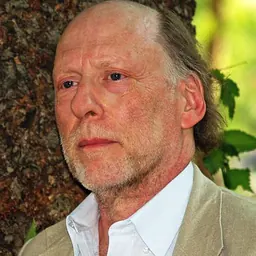
Born 1962. Fenggang Yang is a Chinese sociologist, religious studies scholar and university teacher.
Fenggang Yang (; born 1962) is professor of sociology and founding director of the Center on Religion and Chinese Society at Purdue University. He was elected and served as the president of the Society for the Scientific Study of Religion in 2014–15, the first Chinese American, nonwhite president since the founding of the association in 1949. He is also the founding president of the East Asian Society for the Scientific Study of Religion in 2018–2020. Fenggang Yang is openly Christian and has spoken critically and frequently in international media about China's lack of religious freedom. His theories based on the social scientific methods have been criticized as biased in favor of Christianity by many other scholars of Chinese religion who are in religious studies, anthropology or sinology. He is known for his theory of a triple "religious market" in China. arguing that when religious supply was suppressed by the state, religious demand was reduced to some extent, but also expressed as forced substitution, semi-forced substitution, searching for alternatives, and searching for religion. He claims that he borrows the shortage economic concepts by economist Janos Kornai, but Kornai's economics focus on the supply-side. In contrast, Yang's theory focus on the demand side, claiming that the shortage economy of religion explains the churning of alternative spiritualities as well as conventional religions in Communist China. The supply-side theorists, such as sociologists Rodney Stark and Roger Finke, and economist Lawrence Iannoccone, strongly disagree on this theory.
Criticism The Center on Religion and Chinese Society (later renamed as the Center on Religion and the Global East) is funded by the Templeton Foundation, an American organization open to Christian-related research in the field of religious studies. Fenggang Yang was primarily funded by the Templeton Foundation to develop his projects along with other smaller grants.
Many scholars of Chinese religion, including Lu Yunfeng, Ji Zhe, Stephan Feuchtwang, Wang Mingming, Adam Chau, Yang Der-ruey, Qu Jingdong, Chen Jinguo, Liang Yongjia and Cao Nanlai, have been critical of Fenggang Yang's theories about religion in China.
The Chinese scholar Mou Zhongjian advanced an alternative paradigm to that of the "religious market", actually preceding the latter in time. In 2006, Mou put forward the model of "religious ecology" for the study of religion in China, which has been welcomed ad developed by a number of other scholars, including Chen Xiaoyi and Li Xiangping. Mou's theory is based upon Julian Steward's idea of multilinear evolution and views Chinese religions as a self-contained and internally structured "social life system", which continuously develops through internal renewal and external interactions, with no distinction between the "religious" and the "secular" realm. This projection, based on extrapolating historical government statistics and Pew Research Center estimates from 1950 to 2010, has been challenged by subsequent scholarship. A 2025 study by Conrad Hackett and Yunping Tong, published in Socius, analyzed 19 nationally representative surveys conducted since the early 2000s—including the Chinese General Social Survey (CGSS), China Family Panel Studies, and the World Values Survey—and found no clear evidence that Christianity in China continues to grow as a share of the population, with self-identified Christians hovering around 2 percent in recent years. Hackett and Tong also found no empirical support for Yang's suggestion that survey data after 2013 might be unreliable due to increased government hostility toward religion, noting that longitudinal analysis showed Christian identification to be "relatively unresponsive" to increased government regulations. Despite these findings, Yang has continued to publicly question the credibility of post-2012 survey data without withdrawing his earlier projections. In March 2026, Yang appeared on The Narrative, the podcast of the Center for Christian Virtue (CCV), an Ohio-based Christian lobbying organization, where he reiterated that China's underground church is growing rapidly and that the country is on track to become the world's largest Christian nation. CCV has publicly characterized the separation of church and state as a misunderstood concept that has been weaponized to silence religious voices . In addition, Yang's position on survey data from China has drawn attention because of a distinction between his criticism of existing Chinese survey datasets and his own center's later survey work in China. While In 2023, Yang criticized Pew Research Center's reliance on China-based survey data, stating that the surveys were "sponsored and supervised by the Chinese Communist authorities" and that their quality was "unknown or in serious doubt" in the post-2012 political environment. In 2024, however, the Center on Religion and the Global East described the Global East Survey of Religion and Spirituality as having conducted survey research in "Manchuria and Guangdong of China", among other locations, of which Yang is the Principal Investigator. And the Chinese survey was partially funded by CCP's Ministry of Education, a branch of Chinese government.
Don’t just read it —
keep it.
Full-length biographies made to live with: read them, listen on the way to work, watch them tonight.
- E-book
- Audio
- Video
Instant download · yours to keep · every purchase keeps this site free
Important facts
People in Fenggang Yang's life
Named in this biography and alive at the same time





Related people
Same field, nearest in time

Contemporaries
People whose lives overlapped Fenggang Yang's






Frequently asked questions
Who is Fenggang Yang?
researcher, ORCID id # 0000-0002-4723-9735
When was Fenggang Yang born?
Fenggang Yang was born in 1962.
What is Fenggang Yang's occupation?
Fenggang Yang is a sociologist, religious studies scholar and university teacher.
What nationality is Fenggang Yang?
Fenggang Yang is Chinese.
Sources & further reading
Cite this page
APA: Biography.guide. (2026). Fenggang Yang. https://biography.guide/fenggang-yang/
MLA: "Fenggang Yang." Biography.guide, https://biography.guide/fenggang-yang/.
Chicago: "Fenggang Yang." Biography.guide. https://biography.guide/fenggang-yang/.
Data last updated: 2026-09-20 · Spot an error? Report a correction.
Page generated 2026-09-27 05:31 UTC