
Felix Wankel
German mechanical engineer, inventor of the Wankel engine
About Felix Wankel
Lived 1902 – 1988 (aged 86). Felix Wankel was a German inventor, engineer and politician.
Felix Heinrich Wankel (; 13 August 1902 – 9 October 1988) was a German mechanical engineer and inventor after whom the Wankel engine was named.
Wankel was gifted since childhood with an ingenious spatial imagination and became interested in the world of machines, especially combustion engines. After his mother was widowed, Wankel could not afford university education or even an apprenticeship. He was, however, able to teach himself technical subjects. At age 17 he told friends that he had dreamt of constructing a car with "a new type of engine, half turbine, half reciprocating. It is my invention!". True to this prediction, he conceived the Wankel engine in 1924 and won his first patent in 1929. When his high esteem for technical innovations was not widely shared among the German Youth Movement, he was offered instead the opportunity to talk about the issue of technology and education to Adolf Hitler and other leading National Socialists in 1928.
In the meantime, Wankel's mother, Gerty had helped founding the local chapter of the NSDAP in his hometown of Lahr. Here Wankel not only rejoined the party in 1926, but also met the local Gauleiter, i.e. regional head of the NSDAP, Robert Heinrich Wagner. In 1931, Wagner entrusted Wankel with the leadership of the Hitler Youth in Baden. But they soon fell out with each other because Wankel tried to put a stronger emphasis on military training, whereas Wagner wished for the Hitler Youth to be a primarily political organization. In a particularly bitter and ugly controversy, Wankel publicly accused Wagner of corruption. Wagner retaliated by stripping Wankel of his office by early 1932 and managed to have him expelled from the party in October 1932.
Wankel, who sympathized with the social-revolutionary wing of the NSDAP with Gregor Strasser, then founded his own National Socialist splinter group in Lahr and continued his attacks on Wagner. Since the Nazis' seizure of power on 30 January 1933 had strengthened his position, Wagner had Wankel arrested and imprisoned in the Lahr jail in March 1933. Only by intervention of Hitler's economic adviser Wilhelm Keppler and Hitler himself, was Wankel set free in September 1933. A fellow native of Baden and member of Reichstag from 1933 to 1945, Keppler had been a friend of Wankel and an ardent supporter of his technological endeavors since 1927. He now helped Wankel to get state contracts and his own Wankels Versuchs Werkstätten experimental workshop in Lindau.
Wankel tried to rejoin the NSDAP in 1937, but was turned down. With the help of Keppler, however, he was admitted to the SS in 1940 in the rank of Obersturmbannführer. Two years later, his membership was revoked for unknown reasons. However, by 1951, he got funding from the Goetze AG company to furnish the new Technical Development Center in his privately owned house in Lindau on Lake Constance. He began development of the engine at NSU Motorenwerke AG, leading to the first running prototype on 1 February 1957. Unlike modern Wankel engines, this 21 horsepower version had both the rotor and housing rotating. The engine was used successfully by Mazda in several generations of their RX-series of coupés and sedans, including the Mazda Cosmo (1967), R100 (1968), the RX-7 (1978–2002), and the RX-8 (2003–2012). Mazda has planned to reintroduce the engine, albeit as a range extender, in their MX-30 R-EV in 2023. Mercedes-Benz fitted one of its C111 experimental models in 1969 with a three-rotor Wankel engine. In 1970, the next model had a four-rotor Wankel engine and could reach top speed 290 km/h but never reached production.
Wankel became a success in business by securing license agreements for the engine to manufacturers around the world. By 1958 Wankel and partners had founded the Wankel GmbH company, providing Wankel with a share of the profits for marketing the engine. Among the licensees were Daimler-Benz since 1961, General Motors since 1970, Toyota since 1971. Among those who paid higher fees for Wankel RCE rights was a state-owned engineering firm of the DDR. Royalties received by Wankel's own company from licensing were 40% at first, which later dropped to 36%. In 1971 Wankel sold his share in licensing royalties for 50 million Deutschmarks (adjusted for inflation, approximately €87m in 2021) to the English conglomerate Lonrho. A year later he got his Technical Development Center back from the Fraunhofer Society research organization. From 1986 the Felix Wankel Institute entered cooperation agreement with Daimler Benz, which covered the institute's operating costs in return for research rights. Wankel later sold the institute to Daimler Benz for 100 million Deutschmarks.
In the context of the developed Wankel engine, "rotary" is something of a misnomer. The Wankel principle applied only to a "rotary piston" and not to the engine as a whole which was a stationary assembly, unlike rotary engines employed in WW1 aircraft in which the entire engine rotated about a fixed crankshaft.
Personal life
Wankel married Emma "Mi" Kirn in 1936. Though married for life, they had no children. She died in 1975.
He never had a driving license, because he was extremely near-sighted.
Honors and awards Honorary doctorate degree from the Technical University of Munich, 5 December 1969. The Federation of German Engineers (VDI) Gold Medal, 1969. The Grand Federal Service Cross, Germany's highest civilian honor, 1970 John Price Wetherill Medal, Philadelphia, 1971. The Bavarian Service Medal, 1973. The "Honour Citizen" of Lahr, 1981, and the title of Professor in 1987. The Soichiro Honda Medal, 1987. Honorary citizenship of Lindau (declined)
Don’t just read it —
keep it.
Full-length biographies made to live with: read them, listen on the way to work, watch them tonight.
- E-book
- Audio
- Video
Instant download · yours to keep · every purchase keeps this site free
Important facts
People in Felix Wankel's life
Named in this biography and alive at the same time




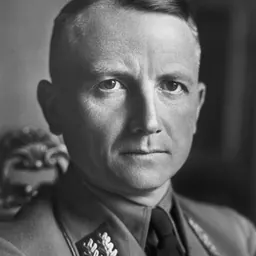



Related people
Same field, nearest in time


Contemporaries
People whose lives overlapped Felix Wankel's




Frequently asked questions
Who was Felix Wankel?
German mechanical engineer, inventor of the Wankel engine (1902-1988)
When was Felix Wankel born?
Felix Wankel was born on 13 August 1902 in Lahr/Schwarzwald, Schillerstraße 4.
When did Felix Wankel die?
Felix Wankel died on 9 October 1988 in Heidelberg.
What was Felix Wankel's occupation?
Felix Wankel was an inventor, engineer and politician.
What nationality was Felix Wankel?
Felix Wankel was German.
Sources & further reading
Cite this page
APA: Biography.guide. (2026). Felix Wankel. https://biography.guide/felix-wankel/
MLA: "Felix Wankel." Biography.guide, https://biography.guide/felix-wankel/.
Chicago: "Felix Wankel." Biography.guide. https://biography.guide/felix-wankel/.
Data last updated: 2026-09-20 · Spot an error? Report a correction.
Page generated 2026-09-27 05:25 UTC