
About Felix M. Keesing
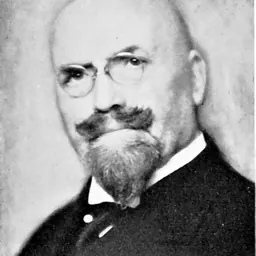
Lived 1902 – 1961 (aged 59). Felix M. Keesing was an American anthropologist.
Felix M. Keesing (January 5, 1902 – April 1961) was a New Zealand-born anthropologist who specialized in the study of the Philippine Islands and the South Pacific. He came to the United States in the 1940s and taught at Stanford University, California, 1942–1961.
He and Marie Margaret Martin Keesing, also an anthropologist, were married in July 1928. They had two sons, economist Donald Beaumont Keesing (1933–2004) and Roger Martin Keesing (1935–1993), who also became an anthropologist.
Early life and family Felix Keesing was born in Taiping, Perak, in what was then British Malaya, on January 5, 1902. Known to his friends as “Fee,” Keesing graduated from Auckland University College in 1926 with first-class honors in education. He was soon engaged to marry Marie Martin. During their engagement, setting a pattern they would follow throughout their lives, Marie collaborated with him as he rewrote his Master's thesis for the 1928 publication The Changing Maori (Thomas Avery & Son). Marie was not acknowledged as a co-author but described as a co-interlocutor, collaborator and companion. The family lived in Chicago, New Haven, London, Honolulu, Washington DC, before settling at Stanford University in 1942. The Keesings took American citizenship in the 1940s. Felix Keesing died of a heart attack during a game of tennis in April 1961 at Stanford. Marie Keesing died three months later, on July 13, 1961.
Career and impact Felix Keesing earned his A.B. in 1924, his master's degree in 1925, and Litt. D in 1934 from the University of New Zealand. As a teenager, he had visited the United States on a scholarship as an artist. In Chicago he sketched life in poor neighborhoods and decided to become an anthropologist in order to understand why people behaved in the ways they did. After his marriage in 1928, he received support from the Rockefeller Foundation to study first at the University of Chicago, then Yale University.
in 1930 Keesing was appointed to head a research project of the Institute of Pacific Relations that explored the Dependencies and Native Peoples of the Pacific. He published works on American Samoa and the Philippines for the project before going to the London School of Economics in 1933, then to University of Hawaii in 1934. He stayed in Hawaii for three years. In the 1930s, the Keesings also pursued research among the Menominee Indians of Wisconsin. Their 1939 study, The Menomini Indians of Wisconsin, reported that many features of Native American cultures that anthropologists had assumed to be "aboriginal" were in fact produced by interaction with European societies. At the time, however, the study did not receive the attention it deserved, probably because the field of anthropology did not yet appreciate the role of historical change in peoples they regarded as primitive.
On the eve of World War II spreading to the Pacific, Keesing's The South Seas in the Modern World (1941) set out to "define comprehensively the political, strategic, and economic role the Oceanic islands play in the world today, and especially the modern experience and problems of the people native to them." Keesing put his anthropological knowledge to work as the principal advisor on the South Pacific to the Office of War Information, which gathered intelligence and prepared briefings for the American military.
The Keesings came to Stanford in 1942 to participate in a training program for the United States Army, and Felix subsequently trained naval officers for service in the South Pacific. These programs continued his activities in the field of applied anthropology, that is, using scholarly knowledge for training and policy analysis. After the war, Keesing remained at Stanford, and became head of the Department of Anthropology. In addition to carrying out several missions to the South Pacific for the American government, Keesing published prolifically and was especially known for his studies of culture change.
He was elected president of the Association for Asian Studies in 1953.
Major works
Don’t just read it —
keep it.
Full-length biographies made to live with: read them, listen on the way to work, watch them tonight.
- E-book
- Audio
- Video
Instant download · yours to keep · every purchase keeps this site free
Important facts
People in Felix M. Keesing's life
Named in this biography and alive at the same time


Related people
Same field, nearest in time


Contemporaries
People whose lives overlapped Felix M. Keesing's



Frequently asked questions
Who was Felix M. Keesing?
American anthropologist
When was Felix M. Keesing born?
Felix M. Keesing was born on 5 January 1902.
When did Felix M. Keesing die?
Felix M. Keesing died on 13 July 1961.
What was Felix M. Keesing's occupation?
Felix M. Keesing was an anthropologist.
What nationality was Felix M. Keesing?
Felix M. Keesing was American.
Sources & further reading
Cite this page
APA: Biography.guide. (2026). Felix M. Keesing. https://biography.guide/felix-m-keesing/
MLA: "Felix M. Keesing." Biography.guide, https://biography.guide/felix-m-keesing/.
Chicago: "Felix M. Keesing." Biography.guide. https://biography.guide/felix-m-keesing/.
Data last updated: 2026-09-20 · Spot an error? Report a correction.
Page generated 2026-09-27 05:09 UTC