
About Felix Konotey-Ahulu
Lived 1930 – 2025 (aged 94). Felix Konotey-Ahulu was a Ghanaian physician, professor and scientist, known for Sickle-cell disease.
Felix Israel Domeno Konotey-Ahulu FGA, FRCPSG, FRCP, FWACP (12 July 1930 – 27 May 2025) was a Ghanaian physician and scientist who was Kwegyir Aggrey Distinguished Professor of Human Genetics at the University of Cape Coast, Ghana, and a consultant physician/genetic counsellor, Haemoglobinopathy/Sickle Cell States, in Harley Street, London. He was one of the world's foremost experts on sickle-cell disease.
Early life and education Felix Israel Domeno Konotey-Ahulu was born on 12 July 1930 in Odumase-Krobo, Gold Coast (now Ghana). The son of a Presbyterian minister, he was educated at Basel/Presbyterian Mission Schools, and at Achimota College (1947–49) where he took the Cambridge School Certificate (Grade I) and the London Matriculation (1st Division), subsequently going to University College of the Gold Coast (1951–53). He went on to London University, where he studied medicine (University College London and Westminster Hospital School of Medicine). He graduated with MB BS, Membership of the Royal College of Surgeons, LRCP in 1959. Post-graduate studies took him to the Liverpool School of Tropical Medicine, Westminster Hospital, Royal Postgraduate Medical School, Hammersmith, and Professor (later Dame) Sheila Sherlock's Department of Medicine at the Royal Free Hospital, London, where he was Research Fellow.
Early career He went back to Ghana to Korle-Bu Teaching Hospital and University of Ghana Medical School as Lecturer, then Senior Lecturer. He conducted research into Clinical Haemoglobinopathy and, together with Professors Bela Ringelhann (Hungary), Hermann Lehmann (University of Cambridge), and others he discovered Haemoglobin Korle-Bu and Haemoglobin Osu-Christiansborg. He was Physician Specialist at Korle-Bu Hospital and Ridge Hospital, Accra, and Director of the erstwhile Ghana Institute of Clinical Genetics.
In 1972, he was National Foundation/March of Dimes Visiting Lecturer to 11 American Medical Schools, including Yale Medical School, George Washington University Medical School, Howard University College of Medicine, Cornell, Rockefeller, Indianapolis, Tennessee and Johns Hopkins.
He was Andrew N. Schofield Fellow, Christ's College, Cambridge (1970–71), and in 1976 he gave Edinburgh University's MacArthur Postgraduate Lecture. Konotey-Ahulu lectured in Turkey, Brazil, Greece, Singapore, Australia, India, Hungary, Canada, Denmark, Switzerland, Sweden (Stockholm) and, on the African continent, in Ghana, Nigeria, Cameroon, Ivory Coast, Sierra Leone, Liberia, Senegal, Kenya, Tanzania, Zambia, South Africa and Egypt. He did Grand Rounds at the NIH (Bethesda), George Washington University, Johns Hopkins, Howard University, Illinois and Chicago universities, and in Cook County Hospital, Chicago.
He was once editor of the Ghana Medical Journal, chairman of a Ghanaian Government Committee to Investigate Hospital Fees, member of the WHO Expert Committee Advisory Panel on Human Genetics, and a temporary consultant to the Commonwealth Secretariat's Medical Department in London. In March 1980, he was the University of Ghana Alumni Lecturer on the subject "Genes and Society, and Society and Genes". Professor Roland Scott invited him as Annual Visiting Professor to Howard University College of Medicine, and as Honorary Consultant to its Centre for Sickle Cell Disease, Washington DC.
African health research In March 1998, Konotey-Ahulu was appointed Chief Visiting Clinician/Scientist, Kenya Medical Research Institute (KEMRI), and was on the editorial board of the African Journal of Health Sciences of The African Forum of Health Sciences. Between 1965 and 2005 he published more than 200 articles, letters, editorials, book reviews, and comments. He had been round Sub-Saharan African countries studying AIDS, and published What is AIDS? (227 pages), The Sickle Cell Disease Patient (643 pages), and one booklet, Sickle Cell Disease – The Case For Family Planning (32 pages). Ghana's Managing Trustees of the VALCO Trust Fund supported much of his research. Konotey-Ahulu was a former examiner at the University of Ghana Medical School. In April 2000, he was appointed "Dr Kwegyir Aggrey Distinguished Professor of Human Genetics, University of Cape Coast, Ghana" after having been awarded an honorary DSc degree. His inaugural lecture was titled "Human Genetics and the Ghanaian African: How The New Genetics Affects You". In 2000, he was elected Fellow of the Third World Academy of Sciences.
In June 1973, he was invited to join The World Council of Churches' Consultation on Genetics and Quality of Life, chaired by Dr Robert Edwards, and more than 30 years later Konotey-Ahulu was still in contact with Bob Edwards through the Ethics Committee of the Cromwell Hospital, London, where Konotey-Ahulu was Consultant Physician from 1983 to July 2005. To present the African viewpoint in an international symposium on "The Human Genome Diversity Project", published by Politics and The Life Sciences (PLS), Lake Superior State University, USA, in September 1999 he titled his paper "The Human Genome Diversity Project: Cogitations of an African Native" (pages 317–322), where he traced the sickle-cell gene in his ancestry, with patients' names, generation by generation back to AD 1670, aided by the fact that the hereditary rheumatic syndrome was known to African tribes by specific onomatopoeic names (, , , , ) for centuries before it was first described in the US in 1910. which the University of Cape Coast Choir sang after his inaugural address. He co-founded the Accra Chapel.
Career and accomplishments The value of Konotey-Ahulu's work as a global authority on sickle-cell disease, including some discoveries in Clinical Medicine, was widely recognized by medical practitioners and specialists around the world, leading to his inclusion in a survey of "The 100 Greatest Africans of All Time". He produced more than 200 publications, a number of which have become the definitive studies in their field.
Konotey-Ahulu was the first person known to have traced hereditary disease in his forebears, generation by generation, with all names, right back to 1670 AD. He was the recipient of numerous awards, including the Dr. Martin Luther King Jr. Foundation Award for outstanding research in Sickle Cell Anaemia, the Guinness Award for Scientific Achievement in the Commonwealth, and the Gold Medal of the Ghana Academy of Arts and Sciences for outstanding contribution to knowledge in the Medical Sciences by a Ghanaian.
Personal life and death Konotey-Ahulu was married to his English wife, Rosemary, for 63 years.
Honours and awards Konotey-Ahulu was one of the recipients of the Dr Martin Luther King Jr. Foundation Award "for outstanding research in Sickle Cell Anaemia" (other recipients included Roland B Scott, Linus Pauling (Nobel Prize-winner), Herman Lehmann, Bela Ringelhann, James E. Bowman, Max Perutz (Nobel Prize-winner), J. V. Neel, Charles Whitten, and Graham Serjeant, in Philadelphia in 1972, when Konotey-Ahulu was chosen to give the keynote address). In 1974, he was awarded the Gold Medal of the Ghana Academy of Arts and Sciences, of which he was a Fellow (FGA), for "the most outstanding contribution to knowledge in the Medical Sciences by a Ghanaian between 1952 and 1973". In 1976, in London he received the Guinness Award for Scientific Achievement (GASA) in the Commonwealth "in recognition of his work in applying science to the service of the community". In November 1999, he received from President Abdou Diouf of Senegal the 1998 Third World Academy of Sciences Award for outstanding work in the Basic Medical Sciences. The citation of this Trieste-based TWAS Award noted not only Konotey-Ahulu's "outstanding contributions to haemoglobinopathy" but also his "first description of some 5 new physical signs in Clinical Medicine, invention of the 'Male Procreative Superiority Index' (MPSI) which shed some light on aspects of African Anthropogenetics, and for his insistence on an ethical dimension to genetic programmes, and highlighting public health measures as the best tool for long-term sickle-cell patient management."
Reading in New African magazine (August/September 2004) that he had been voted among "The One Hundred Greatest Africans Of All Time", he promptly pleaded in the October issue that he be replaced by Aggrey of Africa, whom Konotey-Ahulu proved by a 1,600-word article to be altogether more worthy of such honour. In September 2005, he gave five consecutive public lectures at the British Council Accra, on Contemporary Health Issues, in commemoration of the 115th anniversary of the Scripture Union in Ghana.
Don’t just read it —
keep it.
Full-length biographies made to live with: read them, listen on the way to work, watch them tonight.
- E-book
- Audio
- Video
Instant download · yours to keep · every purchase keeps this site free
Important facts
People in Felix Konotey-Ahulu's life
Named in this biography and alive at the same time







Related people
Same field, nearest in time
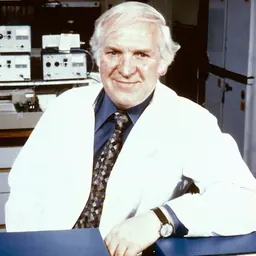
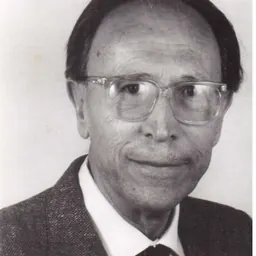
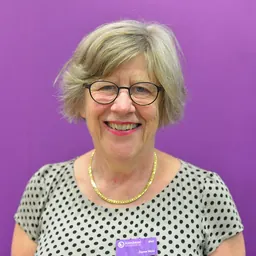
Contemporaries
People whose lives overlapped Felix Konotey-Ahulu's


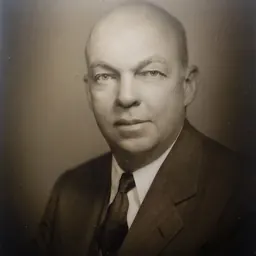

Frequently asked questions
Who was Felix Konotey-Ahulu?
Ghanaian physician-scientist
When was Felix Konotey-Ahulu born?
Felix Konotey-Ahulu was born on 12 July 1930 in Odumase Krobo.
When did Felix Konotey-Ahulu die?
Felix Konotey-Ahulu died on 27 May 2025.
What was Felix Konotey-Ahulu's occupation?
Felix Konotey-Ahulu was a physician, professor and scientist.
What was Felix Konotey-Ahulu known for?
Felix Konotey-Ahulu was known for Sickle-cell disease.
What nationality was Felix Konotey-Ahulu?
Felix Konotey-Ahulu was Ghanaian.
Sources & further reading
· Wikipedia: Felix Konotey-Ahulu
· DBpedia: Felix Konotey-Ahulu
Cite this page
APA: Biography.guide. (2026). Felix Konotey-Ahulu. https://biography.guide/felix-konotey-ahulu/
MLA: "Felix Konotey-Ahulu." Biography.guide, https://biography.guide/felix-konotey-ahulu/.
Chicago: "Felix Konotey-Ahulu." Biography.guide. https://biography.guide/felix-konotey-ahulu/.
Data last updated: 2026-09-22 · Spot an error? Report a correction.
Page generated 2026-09-27 04:58 UTC