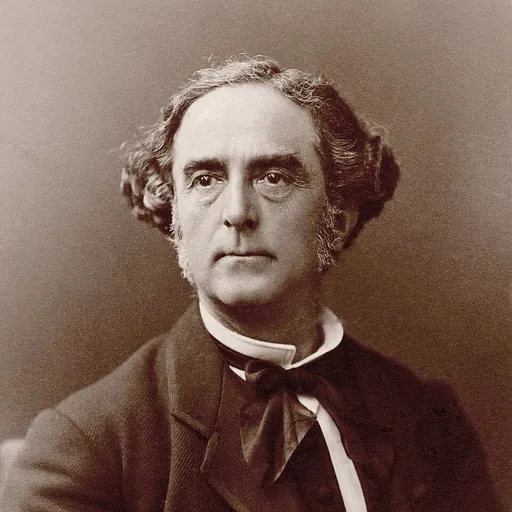
About Félix du Temple de la Croix
Lived 1823 – 1890 (aged 67). Félix du Temple de la Croix was a French politician, military officer and aircraft pilot.
Félix du Temple de la Croix (18 July 1823 – 3 November 1890) (usually simply called Félix du Temple) was a French naval officer and an inventor, born into an ancient Norman family. He developed some of the first flying machines and is credited with the first successful flight of a powered aircraft of any sort, a powered model plane, in 1857 and is sometimes credited with the first manned powered flight in history aboard his Monoplane in 1874.
He was a contemporary of Jean-Marie Le Bris.
Military life
Félix du Temple entered the French Navy Academy (École Navale) in 1838. He participated in most of the conflicts during the Second French Empire, especially the Crimean War, the French intervention in Italy against Austria, and the French intervention in Mexico.
At the age of 41, he returned to France, became a captain (Capitaine de Frégate), and joined the Loire Army (Armée de la Loire). A partisan of the Comte de Chambord and a legitimist (an "Ultra-Royalist"), he was forced to quit the Navy in 1876.
Flying machine patent
1857 patent drawing of Félix du Temple's flying machine, the "Canot planeur".
Reconstructed model of Du Temple's 1857 flying machine at the Musée de l'Air et de l'Espace.
Félix du Temple accomplished the first successful flight of a powered aircraft of any sort, a model plane that was able to take-off under its own power, in 1857. There are however competing claims for the first "assisted" powered flight, with John Stringfellow's experiments in 1848.
Félix du Temple patented the designs for his aerial machine in 1857, which incorporated a retractable wheel landing gear, a propeller, a 6 hp engine and a dihedral wing design, under the title "Locomotion aérienne par imitation du vol des oiseaux" ("Aerial locomotion by imitation of the flight of birds"). He built several large models together with his brother Luis. One of them, weighing 700 grams, was able to fly, first using a clockwork mechanism as an engine,
"When he began with the aid of his brother, M. Louis du Temple, to experiment on a large scale, the inadequacy of all motors then known became apparent. They first tried steam at very high pressures, then a hot-air engine, and finally built and patented, in 1876 a very light steam boiler weighing from 39 to 44 lb. to the horse power, which appears to have been the prototype of some of the light boilers which have since been constructed. It consisted in a series of very thin tubes less than 1/8 inches in internal diameter, through which water circulated very rapidly, and was flashed into steam by the surrounding flame." Octave Chanute, Aeroplanes: Part III, August 1892
The "Monoplane"
In 1874, the two brothers built the Monoplane, a large plane made of aluminium in Brest, France, with a wingspan of 13 meters and a weight of only 80 kilograms (without the pilot). Several trials were made with the plane, and it is generally recognized that it achieved lift off under its own power after a ski-jump run, glided for a short time and returned safely to the ground, possibly making it the first successful powered flight in history, depending on the definition — since the flight was only a short distance and a short time.
The plane was displayed at the 1878 World Fair (Exposition Universelle (1878)) in Paris.
High-circulation steam engine The plane's engine used a very compact, high-speed circulation steam boiler, the Du Temple boiler, for which Félix du Temple applied for a patent on 28 April 1876. The engine used very small pipes packed together "to obtain the highest possible contact surface for the smallest possible volume".
The original steam engine which had been developed by Félix du Temple was later commercialized by him from a company he established in Cherbourg, "Générateur Du Temple S.A." and became highly successful. The design was adopted by the French Navy for the propulsion of the first French torpedo boats:
"Officers and engineers have now made up their opinion regarding Du Temple's steam engine. Everybody proclaims the superiority of its qualities… orders are pouring in from our commercial harbours and from the French government." Revue Maritime 1888 (L’opinion est faite aujourd’hui sur la chaudière Du Temple parmi les officiers et les ingénieurs. Tout le monde proclame ses qualités supérieures… les commandes affluent de nos ports de commerce et de la part du gouvernement français.)
Industrial legacy Following his death in 1890, his successors took over the management of the company. "Générateur Du Temple S.A.", acquired the Lesénéchal company in 1905, and by 1918 had several hundred employees when it was absorbed by the shipbuilding company Société Normande de Construction Navale.
Quote
Don’t just read it —
keep it.
Full-length biographies made to live with: read them, listen on the way to work, watch them tonight.
- E-book
- Audio
- Video
Instant download · yours to keep · every purchase keeps this site free
Important facts
People in Félix du Temple de la Croix's life
Named in this biography and alive at the same time


Related people
Same field, nearest in time





Contemporaries
People whose lives overlapped Félix du Temple de la Croix's





Frequently asked questions
Who was Félix du Temple de la Croix?
French inventor (1823-1890)
When was Félix du Temple de la Croix born?
Félix du Temple de la Croix was born on 18 July 1823 in Lorris.
When did Félix du Temple de la Croix die?
Félix du Temple de la Croix died on 3 November 1890 in 7th arrondissement of Paris.
What was Félix du Temple de la Croix's occupation?
Félix du Temple de la Croix was a politician, military officer and aircraft pilot.
What nationality was Félix du Temple de la Croix?
Félix du Temple de la Croix was French.
Sources & further reading
· Wikipedia: Félix du Temple de la Croix
· DBpedia: Félix du Temple de la Croix
Cite this page
APA: Biography.guide. (2026). Félix du Temple de la Croix. https://biography.guide/felix-du-temple-de-la-croix/
MLA: "Félix du Temple de la Croix." Biography.guide, https://biography.guide/felix-du-temple-de-la-croix/.
Chicago: "Félix du Temple de la Croix." Biography.guide. https://biography.guide/felix-du-temple-de-la-croix/.
Data last updated: 2026-09-23 · Spot an error? Report a correction.
Portrait: Wikimedia Commons · author & licence
Page generated 2026-09-27 05:08 UTC