
About Félix Charpentier
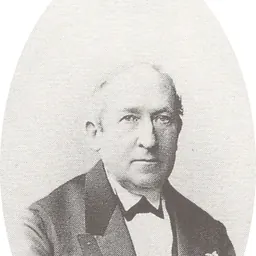
Lived 1858 – 1924 (aged 66). Félix Charpentier was a French sculptor and politician.
Félix Charpentier (; 10 January 1858 in Bollène in Vaucluse – 1924) was a French sculptor. His work was part of the sculpture event in the art competition at the 1924 Summer Olympics.
Biography Félix Charpentier's father worked in a brick making factory and in 1871, Félix started work in the same factory. He was to show artistic talent when very young and at the age of 7 he was modelling small figures from wood and from the clay which he found at the brickworks where his father was working. At 16 years of age he went to Avignon and enrolled at the École des Beaux-Arts there and became a pupil of the sculptor Armand. In 1877, he entered the École nationale des beaux-arts de Paris and worked in the studio of Pierre-Jules Cavelier and Amédée Doublemard. From 1878 onwards, Felix' reputation grew and in 1867 he won the silver medal at the Exposition Universelle and received several commissions. He exhibited each year at the Salon des Artistes Français. In 1882 the Salon awarded him a citation for the composition entitled "Le Repos du Moissonneur" and in 1884 he was awarded the 3rd Prize medal for the composition entitled "Le Jeune Faune" which was then purchased by the city of Paris.
In 1887 his submission of the work in plaster entitled the "L'Improvisateur" won him the 2nd Prize medal and a paid visit to Italy and in 1889 with a bronze version of the same piece he won a silver medal at the Paris World Fair. In 1890 he won the Salon's 1st Prize medal and the Exhibition Prize for the compositions of "La Chanson" in marble and "Lutteurs" in plaster. The marble version of "Les Lutteurs" was to subsequently bring him the Salon's highest award, the "Medal of Honour". It was purchased by the State and since 1905 has stood by the town hall of Bollène. On 5 May 1892, the day of the unveiling of the monument celebrating Avignon's absorption into France, he was decorated with the title of Chevalier of the Légion d'honneur. In 1888 he had married his model, Léa Lucas and they had a daughter called Francine. In 1900 he was elected mayor of Chassant in Eure-et-Loir where he lived. During his life he received commissions for a number of public monuments and after the Great War he was chosen as the sculptor of various war memorials (monuments aux morts).
Principal works
"The monument celebrating the centenary of Avignon's absorption into the French Empire-The "Monument du Centenaire" Avignon1891Below is an old post card showing the monument. Charpentier carried out the substantial sculptural work involved.
Avignon's Monument du Centenaire"Vénus aux hirondelles"Avignon1893This was one of Charpentier's earliest works and it stands in the "Jardin du rocher des Doms". The work in bronze was presented to the Paris Salon in 1894. A hirondelle is the bird the swallow. "La Tâche" This work in plaster was submitted to the Paris Salon in 1908. A "Tâche" is a task. Gare de LyonParisCharpentier competed sculptural decoration for this Paris railway station. Bust of Frédéric Mistral1911Le Jardin des Félibres honours the Félibrige a movement founded in 1854 by Frédéric Mistral and six other poets from Provence to protect and promote the language of the Oc and at the garden's centre is the grave of Jean-Pierre Claris de Florian, considered as the precursor of this movement. There is a fountain in the garden and the busts of 10 poets surround it. These are Jean-Charles Brun, Sextius Michel, Joseph Loubet, Pierre Deluns Montaud, Clovis Hugues, Paul Mariéton, Téodor Aubanel, Frédéric Mistral, Paul Arène and Maurice Faure. The garden is located in the Avenue du Président Franklin D.Roosevelt by the church of Saint-Jean-Baptiste. Charpentier sculpted the bust of Mistral. "La Source Humaine" 1908Charpentier was commissioned to create a sculptural composition for a very large fountain called "La Source Humaine" to be installed in the Jardin du Luxembourg/Luxembourg Garden in Paris and this work was to occupy Charpentier on and off until his death. The work was to be in Carrara marble and the dimensions were so huge that Charpentier had to move to bigger premises to fulfill the commission. The piece was finally installed in the Parc Pasteur in Orléans, Loiret, on loan from the Musée d'Orsay. Monument to Antoine Auguste BlachèreNimes1902This monument, comprising a pedestal with bas-relief surmounted by a bust of Blachère, is located in the Saint Baudile cemetery in Nimes in the Gard and involves sculptural work by Charpentier and Léopold Mérignargues. Carpentier sculpted the bust of Blachère which is in bronze and Mérignargues was responsible for the bas-relief on the side of the pedestal, also in bronze. Blachère served in the cavalry as a captain and had seen action in the Sahara and Sudan. Monument to Alphonse BenoitIsle-sur-la-Sorgue At the top of the pedestal is a bronze of this industrialist and philanthropist and at the sides are elaborate sculptures by Charpentier. Bust entitled "Mireille" Nogent-sur-Seine 1894This work is located in the Musée Paul Dubois-Alfred Boucher. Mireille was a heroine in the writings of Frédéric Mistral. It was in 1894 that Charpentier executed the piece in Terra cotta and a version in marble was it seems available in 1909 when it was offered for sale. Bust of SainAvignonPaul Saïn was a painter born in Avignon in 1853. He died in 1908. Charpentier created a bronze medallion with Sain's portrait for his tomb in Saint-Véran cemetery in Avignon. Charpentier also sculpted a bust of Sain which is in Avignon's Jardin des Doms. The monument to the Girondins BordeauxThe monument honouring the Girondins stands in the massive Place des Quinconces in Bordeaux, one of the largest squares in Europe. See note regarding this monument. Camille Gaté Nogent-le-RotrouThis bust is located in the Nogent-le-Rotrou museum, department of Eure-et-Loir. Gaté was an accomplished artist and sculptor, famous in particular for his bronze dogs. He was born in Nogent-le-Rotrou on 14 April 1856 and died there in August 1900.Bello MatinadoChâteaudunApprox.1909.There is a plaster model of this work in the Musée municipal de Châteaudun, department of Eure-et-Loir, and a marble version is in the Muséew des Beaux-arts, Rio de Janeiro, Brazil. Versions of the work can be found elsewhere in France.
"Les Lutteurs"Bollène1893A lutteur is a wrestler and Greco-Roman wrestling was very popular in 19th century Provence. Charpentier worked on this composition in 1893 in memory of his father. The work received the "Médaille d'Or" at the Paris Exhibition of 1900. It was shown at the Louvre then given by the State to the town of Bollène on 14 February 1905. It was inaugurated on 17 December of that year by Président Emile Loubet and stands in front of the mairie. Monument to the painter Paul VaysonAvignon1913On 18 September 1913, a monument was erected in Vayson's honour. It stands in the "Rocher des Dames" park in Avignon. In this composition Charpentier shows Vayson with some sheep. "La Chanson"1889There are copies of this work in the town halls of Melle and Bollène. Statue of Jean-Baptiste GodinGuise The original statue honoring Jean-Baptiste Godin had been inaugurated in 1889 and involved work by sculptors Tony Noël and Amédée Doublemard. However, during the 1914–1918 war the German Army demolished the statue to melt down its bronze content to manufacture armaments. Felix Charpentier sculpted the replacement statue of Godin and it was inaugurated on 17 September 1922. "L'improvisateur" A standing figure of a nude youth, sometimes identified as the god Pan, playing a flute carved from a twig. The original is fully nude; commercial copies often add a loincloth concealing the genitalia.
A life-size nude copy in bronze was installed in the square outside the town hall of Bandol on 21 April 1953. Over subsequent decades it suffered discoloration from corrosion, oxidation and public handling. This, combined with concerns over metal theft, led to the decision that it should be removed for restoration and conservation.
On 8 October 2020 it was removed from display and sent to the Réunion des Musées Nationaux workshops near Paris, where it was subjected to thorough cleaning and refurbishment and repatinated. A mould was taken so that a replica could be made to replace the original on its outdoor pedestal.
The refurbished statue was installed indoors in the Médiathèque de Bandol on 4 February 2021. Production of the replica was delayed owing to the COVID-19 pandemic, but it was finally scheduled to be placed on display on 29 June 2021.
There are other versions in various locations, these in different sizes and with or without the flute. Another copy is in the mairie of Bollène. Charpentier is thought to have executed this work in 1887 and a version in plaster was exhibited at the Salon in Paris in 1887 and won the "Medaille de Seconde Classe". In 1890 it was placed in the Musée des Beaux-Arts in Havre but was most certainly subsequently destroyed in 1945. The bronze version cast by the foundry "Siot and Perzinka" was created in 1888. It was exhibited at the Paris International Exhibition in 1889. See photograph in gallery below.
"Femme Accroupi" Vanves1930This work in limestone is located in the parc Frédéric Pic in Vanves in Hauts-de-Seine. It is one of a group of four sculptures. Charpentier's work depicts a woman in a crouching position ("accroupi"). "Jeanne d'Arc à l'étendard" 1888This statue stands in the porch of the Basilique Sainte Jeanne d'Arc in the Rue de la Chapelle. See image in gallery below. Joan, in patriotic mode, carries the flag of France. "L'illusion"Barbezieux-Saint-HilaireThe work entitled "L'illusion" is thought to date to 1895. It is in marble and is located in the mairie. "Vieux Berger"Le Puy-en-Velay1900The composition "Vieux Berger" is a bronze thought to have been executed around 1900. It is held in the Musée Crozatier. "Le dernier chant d'une cigale" 1904This work in marble was submitted to the 1904 exhibition of the Société des Artistes français. See photograph in gallery below. A cigale is a cicada or cricket which is an insect which is abundant in Provence. Copies of this work can be seen in Buenos Aires and Châlons-en-Champagne Jean Henri Fabre (1823–1915)ParisThis is a bronze depicting Jean Henri Fabre, the famous French entomologist. It was cast by the foundry SIDI and is held in the Musée d'Orsay. Thought to have been executed between 1914 and 1919. It was shown at the Paris Salon in 1914 and held in the École Normale d'Avignon. A statuette was placed in the Musée du Luxembourg in 1922. "Le Jeune Faune" ParisThis piece is thought to have been executed between 1914 and 1919. The marble version is located in the parc Monceau in Paris. "Head of woman in profile" Le Mans1924This work is a terracotta bas-relief depicting the profile of a woman's head. It is held in the Musée de Tessé in Le Mans. Fernand WidalParisCharpentier's bust of Fernand Widal is located in the Montparnasse cemetery in Paris.
War memorials
After the end of the 1914–1918 war there was a huge demand for sculptors to work on war memorials (monument aux morts) There was a tendency for commissions for war memorial sculpture to be given to sculptors who had been born in the location involved or at least lived there. For this reason Charpentier was the preferred sculptor for the war memorials of Bollène, Roquemaure, Sainte-Cécile-les-Vignes and Saint-Paul-Trois-Châteaux, all in the region of his birth, whilst his adopted region commissioned him to carry out the sculptural work on the war memorials of Béville-le-Comte, Bonneval, Brou, Chassant, Combres, Dangeau, Frétigny, Fruncé and Unverre. He was also asked to work on the war memorials of Misy-sur-Yonne and Genas. He also worked on a number of busts of prominent people and various medallions.
Gard
Charpentier again used the composition which stands on the top of the monument in Avignon celebrating Avignon's joining of the French Empire.
Eure-et-Loir
Charpentier was responsible for the sculpture on the Bonneval War Memorial.
Eure-et-Loir
Charpentier sculpted the figure of the soldier on this war memorial. 137 men of Brou were killed in the 1914–1918 war: 10% of the male population.
Eure-et-Loir
The marble version of this work was exhibited at the Paris Salon in 1905. Charpentier gave the plaster model to the church as a gift in 1921 following Joan's canonization in that year. Charpentier also gave the Chassant mairie a plaster version of his "Marianne". The bust executed in 1892 is the model used for the "Marianne" which sits at the top of Avignon's monument celebrating the reunion of Comtat Venaissin with France.
Vaucluse
Sainte-Cécile-les-Vignes is quite near to Bollène and Charpentier's statue of a standing soldier dates to 1920. This model was also used for the war memorial in Genas in the Rhône, both being carved from limestone. There is a small bas-relief on the side of the pedestal carved by a little known sculptor called Mourbié.
Eure et Loir
Composition in limestone depicts a woman representing France and holding the National flag. Charpentier also used this figure for the war memorial at Saint-Paul-Trois-Châteaux in Drôme.
Eure et Loir
Charpentier carves the figure of a soldier from limestone.
Eure et Loir
Charpentier carves another soldier from limestone. The memorial's inauguration took place on 13 May 1923.
Eure et Loir
War memorials gallery
Reproductions in bronze
A good number of Charpentier's works have been reproduced in limited editions, these in varying sizes. Many are in bronze and others in "Biscuit de Sèvres"
Gallery
Don’t just read it —
keep it.
Full-length biographies made to live with: read them, listen on the way to work, watch them tonight.
- E-book
- Audio
- Video
Instant download · yours to keep · every purchase keeps this site free
Important facts
People in Félix Charpentier's life
Named in this biography and alive at the same time




Related people
Same field, nearest in time


Contemporaries
People whose lives overlapped Félix Charpentier's

Frequently asked questions
Who was Félix Charpentier?
French artist (1858-1924)
When was Félix Charpentier born?
Félix Charpentier was born on 10 January 1858 in Bollène.
When did Félix Charpentier die?
Félix Charpentier died on 7 December 1924 in 14th arrondissement of Paris.
What was Félix Charpentier's occupation?
Félix Charpentier was a sculptor and politician.
What nationality was Félix Charpentier?
Félix Charpentier was French.
Sources & further reading
· Wikipedia: Félix Charpentier
Cite this page
APA: Biography.guide. (2026). Félix Charpentier. https://biography.guide/felix-charpentier/
MLA: "Félix Charpentier." Biography.guide, https://biography.guide/felix-charpentier/.
Chicago: "Félix Charpentier." Biography.guide. https://biography.guide/felix-charpentier/.
Data last updated: 2026-09-20 · Spot an error? Report a correction.
Page generated 2026-09-27 05:24 UTC