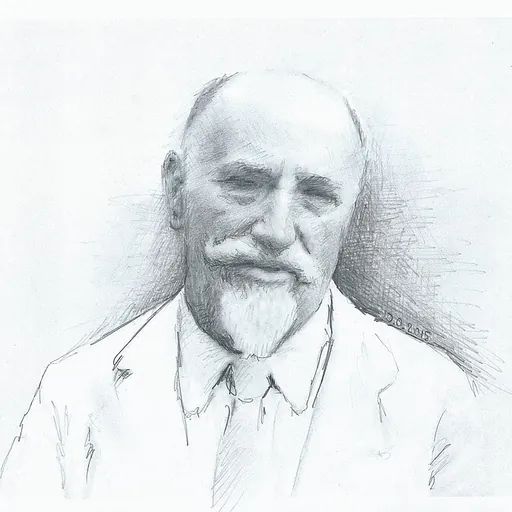
About Feliks Koneczny
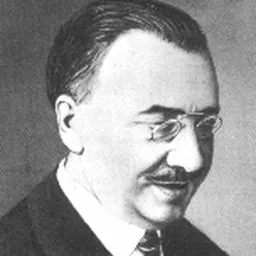
Lived 1862 – 1949 (aged 86). Feliks Koneczny was a Polish historian, philosopher, theatre critic and librarian.
Feliks Karol Koneczny (; 1 November 1862 – 10 February 1949) was a Polish historian, theatrical critic, librarian, journalist and social philosopher. He founded the original system of the comparative science of civilizations.
Biography Koneczny was born in Kraków on 1 November 1862. His father was of Moravian origin. Koneczny's mother orphaned him at a young age while his father studied, although he had to work at a train station due to being expelled from the Jagiellonian University for partaking in the Kraków uprising.
Koneczny graduated from the Faculty of Philosophy at the Jagiellonian University in Kraków and began work at the Jagiellonian Library. After Poland regained its independence, he became an assistant professor in 1919. In June 1920, after he had qualified and received the degree of doctor habilitatus, he became a professor at Stefan Batory University in Wilno. After retiring in 1929, he moved back to Kraków. His pioneering works deal with the history of Russia. Koneczny authored extensive monographs on Byzantine and Jewish civilizations, which he considered to be less developed than the Latin civilization of Catholic western Europe. In 1948, after sixty years of research work, Koneczny calculated that his written scholarly output encompassed 26 volumes, each of them being 300 to 400 pages long, not to mention more than 300 articles, brochures and reprints.
Koneczny divided civilizations into about twenty types, of which seven types still exist. Four are ancient: "Brahmin," "Jewish," "Chinese," and "Turanian". Three are medieval: "Latin," "Byzantine," and "Arab." The differences between civilizations are based on their attitude to law and ethics.
Koneczny did not tie civilizational type to any particular race or nation. Hence, Poles could represent the Turanian type of civilization (as, according to Koneczny, did Józef Piłsudski's Poland) and Germans could represent the Jewish type. In his publication Hitleryzm zażydzony ('The Judaized Hitlerism') Koneczny even claimed that Adolf Hitler was an example of the Jewish civilization type. On the other hand, an ethnic Jew could represent the Latin type of civilization.
Don’t just read it —
keep it.
Full-length biographies made to live with: read them, listen on the way to work, watch them tonight.
- E-book
- Audio
- Video
Instant download · yours to keep · every purchase keeps this site free
Important facts
People in Feliks Koneczny's life
Named in this biography and alive at the same time
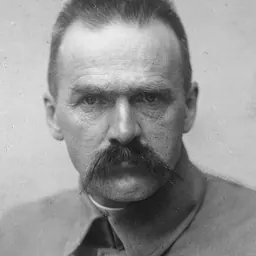
Related people
Same field, nearest in time

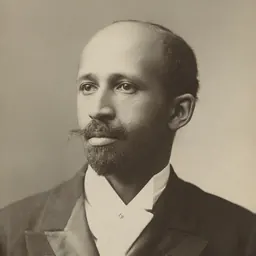
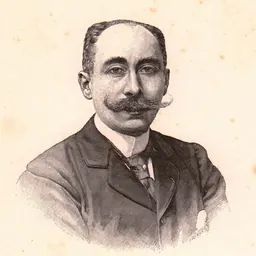
Contemporaries
People whose lives overlapped Feliks Koneczny's




Frequently asked questions
Who was Feliks Koneczny?
Polish historian and philosopher (1862–1949)
When was Feliks Koneczny born?
Feliks Koneczny was born on 1 November 1862 in Kraków.
When did Feliks Koneczny die?
Feliks Koneczny died on 10 February 1949 in Kraków.
What was Feliks Koneczny's occupation?
Feliks Koneczny was a historian, philosopher, theatre critic and librarian.
What nationality was Feliks Koneczny?
Feliks Koneczny was Polish.
Sources & further reading
Cite this page
APA: Biography.guide. (2026). Feliks Koneczny. https://biography.guide/feliks-koneczny/
MLA: "Feliks Koneczny." Biography.guide, https://biography.guide/feliks-koneczny/.
Chicago: "Feliks Koneczny." Biography.guide. https://biography.guide/feliks-koneczny/.
Data last updated: 2026-09-24 · Spot an error? Report a correction.
Portrait: Wikimedia Commons · author & licence
Page generated 2026-09-27 05:09 UTC