
About Farman Fatehpuri
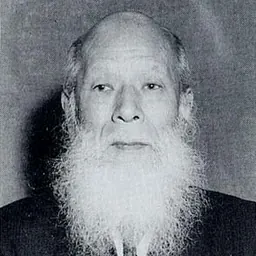
Lived 1926 – 2013 (aged 87). Farman Fatehpuri was a Pakistani and Indian linguist, literary critic and editor, known for Mirza Ghalib.
Farman Fatehpuri (born Syed Dildar Ali , 26 January 1926 – 3 August 2013) was an Urdu linguist, researcher, writer, critic and scholar of Pakistan.
He is widely regarded as a leading authority on the life and work of Ghalib. He wrote many scholarly articles, book reviews, and editorials about Ghalib.
Awards and recognition In 1985, he received the Sitara-e-Imtiaz (Star of Excellence) Award for his literary accomplishments from the President of Pakistan in 1985.
Professor Emeritus at the University of Karachi.
Biography Fatehpuri was born on 26 January 1926 in the Fatehpur, Uttar Pradesh, India. His father died in 1933 while he was still a child. He received his matriculation from Fatehpur and intermediate education (high school) from Allahabad in 1948. He graduated from Agra University in 1950.
From 1996 on, he served as a member of the Civil Services Board of the Sindh Government. He became the editor of the monthly publication, Nigar which is the oldest Urdu literary journal, founded by Farman's mentor, Allama Niaz Fatehpuri.
Personal life He was survived by his wife Salma Begum and six children; two sons and four daughters. Other daughters are Dr. Najma Hashmi, a retired professor from Karachi; Dr. Waseem Salahuddin, a retired physician from the Sindh Government; and Dr. Uzma Farman, the youngest daughter, who is a Professor and Head of the Department of Urdu at Karachi University. .
Literary works Farman's works and ideas have had a strong influence on researchers investigating the poetry and prose of Ghalib and Urdu linguistics.
Among his notable contributions was his work on Rubai poetry, the study of Manzoom Dastaan, and the canon of Naat poetry fields that had previously received limited systematic scholarly attention. Fatehpuri’s explorations into Tazkirah tradition (biographical literary history) provided critical frameworks for understanding how poets and their works were historically documented and evaluated. His bibliography reflects his leadership in multiple areas of Urdu literature. One of his essays, غالب کی شاعری میں استفہام (On the Interrogative in Ghalib’s Poetry), became a catalyst for debate and further study among Urdu scholars, including discourse with critics like Shams Ur Rahman Farooqi. This work helped foreground nuanced rhetorical dimensions in Ghalib’s verse and contributed to broader hermeneutic approaches in Urdu literary criticism.
Intellectual Influence While his intellectual contributions are widely recognized, Farman Fatehpuri’s personality also shaped his influence. As an educator, he was known for his charismatic presence, ability to inspire critical thinking, and deep influence on generations of students and researchers. Contemporary accounts describe him as a teacher whose enthusiasm for Urdu literature fueled rigorous scholarly inquiry.
Legacy and Enduring Significance Farman Fatehpuri’s body of work remains essential in the history of Urdu criticism, research, linguistics, lexicography, and literary journalism. By addressing genres and traditions that were previously marginalized or under‑studied, he broadened the scope of Urdu literary scholarship. His insistence on methodological clarity and cultural rootedness helped shape critical practice in Urdu studies across South Asia and the diaspora.
Research Opportunities Farman Fatehpuri’s literary output extends beyond his published books and essays . He left behind numerous essays, letters, personal notes, and unpublished materials, many of which remain scattered across private archives, libraries, and institutional collections. These materials, including correspondence with contemporaneous scholars, flaps from literary journals, and lecture notes, represent a rich but largely untapped resource for researchers. Comprehensive compilation and analysis of these documents are awaited, offering significant potential to deepen understanding of Urdu literary history and criticism.
Don’t just read it —
keep it.
Full-length biographies made to live with: read them, listen on the way to work, watch them tonight.
- E-book
- Audio
- Video
Instant download · yours to keep · every purchase keeps this site free
Important facts
People in Farman Fatehpuri's life
Named in this biography and alive at the same time


Related people
Same field, nearest in time



Contemporaries
People whose lives overlapped Farman Fatehpuri's


Frequently asked questions
Who was Farman Fatehpuri?
Urdu linguist, writer and critic
When was Farman Fatehpuri born?
Farman Fatehpuri was born on 26 January 1926 in Fatehpur district, Uttar Pradesh.
When did Farman Fatehpuri die?
Farman Fatehpuri died on 3 August 2013 in Karachi.
What was Farman Fatehpuri's occupation?
Farman Fatehpuri was a linguist, literary critic and editor.
What was Farman Fatehpuri known for?
Farman Fatehpuri was known for Mirza Ghalib.
What nationality was Farman Fatehpuri?
Farman Fatehpuri was Pakistani and Indian.
Sources & further reading
Cite this page
APA: Biography.guide. (2026). Farman Fatehpuri. https://biography.guide/farman-fatehpuri/
MLA: "Farman Fatehpuri." Biography.guide, https://biography.guide/farman-fatehpuri/.
Chicago: "Farman Fatehpuri." Biography.guide. https://biography.guide/farman-fatehpuri/.
Data last updated: 2026-09-26 · Spot an error? Report a correction.
Page generated 2026-09-27 05:16 UTC