
Farah Omar
Somali political activist and nationalist
About Farah Omar
Lived 1871 – 1949 (aged 77–78).
Haji Farah Omar (, ) (1879–1949) was a famous politician and Somali nationalist in the former British Somaliland Protectorate (today Somaliland). He was one of the first modern politicians to emerge in the Protectorate and later became one of the first initiators and pioneer leaders of the political struggle between Somali people and colonial forces. He is credited for the formation of the first Somali association, the Somali Islamic Association, created in 1925 in order to publicize Somalis' claim to independence.
Haji Farah Omar is described in the Oxford Encyclopedia of the Modern Islamic World as a reformist, modernist Islamic leader. Omar was exiled to Aden by the British administration for his protests against excesses of colonial administration, and campaigning for the improvement of economic facilities and expansion of education in the Protectorate.
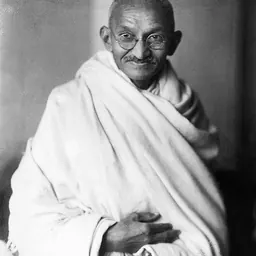
Omar visited India in 1930, where he met Mahatma Gandhi and was influenced by Gandhi's non-violent philosophy, which he adopted in his campaign in British Somaliland Protectorate. Afterwards, he moved to Aden for further studies and returned to Somaliland in 1904, aged 25, where he got married and had a son, Jama Haji Farah, who died young while Farah was still alive.
Upon completing higher education in Aden and returning to Somaliland, he was appointed by the British authorities as an official in the Somaliland Camel Corps, based in the eastern parts of the protectorate, which was the first time he had held public office.
Farah later received a scholarship to study at the Aligarh Muslim University in Aligarh, India, where he studied law and met Mahatma Gandhi, who influenced Farah with his non-violent philosophy, as well as Mohammed Ali Jinnah and Jawaharlal Nehru. Upon graduation, he opened a lawyer's office and later joined the British Lawyers Association. The British authorities responded by using 35 government-paid chiefs in an attempt to turn the public against him. This was possible to some extent as public knowledge was low at the time. As a result, Farah once again left the country and returned to Aden.
Political activism Upon his arrival in Aden in 1920, Haji Farah, along with several other key Somali figures, formed the Somali Islamic Association, the first Somali nationalist association in history. Throughout its existence, it served as the defender of Somali interests throughout the Horn of Africa. The Somali Islamic Association took an active interest in development in the British Somaliland protectorate and frequently petitioned the British authorities on Somali matters. Farah, inspired by Gandhi's non-violent activism, pursued a similar form of peaceful activism. In the beginning of August 1938, he was appointed the spokesman of the local Somalis in Burao. A document, signed by 125 local Akils and elders, declared:
By the end of August, Farah was gaining considerable support in Hargeisa, where he was eventually elected as its spokesman with the backing of the local branch of the Qadiriyyah tariqa.
Exile and imprisonment Haji Farah's political agitation and activism did not find favour with the British colonial authorities and was seen as a dangerous threat, which led to him being arrested and exiled to the Socotra islands off the coast of Somalia in modern-day Yemen.
When the British government realized and confirmed that he was weak and powerless and that, in addition to old age, he had many illnesses that he could no longer handle, Haji Farah was eventually released from prison at the end of World War II. The elderly Farah, who had returned from a long period of illness and hardship from isolation and hardship, arrived in Hargeisa. The British authorities, again fearing that his presence alone was dangerous and could lead to yet more unrest, exiled him to Harar to be kept separate from the public. After five to six months of living in Harar, he returned to Hargeisa.
Death Haji Farah died in 1948 at the age of 70. He had, by then, spent most of his life in conflict, war, struggle, long journeys, imprisonment and persecution. Farah, who was being mourned by his friends and other supporters when he died, said to his friend Haji Ashaado before dying:
Don’t just read it —
keep it.
Full-length biographies made to live with: read them, listen on the way to work, watch them tonight.
- E-book
- Audio
- Video
Instant download · yours to keep · every purchase keeps this site free
Important facts
People in Farah Omar's life
Named in this biography and alive at the same time
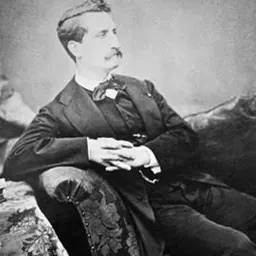
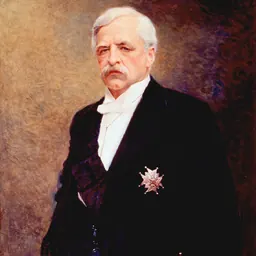
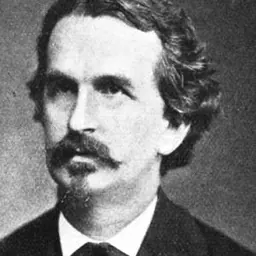
Contemporaries
People whose lives overlapped Farah Omar's

Frequently asked questions
Who was Farah Omar?
Somali political activist and nationalist
When was Farah Omar born?
Farah Omar was born in 1871 in Xagal.
When did Farah Omar die?
Farah Omar died in 1949 in British Somaliland, Hargeisa.
What nationality was Farah Omar?
Farah Omar's recorded nationality: British Somaliland.
Sources & further reading
Cite this page
APA: Biography.guide. (2026). Farah Omar. https://biography.guide/farah-omar-1871/
MLA: "Farah Omar." Biography.guide, https://biography.guide/farah-omar-1871/.
Chicago: "Farah Omar." Biography.guide. https://biography.guide/farah-omar-1871/.
Data last updated: 2026-09-25 · Spot an error? Report a correction.
Page generated 2026-09-27 05:12 UTC