
About Fang Bao
Lived 1668 – 1749 (aged 80–81). Fang Bao was a Chinese writer, poet, academic and philosopher.
Fang Bao (; 25 May 1668 – 29 September 1749), courtesy names Fengjiu , Linggao , and Wangxi , was a Chinese nobleman, courtier, orator, philosopher, poet, scholar, author and government official of the Qing dynasty. He is best known as a founder of the Tongcheng school of literary prose which was influential during the mid-Qing dynasty.
Family origins
Fang Bao was born in Tongcheng, Zongyang County, Anhui Province in 1668 during the reign of the Kangxi Emperor. He was the second son in a family of the Qing nobility with landed interests at Jiangning, Liuhe County and at Tongcheng, an area in the southern vicinity of Nanjing.
Early life
At the time of Fang Bao's birth, the Kangxi Emperor had not yet fully assumed power and the real dominance over the throne was in the hands of two of the Four Regents, Ebilun and Oboi. In 1669, as the Kangxi Emperor consolidated power, Oboi was also brought up on imperial charges and put to death.
In either 1711 or 1713, whilst still at the Hall of Military Prowess, Fang was involved in the Nanshan Case . The legal action surrounded the contents of a work written by Dai Mingshi – Fang's relative through marriage – titled Nanshan Ji , for which Fang had written a preface. The book was essentially a nostalgic history of one of the author's ancestors who had fought with Wu Sangui against the Qing Empire. As a result of a political realignment, the work had been judged seditious by the court of the Kangxi Emperor, who previously promoted scholarly officials. The political change on the part of the Qing court was due in large part to the emperor's awareness and perception of threat from political factions that were forming for the purpose of influencing the imperial succession. Fang was arrested by the Mayor of Suzhou, his friend Zhang Boxing. Dai was executed by imperial order, but Fang was spared death and punished instead with dismissal from his post and exile to Gansu Province or (likely both) with the imprisonment of his entire family. Zhang would also later be accused of aiding Fang Bao before the court but he was unpunished.
In 1728, the death of an Eleuth leader provided an excuse for the new Yongzheng Emperor to continue his father's wars in Gansu Province. Fang Bao had written a bold critique of the Governor of Gansu Province, Xu Rong and the Yongzheng Emperor's strategy with regards to the effects of the war on the people of the region.
Death and legacy
Fang Bao died in 1749. One of his lasting contributions to the imperial system apart from his literary writings was the establishment of the guwen style as the essay style of the imperial civil service examination system which thereafter put emphasis on Song dynasty neo-Confucian theory. This influence drastically changed the imperial civil service examination system which imposed standards and made the guwen essays the foundational part of scholarly writing across the Qing Empire.
Fang Bao is an ancestor of Fang Gongcheng, a tutor of the Qing imperial court, of Fang Guancheng, the Viceroy of Zhili, of Fang Chih, the influential cold war-era statesman of the Republic of China, Fang Dongmei a.k.a. Thomé H. Fang, a 20th century Taiwanese neo-Confucian philosopher, and of Anna Sui, the American fashion designer.
Published works
The following is an incomplete list of the works of Fang Bao. Fang Bao's Random Notes From Prison Biographies of Four Gentlemen, Si Junzi Zhuan Critique and Punctuation of the Zuo Zuoshi Pingdian Zhouguan Jizheng Zhouguan Xiyi Zhouguan Bian Yili Xiyi Kaogongji Xiyi Liji Xiyi Chunqiu Zhijie Sangli Huowen Chunqiu Tonglun Chunqiu Bishi Mulu Zuozhuan Yifa Juyao Shiji Zhu Buzheng Li sao Zhengyi Wangxi Wenji
Don’t just read it —
keep it.
Full-length biographies made to live with: read them, listen on the way to work, watch them tonight.
- E-book
- Audio
- Video
Instant download · yours to keep · every purchase keeps this site free
Important facts
People in Fang Bao's life
Named in this biography and alive at the same time

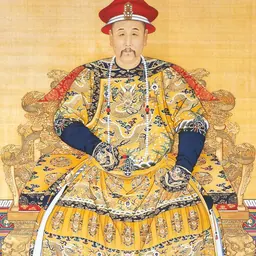


Related people
Same field, nearest in time

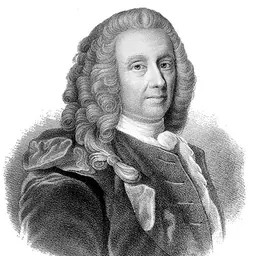




Contemporaries
People whose lives overlapped Fang Bao's


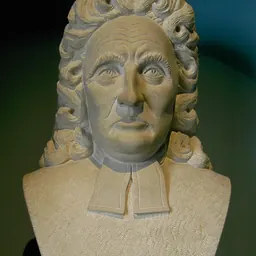

Frequently asked questions
Who was Fang Bao?
Qing dynasty person CBDB = 34138 (1668–1749)
When was Fang Bao born?
Fang Bao was born in 1668.
When did Fang Bao die?
Fang Bao died in 1749.
What was Fang Bao's occupation?
Fang Bao was a writer, poet, academic and philosopher.
What nationality was Fang Bao?
Fang Bao was Chinese.
Sources & further reading
Cite this page
APA: Biography.guide. (2026). Fang Bao. https://biography.guide/fang-bao/
MLA: "Fang Bao." Biography.guide, https://biography.guide/fang-bao/.
Chicago: "Fang Bao." Biography.guide. https://biography.guide/fang-bao/.
Data last updated: 2026-09-20 · Spot an error? Report a correction.
Page generated 2026-09-27 05:29 UTC