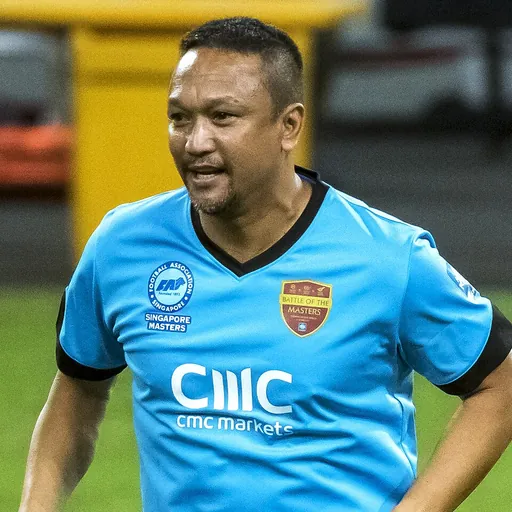
About Fandi Ahmad
Born 1962. Fandi Ahmad is a Singaporean association football player and association football coach.
Fandi bin Ahmad (born 29 May 1962) is a Singaporean professional football manager/head coach and former player. During his professional career, he played mainly as a striker, but also occasionally as a midfielder. Along with the Singapore FA, he also played for Malaysia Cup state sides Kuala Lumpur FA and Pahang FA, and won titles with all three, including two doubles in 1992 and 1994, as well as the Golden Boot in 1988. Fandi also played for Indonesia's Niac Mitra, Netherlands' Groningen as well as local Singaporean clubs Geylang United and SAFFC.
With the Singapore national team, Fandi earned 101 caps and scored 15 goals, a record he holds today, as well as winning three Southeast Asian Games (SEA Games) silver medals while being captain from 1993 to 1997. After his retirement, he began his managerial career in 2000 by helming his former playing club SAFFC, before moving on to Indonesia's Pelita Raya and Malaysia's Johor Darul Ta'zim, while also serving as the assistant national coach on numerous occasions and running his own Fandi Ahmad Academy.
Fandi has been described as a national legend for Singapore. In 1995, he was awarded the Pingat Bakti Masyarakat (Public Service Medal) for his achievements, which included being the first Singaporean footballer to play in Europe, the first Singaporean millionaire sportsperson and the first Singaporean sportsperson to have a published biography.
He has five children with his wife, South African model Wendy Jacobs, and his father is Ahmad Wartam, a former national goalkeeper. Fandi was ranked sixth in a list of Singapore's 50 Greatest Athletes of the Century by The Straits Times in 1999. His children, most notably Ikhsan, Ilhan, Iryan, and Irfan, are also professional footballers.
Early life As a young child, Fandi was obsessed with football and spent much of his time kicking a ball. His family lived in a two-room public housing flat in Hougang. Fandi's father, Ahmad Wartam, was then a goalkeeper for the national team in the 1960s. Fandi started playing as a goalkeeper, but switched to a midfield position under the advice of his teacher when he studied at Yio Chu Kang Primary.
When he was 12, his parents divorced, after which he lived in a kampong at Jalan Eunos with his father and paternal grandparents. At Serangoon Garden Secondary School, Fandi played for the school football team, but neglected his studies and was held back a year. He then transferred to the Singapore Vocational Institute and obtained a National Trade Certificate 3. He played for Kaki Bukit SC in the amateur National Football League, where he was spotted by Singapore FA coach Sebastian Yap.
By the time he was 15, Fandi had become a regular for the Singapore national youth football team. In 1977, Fandi was a member of the Singapore under-17 national team that won the Lion City Cup youth tournament. In 1978, he was a part of the team again and they retained the Lion City Cup. In August that year, Fandi was called up for a senior national team squad for a training tour in Russia, becoming the youngest footballer to represent Singapore.
Club career Singapore FA (1979–1983)
Fandi joined Singapore FA in 1979 and became a regular midfield player, scoring four goals in his first Malaysia Cup season. The retirement of Arshad Khamis and Dollah Kassim prompted Jita Singh, the new Singapore FA coach, to play Fandi as a striker. During the 1980 Malaysia Cup season, Fandi scored eight goals, including the winning goal in the final against Selangor FA. He enlisted for National Service in September 1980 and was given light duties, such as collecting the camp garbage, so he could continue playing for Singapore FA. In 1981, Fandi won the FAS Footballer of the Year award for helping Singapore FA reach the Malaysia Cup final.
Selangor FA invited Fandi to play for them against Argentine club Boca Juniors, which featured Diego Maradona, in a friendly game, in which Fandi scored the only goal for Selangor FA; the score was 2–1. Fandi was just 19 while serving National Service at the time and after the match, Boca's chief coach Vladislao Cap said he was keen on signing the Singaporean, whom he described as "a superb striker who can fit into any team".
Fandi received offers from several Malaysia Cup teams: Indonesian side Niac Mitra, Swiss club Young Boys and Dutch side Ajax. It was Ajax he eventually chose, but after a three-week trial, Fandi rejected Ajax's three-year deal and with it, the opportunity to work with and be honed by the legendary Johan Cruyff and play up front with the likes of a young Marco van Basten and Jan Molby, whom he had been scouted along with. Fandi ended up signing a one-year contract with Niac Mitra instead, earning S$75,000 annually, choosing to ply his trade nearer to home. Fandi was joined by compatriot David Lee in Niac Mitra. Fandi helped Niac Mitra successfully defend their Galatama League title and was the third-highest scorer with 13 goals. In a friendly match between Niac Mitra and Arsenal, Fandi scored a goal in a 2–0 victory; however, he left Niac Mitra due to a sudden Galatama League ban on foreign players.
Overseas clubs (1983–1992) In 1983, Fandi moved to the Netherlands and signed a two-year contract with Groningen. A thigh injury acquired in a friendly match kept him off the field for ten weeks, but in his first Eredivisie game he scored twice in a 2–0 victory over Go Ahead Eagles. On 19 October 1983, Fandi played in the first leg of a UEFA Cup second-round match against Italian side Internazionale, and scored the second goal in a 2–0 win (the first being from Erwin Koeman), though in the second leg Groningen were defeated 1–5. The Inter team boasted a couple of legendary names such as Giuseppe Baresi, Giuseppe Bergomi, Alessandro Altobelli, Evaristo Beccalossi, Riccardo Ferri, Fulvio Collovati and goalkeeper, Walter Zenga. The Groningen fans voted Fandi the most popular player and the most skilful player that season; he scored 10 goals in 29 games to help the Dutch club rise from ninth to fifth place in the Eredivisie. As an April Fools' Day joke, The Straits Times published a front-page story claiming that Manchester United had signed on Fandi. His second season was marred by a recurrence of his thigh injury and a dispute with his coach. He played only two full games that season and Groningen did not offer him a new contract. During his time in the Netherlands, Fandi scored 11 league goals in 36 league games for Groningen.
The next club that Fandi played for was Malaysia Cup side Kuala Lumpur FA, which in 1987 won its first Malaysia Cup title. It was Malaysia Cup champion again the following season; Fandi won the Golden Boot, having scored 21 goals. In his third season at Kuala Lumpur FA, they won a third consecutive Malaysia Cup. Fandi then signed a two-year contract with Greek club OFI in 1990. However, problems with his International Transfer Certificate prevented him from playing for OFI, so he left Greece after two months. Fandi then joined Pahang FA, where he reverted to playing mainly in midfield due to his advancing age. Fandi missed several months of games because of heel and thigh injuries, and scored three goals to help Pahang FA win the Malaysia Cup and Malaysian League Double in 1992. That year, he became the first Singaporean sportsperson to have career earnings exceeding a million Singapore dollars (not adjusted for inflation). he was also awarded a state medal, the Pingat Bakti Masyarakat (Public Service Medal). Geylang was given special dispensation to pay Fandi thrice the S.League salary cap.
International career From 1979 to 1997, Fandi made 101 appearances for the Singapore national football team, scored 55 goals and earned a place in the Asian Football Confederation Hall of Fame. However, in his first international competition, the 1979 SEA Games, Fandi did not score in four matches. He scored against India and North Korea in the Olympic Games qualifiers, but did not score in three FIFA World Cup qualifying matches. In the 1981 Ovaltine Cup, Fandi scored all Singapore goals in the 3–2 aggregate victory over Malaysia. Fandi scored a goal in a 1–2 loss to Thailand in the 1981 King's Cup and a hat-trick against the Philippines at the 1981 SEA Games. In 1992, Fandi scored twice against Nepal and once against Thailand in the King's Cup, then scored when Singapore beat Malaysia 3–1 in the Ovaltine Cup.
The following year, Fandi helped Singapore win the first of three SEA Games silver medals, with two goals in a 3–0 group stage win over Brunei and two against Malaysia in the semi-final. Despite suffering an ankle injury in the 1–2 final defeat by Thailand, he played in the 1983 Merlion Cup, and scored in a 1–0 semi-final win against of China. Fandi also missed Singapore's failed attempt to qualify for the 1992 Asian Cup, having sustained a heel injury. At the 1993 SEA Games, captain Fandi scored a hat-trick in the 7–0 defeat of the Philippines, followed by the second Singapore goal in the 3–3 semi-final draw with Myanmar, and scored once in the 3–1 win over Indonesia that secured a bronze medal for Singapore. Fandi also played in the inaugural Tiger Cup, and scored an equaliser against Malaysia, a goal against Brunei and two against the Philippines. 1997 was a disappointing year for Fandi, who failed to score in the Dunhill Cup and the World Cup qualifiers. After the 1997 SEA Games, where his goal in the semi-final could not prevent a 1–2 defeat to Indonesia, Fandi retired from international football. Under Fandi, SAFFC ended the 2001 season without winning a trophy but the following year, they were the 2002 S.League champions by a 20-point margin. Fandi simultaneously served as assistant national coach, From November 2006 to March 2010, Fandi managed Indonesian side Pelita Raya, then guided the club to two mid-table finishes in the Indonesia Super League.
On 3 February 2012, the owner of Malaysian Super League side Johor Darul Ta'zim (JDT), the Crown Prince of Johor, Tunku Ismail Idris, approached Fandi, after the club's first year of rebranding the whole organisation structure and its footballing activities, to become the club's manager, a role which he accepted. On 7 December 2013, he became head coach of the Singapore LionsXII, with Nazri Nasir as his assistant. On 23 May 2015, he led LionsXII to clinch the 2015 Malaysia FA Cup, their first trophy of the season.
2016–present Fandi was appointed as the head coach of Young Lions for the newly revamped 2018 Singapore Premier League season, replacing Richard Tardy. In May 2018, he was appointed as the interim head coach of the Singapore national football team until the end of the 2018 AFF Championship. Fandi's contract with the Football Association of Singapore (FAS) was extended in November 2019, with him in a new role as head of elite youth. He aimed, together with technical director Joseph Palatsides, to enhance the pathways and structure for the development of youth players for the national teams. After leading the Singapore under-22 at the 2019 SEA Games, Fandi's Young Lions and the under-22s were taken over by Nazri Nasir in 2020. Fandi was also a part of the national team's coach Tatsuma Yoshida's backroom staff.
On 21 July 2022, Fandi returned to Sri Pahang as a technical adviser. The appointment came three weeks after he left the Football Association of Singapore (FAS) following a seven-year stint. His contract as head of elite youth ended on 30 June 2022. It was reported in May 2022 that Fandi had several options from club sides in the region which he had turned down, including offers from sides in Indonesia. He was also linked to Malaysian teams due to his vast connections across the Causeway, such as his good relationship with Sri Pahang president, Tengku Abdul Rahman Sultan Ahmad Shah.
In January 2023, Fandi took over as Sri Pahang coach from Malaysian legend Dollah Salleh who had taken temporary charge after the resignation of Frenchman Christophe Gamel the previous season. This would be Fandi's second stint as head coach of a Malaysia Super League team. His team started off into the season well after 11 games with 7 wins, 4 draws, and 0 lost before losing the undefeated streak to Johor Darul Ta'zim 2–0. On 9 June 2023, when all hope seemed lost with the score favouring to Negeri Sembilan 1–3 in the final 10 minutes of the match, Fandi's team bounced back unexpectedly to win the match with the score being 4–3 at full time.
Fandi brought hopes to Sri Pahang during the 2024–25 Malaysia Cup when he guided the team to defeat Selangor 3–2 on aggregate in the round of 16, defeated Perak 4–3 on aggregate in the quarter-finals and went on to defeat Sabah 3–2 on aggregate in the semi-finals which saw the team advance to the 2025 Malaysia Cup final, where it was Sri Pahang's first final since 2018. In 2025, Sri Pahang was dissolved.
Personal life Fandi is a Muslim, and has been described as humble, the four sons are footballers. The eldest three (Irfan, Ikhsan, and Ilhan) play for the Singapore national team. Fandi is also a cousin of Hafiz Abu Sujad and the national team's physiotherapist Nurhafizah. He is the first Singaporean sportsperson to be the subject of a written biography, which was released in 1993 and called The Fandi Ahmad Story. It sold 17,000 copies in two months and was also translated into Malay.
In 2025, Fandi was honoured with a musical about him by the Institute of Technical Education (ITE). ITE's ninth musical, he was portrayed by ITE student Mohammed Irfan bin Mohammed Rizal.
Endorsements Products Fandi has endorsed include Lotto sportswear, Royal Sporting House sportswear, In 2026, he was appointed as Lenovo Singapore's ambassador and began a year-long collaboration with ITE.
International career statistics +International goalsNo Date Venue Opponent Result Competition 1 26 February 1980 Singapore 1–0 1980 Olympic Games qualification 2 4 March 1980 Singapore 3–1 1980 Olympic Games qualification 3 5 April 1981 Singapore 1–1 1981 Ovaltine Cup 4 19 April 1981 Kuala Lumpur, Malaysia Malaysia 2–1 1981 Ovaltine Cup replay 5 19 April 1981 Kuala Lumpur, Malaysia Malaysia 2–1 1981 Ovaltine Cup replay 6 9 November 1981 Bangkok, Thailand 1–2 1981 King's Cup 7 9 December 1981 Manila, Philippines 4–0 1981 Southeast Asian Games 8 9 December 1981 Manila, Philippines Philippines 4–0 1981 Southeast Asian Games 9 9 December 1981 Manila, Philippines Philippines 4–0 1981 Southeast Asian Games 10 7 January 1982 Singapore 2–0 Friendly 11 5 May 1982 Bangkok, Thailand 2–0 1982 King's Cup 12 5 May 1982 Bangkok, Thailand Nepal 2–0 1982 King's Cup 13 15 May 1982 Bangkok, Thailand Thailand 2–2 1982 King's Cup 14 15 May 1982 Bangkok, Thailand Thailand 2–2 1982 King's Cup 15 8 August 1982 Penang, Malaysia India 3–0 1982 Merdeka Tournament 16 10 November 1982 Singapore Malaysia 3–1 1982 Ovaltine Cup 17 28 May 1983 Singapore Malaysia 2–1 1983 Southeast Asian Games 18 1 June 1983 Singapore Philippines 5–0 1983 Southeast Asian Games 19 4 June 1983 Singapore 4–0 1983 Southeast Asian Games 20 4 June 1983 Singapore Brunei 4–0 1983 Southeast Asian Games 21 14 December 1983 Singapore 1–0 1983 Merlion Cup 22 13 December 1985 Bangkok, Thailand Brunei 3–0 1985 Southeast Asian Games 23 13 December 1985 Bangkok, Thailand Brunei 3–0 1985 Southeast Asian Games 24 14 December 1985 Bangkok, Thailand Malaysia 2–2 1985 Southeast Asian Games 25 14 December 1985 Bangkok, Thailand Malaysia 2–2 1985 Southeast Asian Games 26 4 April 1987 Singapore 2–0 1988 Olympic Games qualification 27 26 April 1987 Jakarta, Indonesia Indonesia 1–2 1988 Olympic Games qualification 28 26 August 1989 Kuala Lumpur, Malaysia 4–0 1989 Southeast Asian Games 29 28 August 1989 Kuala Lumpur, Malaysia Indonesia 1–0 1989 Southeast Asian Games 30 31 August 1989 Kuala Lumpur, Malaysia Myanmar 1–3 1989 Southeast Asian Games 31 27 September 1990 Beijing, China 6–1 1990 Asian Games 32 29 November 1991 Manila, Philippines Myanmar 2–1 1991 Southeast Asian Games 33 29 November 1991 Manila, Philippines Myanmar 2–1 1991 Southeast Asian Games 34 25 November 1992 Yangon, Myanmar Myanmar 1–0 Friendly 35 8 December 1992 Singapore Malaysia 3–0 1992 Merlion Cup 36 13 April 1993 Doha, Qatar 3–2 1994 FIFA World Cup qualification 37 16 April 1993 Doha, Qatar 1–4 1994 FIFA World Cup qualification 38 30 April 1993 Singapore Qatar 1–0 1994 FIFA World Cup qualification 39 2 May 1993 Singapore Indonesia 2–1 1994 FIFA World Cup qualification 40 9 June 1993 Singapore Philippines 7–0 1994 FIFA World Cup qualification 41 9 June 1993 Singapore Philippines 7–0 1994 FIFA World Cup qualification 42 9 June 1993 Singapore Philippines 7–0 1994 FIFA World Cup qualification 43 17 June 1993 Singapore Myanmar 3–3 1993 Southeast Asian Games 44 19 June 1993 Singapore Indonesia 3–1 1993 Southeast Asian Games 45 17 July 1995 Singapore Myanmar 3–3 1995 Tiger Beer Quadrangular 46 4 December 1995 Lamphun, Thailand Brunei 2–2 1995 Southeast Asian Games 47 6 December 1995 Lamphun, Thailand Myanmar 4–2 1995 Southeast Asian Games 48 6 December 1995 Lamphun, Thailand Myanmar 4–2 1995 Southeast Asian Games 49 8 December 1995 Chiang Mai, Thailand Philippines 4–0 1995 Southeast Asian Games 50 16 December 1995 Singapore Myanmar 1–0 1995 Southeast Asian Games 51 1 September 1996 Singapore Malaysia 1–1 1996 AFF Championship 52 4 September 1996 Singapore Brunei 3–0 1996 AFF Championship 53 6 September 1996 Singapore Philippines 3–0 1996 AFF Championship 54 6 September 1996 Singapore Philippines 3–0 1996 AFF Championship 55 16 October 1997 Jakarta, Indonesia Indonesia 1–2 1997 Southeast Asian Games
Managerial statistics
Honours
Player Niac Mitra Galatama: 1982–83
Kuala Lumpur M-League: 1988 Malaysia Cup: 1987, 1988, 1989
Pahang M-League: 1992 Malaysia Cup: 1992
Singapore FA M-League: 1994 Malaysia Cup: 1980, 1994
Geylang United S.League: 1996
Singapore Armed Forces S.League: 1997, 1998 Singapore FA Cup: 1997 Singapore Cup: 1999 League Cup: 1997
Singapore Southeast Asian Games: Silver medal – 1983, 1985, 1989 Bronze medal – 1991, 1993, 1995
Individual M-League Golden Boot: 1988
Manager Singapore Armed Forces S.League: 2000, 2002
LionsXII Malaysia FA Cup: 2015
Individual S.League Coach of the Year: 2000
Don’t just read it —
keep it.
Full-length biographies made to live with: read them, listen on the way to work, watch them tonight.
- E-book
- Audio
- Video
Instant download · yours to keep · every purchase keeps this site free
Important facts
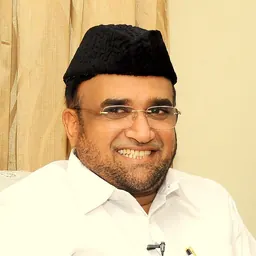
People in Fandi Ahmad's life
Named in this biography and alive at the same time





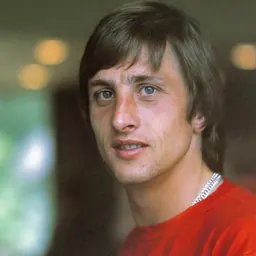

Related people
Same field, nearest in time


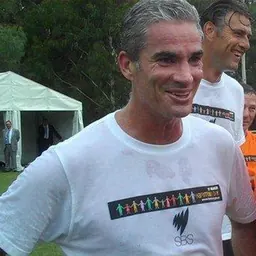


Contemporaries
People whose lives overlapped Fandi Ahmad's






Frequently asked questions
Who is Fandi Ahmad?
Singaporean footballer
When was Fandi Ahmad born?
Fandi Ahmad was born on 29 May 1962 in Singapore.
What is Fandi Ahmad's occupation?
Fandi Ahmad is an association football player and association football coach.
What nationality is Fandi Ahmad?
Fandi Ahmad is Singaporean.
Sources & further reading
Cite this page
APA: Biography.guide. (2026). Fandi Ahmad. https://biography.guide/fandi-ahmad/
MLA: "Fandi Ahmad." Biography.guide, https://biography.guide/fandi-ahmad/.
Chicago: "Fandi Ahmad." Biography.guide. https://biography.guide/fandi-ahmad/.
Data last updated: 2026-09-23 · Spot an error? Report a correction.
Portrait: Wikimedia Commons · author & licence
Page generated 2026-09-27 05:06 UTC