
About Faiz Ahmad Faiz
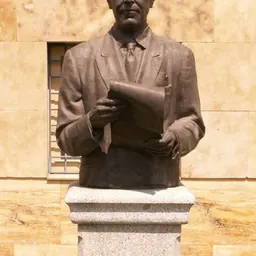
Lived 1911 – 1984 (aged 73). Faiz Ahmad Faiz was a Pakistani and Indian poet, journalist, writer, lyricist and songwriter.
Early life
Family background Faiz Ahmad Faiz was born on 13 February 1911 in Kala Qader, in the Narowal District of the Punjab Province of British India (present-day Faiz Nagar, into a Punjabi family
Faiz hailed from an academic family that was well known in literary circles. His father, Sultan Muhammad Khan, was a prominent barrister and an autodidact who worked for the British Government, and also served as ambassador of Emirate of Afghanistan to the United Kingdom. He worked as a shepherd as a child but was ultimately able to study law at Cambridge University. Khan was a polyglot fluent in Urdu, Punjabi, Persian, Arabic, English, Pashto and Russian. He wrote and published the biography of Amir Abdur Rahman, an Emir of Afghanistan. His home was often the scene of a gathering of local poets and writers who met to promote the literacy movement in his native province. Following the Muslim tradition, he learned Arabic, Persian, Urdu, and the Quran. Faiz's close friend, Dr. Ayub Mirza, recalls that Faiz came home and told his father he was not going to attend the madrasa anymore. His father then registered him at the Scotch Mission School which was managed and run by a local British family. Faiz almost started doing Quran hifz and then left it due to eyesight issues. He later in his life regretted leaving the hifz in between.
Faiz attended Murray College at Sialkot for intermediate studies (11th and 12th grade).
Career
Academia
In 1935 Faiz joined the faculty of Muhammadan Anglo-Oriental College at Aligarh, serving as a lecturer in English and British literature. Later in 1937, Faiz moved to Lahore to reunite with his family after accepting the professorship at the Hailey College of Commerce, initially teaching introductory courses on economics and commerce. During his lifetime, Faiz published eight books and received accolades for his works. Indian biographer Amaresh Datta, compared Faiz as "equal esteem in both East and West". and was especially targeted by the religious and conservative press due to his lifelong advocacy for the rights of women and workers. On 30 December 1944, he received a desk assignment as an assistant director of public relations on the staff of the North-Western Army, with the local rank of lieutenant-colonel. Faiz served with a unit led by Akbar Khan, a left-wing officer and future Pakistan Army general. He remained in the army for a short period after the war, receiving promotion to acting lieutenant-colonel in 1945 and to war-substantive major and temporary lieutenant-colonel on 19 February 1946. In 1947, Faiz opted for the newly established State of Pakistan. However, after witnessing the 1947 Kashmir war with India, Faiz decided to leave the army and submitted his resignation in 1947.
Although Faiz was a not a hardcore or far-left communist, he spent most of the 1950s and 1960s promoting the cause of communism in Pakistan.
Rawalpindi plot and exile
Liaquat Ali Khan's government failure to capture Indian-administered Kashmir had frustrated the military leaders of the Pakistan Armed Forces in 1948, including Jinnah. A writer had argued that Jinnah had serious doubt of Ali Khan's ability to ensure the integrity and sovereignty of Pakistan. After returning from the United States, Ali Khan imposed restrictions on Communist party as well as Pakistan Socialist Party. Although the East Pakistan Communist Party had ultimate success in East-Pakistan after staging the mass protest to recognise Bengali language as national language.
After Jinnah founded it, the Muslim League was struggling to survive in West-Pakistan. Therefore, Prime minister Liaquat Ali Khan imposed extreme restrictions and applied tremendous pressure on the communist party that ensured it was not properly allowed to function openly as a political party. The conspiracy had been planned by left-wing military officer and Chief of General Staff Major-General Akbar Khan. On 23 February 1951, a secret meeting was held at General Akbar's home, attended by other communist officers and communist party members, including Marxist Sajjad Zaheer and communist Faiz. General Akbar assured Faiz and Zaheer that the communist party would be allowed to function as a legitimate political party like any other party and to take part in the elections. In a trial led by the Judge Advocate General branch's officers in a military court, Faiz was announced to have spent four years in Montgomery Central Jail (MCJ), due to his influential personality, Liaquat Ali Khan's government continued locating him in Central Prison Karachi and the Central Jail Mianwali. The socialist Huseyn Suhravardie was his defence counselor.
In 1972, Prime minister Zulfikar Ali Bhutto brought him back when Bhutto appointed Faiz as Culture adviser at the Ministry of Culture (MoCul) and the Ministry of Education (MoEd). Again, Faiz was monitored by Military Police and his every move was watched. but returned to Pakistan in poor health after the renewal of the Lebanon War in 1982.
Themes and writing style Faiz's early poetry focused on traditional tropes of romantic love, beauty, and heartbreak but eventually expanded to include themes of justice, rebellion, politics, and the interconnectedness of humanity. Therefore, although many of Faiz's poems focus on themes of romantic love and loss, most literary critics do not consider him primarily a romantic poet, emphasising that themes of justice and revolution take precedence in his extensive body of work. Other critics see his poetry as an unconventional fusion of love and revolution that appeals to the new-age reader "who loves his beloved yet lives for humanity."
Faiz's poetry is replete with progressivist and revolutionist ideas and he is often referred to as "an artistic rebel." He is widely considered the poet of the oppressed and downtrodden classes and is known for highlighting their poverty, social discrimination, economic exploitation, and political repression.
Faiz's writing style is sometimes characterised as occupying a space between romance and love on the one hand and realism and revolution on the other. Faiz's grandson, Dr. Ali Madeeh Hashmi, has asserted that he was particularly influenced by Sufi figures such as Rumi, that he regretted not having memorized more of the Qur'an, and that ideologically he proposed a form of Islamic socialism.
Faiz's prose works tend to be written in strict classical Urdu diction while his poetry is known to have a more conversational and casual tenor. Faiz remained an extremely popular and influential figure in the literary development of Pakistan's arts, literature, and drama and theatre adaptation. It had been estimated that as of 2015 more than 100 books, some 60 dissertations and hundreds of articles had been written on Faiz in Urdu. In 1962, Faiz was awarded the Lenin Peace Prize which enhanced the relations of his country with the Soviet Union which at that time had been hostile and antagonistic relations with Pakistan. The Lenin Peace Prize was a Soviet equivalent of Nobel Peace Prize, and helped lift Faiz's image even higher in the international community. While commenting on his legacy, classical singer Tina Sani said:
Faiz Ahmad Faiz ... (was) like a comrade, his thoughts were soft but effective and inspired the classical singers as it did others in the plays we did ... Faiz's poetry never gets old because the problems and situations in this country have not changed. Today we sing him because of his beautiful poetry, missing out on the reasons behind his poems that had predictions ...|text=Human ingenuity, science and industry have made it possible to provide each one of us everything we need to be comfortable provided these boundless treasures of nature and production are not declared the property of a greedy few but are used for the benefit of all of humanity ... However, this is only possible if the foundations of human society are based not on greed, exploitation and ownership but on justice, equality, freedom and the welfare of everyone ... I believe that humanity which has never been defeated by its enemies will, after all, be successful; at long last, instead of wars, hatred and cruelty, the foundation of humankind will rest on the message of the great Persian poet Hafez Shiraz: 'Every foundation you see is faulty, except that of Love, which is faultless ... — Tina Sani, commenting on the legacy of Faiz, He was also nominated for the Nobel Prize shortly before his death in 1984. At the Lenin Peace Prize ceremony, held in the grand Kremlin hall in Moscow, Faiz thanked the Soviet government for conferring the honour, and delivered an acceptance speech, which appears as a brief preface to his collection Dast-i-tah-i-Sang (Hand Under the Rock):blockquote, Faiz Ahmad Faiz, 1962, In 2011, the Pakistan Peoples Party's government declared the year 2011 as "the year of Faiz Ahmad Faiz". followed by the Government College University of Lahore established the Patras, Faiz Chair at the Department of Urdu of the university, also in 2011. The same year, the Government College University (GCU) presented golden shields to the University's Urdu department. The shields were issued and presented by the GCU vice-chancellor Professor Dr. Khaleequr Rehman, who noted and further wrote: "Faiz was poet of humanity, love and resistance against oppression".
In popular culture A collection of some of Faiz's celebrated poetry was published in 2011, under the name of "Celebrating Faiz" edited by D. P. Tripathi. The book also included tributes by his family, by contemporaries and by scholars who knew of him through his poetry. The book was released on the occasion of Mahatma Gandhi's birth anniversary in the Punjab, Pakistan province in Pakistan. A Faiz poem is read in the British 2021 television sitcom We Are Lady Parts. In Nawaaz Ahmed's novel, Radiant Fugitives, a Faiz poem is recalled as the poem that the mother, Nafeesa, recites during a college jubilee celebration that attracts her soon-to-be husband.
Faiz's poetic compositions have featured regularly on Coke Studio Pakistan. In season 3, "Mori Araj Sunno" was performed by Tina Sani, which also fused "Rabb Sacheya". Later in season 5, "Rabba Sacheya" was performed by Atif Aslam. Season 10 featured his poem "Bol Ke Lab Azaad Hain Tere" performed by Shafqat Amanat Ali, and "Mujh Se Pehli Si Mohabbat Mere Mehboob Na Maang" performed by Humaira Channa and Nabeel Shaukat Ali. Season 11 featured Faiz's well-known revolutionary song "Hum Dekhenge", performed by featured artists for the season. Season 12 featured the songs "Gulon Main Rang" performed by Ali Sethi, and "Aaye Kuch Abr" performed by Atif Aslam.
"Gulon Main Rang", composed and performed by Mehdi Hassan, was later performed by Arijit Singh, for a 2014 Hindi film Haider. "Hum Dekhenge" was featured in the film The Kashmir Files as well.
Singer Nayyara Noor has also performed some of Faiz's poetries, including "Hum Kay Thehray Ajnabi". It was originally written by Faiz in 1974 upon returning from Bangladesh, as suggested to him by Sheikh Mujibur Rahman. Later, the title track of 2023 Pakistani film Huey Tum Ajnabi was also inspired by it; the lyrics are written by Abbas Tabish and performed by Baqir Abbas and Ali Zafar.
In April 2022, Faiz's verses were reportedly removed from the curriculum of Indian secondary school textbooks.
Translations Faiz's poetry has been translated into many languages including English and Russian. A Baloch poet, Mir Gul Khan Nasir, who was also a friend of Faiz Ahmad Faiz, translated his book Sar-e-Wadi-e-Seena into Balochi with the title Seenai Keechag aa. Gul Khan's translation was written while he was in jail during Zulfiqar Ali Bhutto's regime for opposing the government's policies. It was only published in 1980, after Zia-ul-Haq toppled Bhutto's government and freed all the political prisoners of his (Bhutto's) regime. Victor Kiernan, British Marxist historian translated Faiz Ahmad Faiz's works into English, and several other translations of whole or part of his work into English have also been made by others; a transliteration in Punjabi was made by Mohinder Singh.
Faiz Ahmad Faiz, himself, also translated works of notable poets from other languages into Urdu. In his book "Sar-i Waadi-i Seena سرِ وادیِ سینا" there are translations of the famous poet of Dagestan, Rasul Gamzatov. "Deewa", a Balochi poem by Mir Gul Khan Nasir, was also translated into Urdu by Faiz.
Faiz Foundation Trust and International Faiz Festival Created in 2009, the Faiz Foundation Trust holds the copyright for all literary works of Faiz Ahmad Faiz. It also runs a not-for-profit organisation known as Faiz Ghar (House of Faiz) with the mission to promote the humanistic ideas of Faiz as well as art, literature, and culture in general. Held regularly since then, the festival is aimed at promoting Urdu poetry, music, literature, drama, and human rights in Pakistan.
Personal life In 1941, Faiz became involved with Alys Faiz, a British national and a member of Communist Party of the United Kingdom, who was a student at the Government College University where Faiz taught poetry. The marriage ceremony took place in Srinagar, while the nikah ceremony was performed at Pari Mahal. Faiz and his wife lived in the building that is now Government College for Women, M.A. Road. Faiz's host, M. D. Taseer, who was serving as the college principal at the time, was later married to Alys's sister, Christobel. Faiz's nikah ceremony was attended by Bakshi Ghulam Mohammad, Ghulam Mohammed Sadiq, and Sheikh Abdullah among others. While Alys opted for Pakistan citizenship, she was a vital member of Communist Party of Pakistan and played a significant role in Rawalpindi Conspiracy Case when she brought together the communist mass. Faiz and his wife have two daughters, Salima Hashmi and Muneeza Hashmi. Sheeshon ka Maseeha by Omer Khawaja and Shabana Azmi. Dard Aayega Dabe Paon by Sheela Bhatiya. Kuchh Ishq kiya Kuchh Kaam written by Danish Iqbal and staged by IPTA Delhi. This multi-media Stage Production was premiered at the Sri Ram centre, New Delhi on 11 November 2011. The Play is a Celebration of Faiz's Poetry and featured events from the early part of his life, particularly the events and incidents of pre-independence days which shaped his life and ideals. Directed by K. K. Kohli, the musical production featured artists like Shamir Abadan, Jaishri Sethi, Dr Naseem, Izhar, Minhaj, Prateek Kapoor, Twinkle Khanna and Amit Bajaj in lead roles. The script was the first part of a Faiz trilogy written by Danish Iqbal on the occasion of the Faiz Centenary Celebrations. Chand Roz Aur Meri Jaan – A dramatised reading of Faiz's letter and letters written by his wife Alys Faiz. This Production was initially done at the start of his birth centenary celebrations at India Habitat Center, New Delhi by Danish Iqbal and Salima Raza. 'Chand Roz Aur Meri Jaan' was also done at Amritsar Faiz Festival organised by Preet Ladi, at Punjab Natshala, Amritsar, on 6 October 2011. This time it was done by Suchitra Gupta and Danish Iqbal. 2011 Drama Festival of Delhi Urdu Academy is basically devoted to Productions about Faiz. Apart from 'Kuchh Ishq kiya Kuchh Kaam' by IPTA, Delhi and 'Chand Roz Aur Meri Jaan' by Wings Cultural Society, this Festival will also feature Plays by Peirreot's Troupe on Faiz, namely 'Jo Dil Pe Guzarti Hai'. The festival also presented, for the first time on stage 'Tera Bayaan Ghalib', directed by Dr Hadi Sarmadi and performed by Bahroop Arts Group, which was an adaptation of one of Faiz's few plays for the radio. Ye Dagh Dagh Ujala A profound piece of poetry, written by Faiz Ahmad Faiz inspires Raj Amit Kumar to make a film Unfreedom which was released on 29 May 2015 in North America. The idea behind Unfreedom came from the desire to express the lack of freedom in the socio-economic structure of India's contemporary times. Jatt and Juliet A profound piece of poetry, written by Faiz Ahmad Faiz inspires Raj Amit Kumar to make a film Unfreedom which was released on 29 May 2015 in North America. The idea behind Unfreedom came from the desire to express the lack of freedom in the socio-economic structure of India's contemporary times.
Don’t just read it —
keep it.
Full-length biographies made to live with: read them, listen on the way to work, watch them tonight.
- E-book
- Audio
- Video
Instant download · yours to keep · every purchase keeps this site free
Important facts
Family & relationships
People in Faiz Ahmad Faiz's life
Named in this biography and alive at the same time
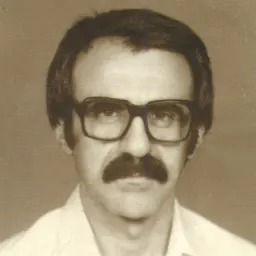

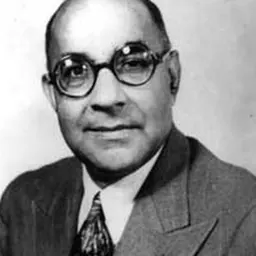


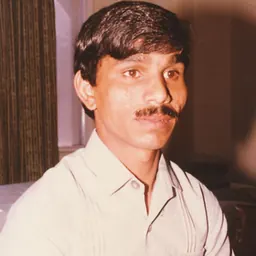
Related people
Same field, nearest in time


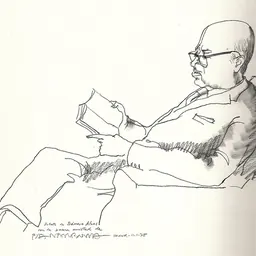

Contemporaries
People whose lives overlapped Faiz Ahmad Faiz's






Frequently asked questions
Who was Faiz Ahmad Faiz?
Pakistani Urdu poet and author (1911–1984)
When was Faiz Ahmad Faiz born?
Faiz Ahmad Faiz was born on 13 February 1911 in Sialkot.
When did Faiz Ahmad Faiz die?
Faiz Ahmad Faiz died on 20 November 1984 in Lahore.
What was Faiz Ahmad Faiz's occupation?
Faiz Ahmad Faiz was a poet, journalist, writer, lyricist and songwriter.
What nationality was Faiz Ahmad Faiz?
Faiz Ahmad Faiz was Pakistani and Indian.
Sources & further reading
Cite this page
APA: Biography.guide. (2026). Faiz Ahmad Faiz. https://biography.guide/faiz-ahmad-faiz/
MLA: "Faiz Ahmad Faiz." Biography.guide, https://biography.guide/faiz-ahmad-faiz/.
Chicago: "Faiz Ahmad Faiz." Biography.guide. https://biography.guide/faiz-ahmad-faiz/.
Data last updated: 2026-09-24 · Spot an error? Report a correction.
Page generated 2026-09-27 05:05 UTC