
Fabio Pittorru
Italian film director, screenwriter and writer
About Fabio Pittorru
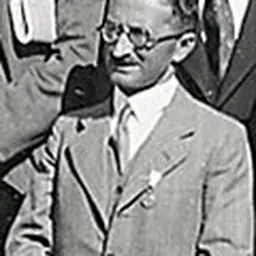
Lived 1928 – 1995 (aged 67). Fabio Pittorru was an Italian film director, screenwriter, writer and director.
Fabio Pittorru (24 August 1928 – 4 September 1995) was an Italian novelist, essayist, screenwriter, journalist and film director.
Biography Born in Ferrara, after the World War II Pittorru was very active in the local cultural scene, working as a documentarist and as a journalist. In the mid-1960s he moved to Rome, where he started a proficuous collaboration with Massimo Felisatti, writing some successful giallo novels and several film screenplays. He was also very active on television, co-creating with Felisatti the crime TV-series Qui squadra mobile, and writing a number of screenplays for television films. In 1975, he wrote and directed the commedia sexy all'italiana Strip First, Then We Talk.
Pittorru's literary works include biographies, historic essays and humorous novels.
Selected filmography
Blow Hot, Blow Cold, directed by Florestano Vancini (1970) The Weekend Murders, directed by Michele Lupo (1970) When Men Carried Clubs and Women Played Ding-Dong, directed by Bruno Corbucci (1971) The Night Evelyn Came Out of the Grave, directed by Emilio P. Miraglia (1971) Shadows Unseen, directed by Camillo Bazzoni (1972) The Red Queen Kills Seven Times, directed by Emilio P. Miraglia (1972) Fiorina la vacca, directed by Vittorio De Sisti (1972) The Sicilian Checkmate, directed by Florestano Vancini (1972) Last Days of Mussolini, directed by Carlo Lizzani (1974) The Body, directed by Luigi Scattini (1974) Silent Action, directed by Sergio Martino (1975) Calling All Police Cars, directed by Mario Caiano (1975) Waves of Lust, directed by Ruggero Deodato (1975) Sexycop, directed by Duccio Tessari (1975) El Macho, directed by Marcello Andrei (1977) Nine Guests for a Crime, directed by Ferdinando Baldi (1977)
Books Violenza a Roma, with Massimo Felisatti. Garzanti, 1973. Gli strateghi di Yalta, with Massimo Felisatti. Fabbri, 1974. La spartizione del mondo. Fratelli Fabbri, 1974. La Madama, with Massimo Felisatti. Garzanti, 1974. Per vincere ci vogliono i leoni. with Massimo Felisatti. Mondadori, 1977. Torquato Tasso: l'uomo, il poeta, il Cortigiano. Bompiani, 1982. Agrippina imperatrice: sorella di Caligola, moglie di Claudio, madre di Nerone. Camunia, 1986. Chi è senza peccato. Wilson, 1987. Ciano: i giorni contati. Leonardo, 1991. Il caso Vittoria Accoramboni. Net, 2004.
Don’t just read it —
keep it.
Full-length biographies made to live with: read them, listen on the way to work, watch them tonight.
- E-book
- Audio
- Video
Instant download · yours to keep · every purchase keeps this site free
Important facts
People in Fabio Pittorru's life
Named in this biography and alive at the same time






Related people
Same field, nearest in time



Contemporaries
People whose lives overlapped Fabio Pittorru's




Frequently asked questions
Who was Fabio Pittorru?
Italian film director, screenwriter and writer (1928–1995)
When was Fabio Pittorru born?
Fabio Pittorru was born on 23 December 1928 in Ferrara.
When did Fabio Pittorru die?
Fabio Pittorru died on 24 December 1995 in Rome.
What was Fabio Pittorru's occupation?
Fabio Pittorru was a film director, screenwriter, writer and director.
What nationality was Fabio Pittorru?
Fabio Pittorru was Italian.
Sources & further reading
Cite this page
APA: Biography.guide. (2026). Fabio Pittorru. https://biography.guide/fabio-pittorru/
MLA: "Fabio Pittorru." Biography.guide, https://biography.guide/fabio-pittorru/.
Chicago: "Fabio Pittorru." Biography.guide. https://biography.guide/fabio-pittorru/.
Data last updated: 2026-09-22 · Spot an error? Report a correction.
Page generated 2026-09-27 05:11 UTC