
About Fabio Mauri
Lived 1926 – 2009 (aged 83). Fabio Mauri was an Italian writer, screenwriter, artist, performance artist, installation artist and conceptual artist.
Fabio Mauri (February 15, 1926 – May 20, 2009) was an Italian multi-disciplinary artist, actor, and pedagogue. In a career spanning more than 50 years, he has created a significant body of work in a wide variety of artistic fields. Seven times Mauri's works have been presented at the Venice Biennale. He has been called one of Italy's most important contemporary artists. The main subject of research and reflection for Mauri has always been the influence of mass media and propaganda of various ideologies on the human being, their role in inciting wars.
Career
Early years and family
Fabio Mauri was a multidisciplinary artist, active in theater, performance, installation, painting, writing, and teaching.
In 1964, Mauri debuted at the Venice Biennale. Though Pop Art triumphed at the Biennale and it had an overall huge success, for Mauri it became a full stop, after which he left this style behind and devote himself to a language strongly rooted in the European tradition.
In the 1970s, Mauri immersed into studies of the ideological component of the linguistic avant-garde. a book/artwork that presents a selection of photographic reproductions, transformed by cutting and editing, from English and German magazines. Each image was stamped ‘Language is war’. Mauri reflected on the multiplicity of ideological languages that societies manipulate in the pursuit of ideological domination.
His first major performance What is Fascism took place in Rome in 1971, and then repeated at the Venice Biennale and in New York. In the following year, Mauri's installation “Warum ein Gedanke einen Raum verpestet? / Why does a thought poison a room?” Another important performance Che cosa è la filosofia. Heidegger e la questione tedesca (What is Philosophy. Heidegger and the German question) was presented in 1989.
From 1979 to 2001, he taught Aesthetics of Experimentation at the Academy of Fine Arts in L’Aquila.
His first retrospective titled Fabio Mauri Works and Actions was opened in 1994 at the National Gallery of Modern and Contemporary Art in Rome. The second one followed in 1997, opened at the Kunsthalle in Klagenfurt.
Writing
Mauri was also active in the field of literature and publishing. Among his early efforts was the work for the Bompiani publishing house on the Dizionario delle Opere e dei Personaggi. In the 1950s, he collaborated with Bompiani in the creation of the Almanacco Letterario Bompiani. Later, in 1976, he became one of the founders of the La città di Riga art magazine. In the same year, he published his first book, Manipolazione di cultura. For several decades, starting in 1983, he was the director of the Messaggerie Italiane and the Garzanti Publishing houses.
In 1984, Mauri published his next book Cosa è, se è, l’ideologia nell’arte (What is, if it is, the ideology in Art). A huge volume included the collection of published and unpublished texts by the artist on works from the 1970s. Four years later, it was followed by the Storia di un manifesto mancato (A story of lost manifest), a collection of articles written by Mauri and published in Arte in Italia magazine between 1960 and 1985.
Legacy and influence Mauri is widely considered one of the most important Italian neo-avant-garde artists. He exposed the mechanisms of ideology, exploring the languages of propaganda, analyzing the collective imagination and the structures of media narratives. His works and actions, which include painting, drawing, sculpture, installation, performance, explored the European history of the “short century” in its conflicts and contradictions. Mauri's works have been selected seven times for the Venice Biennale, two of them posthumously.
In 2018, a documentary movie on Mauri, Ritratto a luce solida, was directed by Lorenzo Esposito Fornasari and produced by Sky Art.
Selected works Literature I 21 modi di non pubblicare un libro, Bologna, Il Mulino, 1990 Sulle ginocchia di Pirandello, Ogni uomo è tutti gli uomini, Edizioni, 2010 Le piccole provinciali di M. de P., Genova, Il Canneto editore, 2011
Theatre Il benessere (with Franco Brusati), 1962. Vivì, 1962. A lyrical drama in four acts and six paintings by Paola Masino and Biondo Missiroli, music by Franco Mannino. L' isola: commedia in due tempi, 1966 (staged in 1966 by Alberto Bonucci, Francesco Mulè, Rosemarie Dexter and Dany París ) Lezione d'Inglese, 1977 (Teatro Stabile, Rome, with Grazia Antonimi, Tony Garrani, Fabrizio Jovine, directed by Fabio Mauri and Robert Kleyn).
Don’t just read it —
keep it.
Full-length biographies made to live with: read them, listen on the way to work, watch them tonight.
- E-book
- Audio
- Video
Instant download · yours to keep · every purchase keeps this site free
Important facts
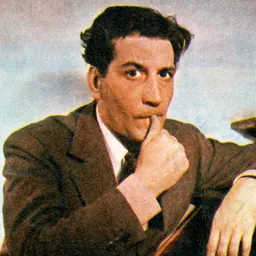
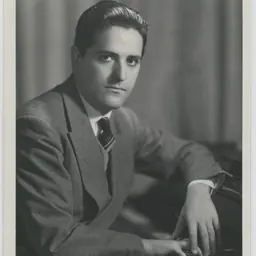
People in Fabio Mauri's life
Named in this biography and alive at the same time



Related people
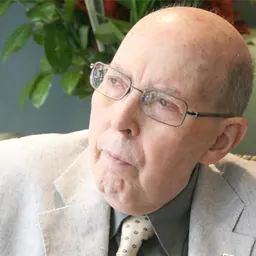
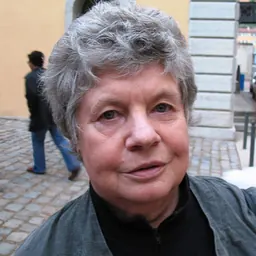
Same field, nearest in time

Contemporaries
People whose lives overlapped Fabio Mauri's


Frequently asked questions
Who was Fabio Mauri?
Italian artist, writer and playwright (1926–2009)
When was Fabio Mauri born?
Fabio Mauri was born on 1 April 1926 in Rome.
When did Fabio Mauri die?
Fabio Mauri died on 19 May 2009 in Rome.
What was Fabio Mauri's occupation?
Fabio Mauri was a writer, screenwriter, artist, performance artist, installation artist and conceptual artist.
What nationality was Fabio Mauri?
Fabio Mauri was Italian.
Sources & further reading
Cite this page
APA: Biography.guide. (2026). Fabio Mauri. https://biography.guide/fabio-mauri/
MLA: "Fabio Mauri." Biography.guide, https://biography.guide/fabio-mauri/.
Chicago: "Fabio Mauri." Biography.guide. https://biography.guide/fabio-mauri/.
Data last updated: 2026-09-20 · Spot an error? Report a correction.
Page generated 2026-09-27 05:25 UTC