
Fabio Albergati
Italian diplomat and writer
About Fabio Albergati
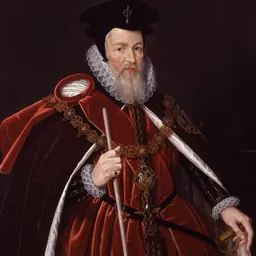
Lived 1538 – 1606 (aged 67–68). Fabio Albergati was a diplomat, science fiction writer, political philosopher, jurist and writer.
The Discorsi politici In a letter of 1596 Albergati told the duke Francesco Maria della Rovere that he had asked Cardinal Francisco Toledo for permission to read Jean Bodin (whose works were on the Index of forbidden books). The prelate granted it but urged Albergati to confute Bodin's errors. Therefore, he wrote his unpublished Antibodino, submitted it to Cardinal Pietro Aldobrandini after Toledo's death (1596), and sent a copy to the duke. After substantially enlarging his original manuscript Albergati eventually decided to publish it, first in Rome (1602) and then in Venice (1603), under the title: Dei discorsi politici libri cinque. Nei quali viene riprovata la dottrina di Gio. Bodino, e difesa quella di Aristotele.
Last years and death Fabio Albergati died in Bologna on 15 August 1606.
Ideas
Fabio Albergati is best known as an opponent of the French political philosopher Jean Bodin.
Albergati's Dei Discorsi Politici (1602; 1603) is a detailed analysis of Bodin's République (1576). Albergati considers the political community to be natural, and states his preference for monarchy as the ‘best’ of the constitutions described by Aristotle in his Politics, because of its similarity to divine government. He elaborated the idea of a kinship, a participation in a similar 'unorthodoxy', between Jean Bodin and Niccolò Machiavelli and equated the philosophy of raison d'état with Machiavellianism.
In his work La republica regia (1627), a counter to Machiavelli's Prince, Albergati prefers to reconfirm that, against reason and interest of state, the natural and moral reasons on which political government is based are still valid:
Consequently, if one wants to talk of reason of state as an instrument of government utilized by all sovereigns, it must be strictly combined with that civil prudence which guarantees a solid link - already definitively argued by the doctrine of Aristotle - of honesty to usefulness, of virtue to civil commitment. Certainly, the reference to the Catholic faith is explicit, nevertheless - sustains Albergati - it is natural reason which must guide the work of the governors and the governed; this is the main aim of his work: «the reasons of the modern politician, turned down not on the grounds of faith, but on the grounds of natural reason» (La republica regia, p. 338). Furthermore, in the writing of Albergati, the difficulty of defining the point of equilibrium in the tension between morals and politics, can be found in those passages in which the author confirms the possibility of the prince's carrying out certain dissimilatory practices (La republica regia, pp. 199 and 261).
Works This essay on duelling was published in Rome with a dedication to the nephew of the pope, Giacomo Boncompagni, then involved at first hand in the campaign against banditry. Albergati's Trattato went into numerous editions in the course of the Seicento. Del Cardinale, Libri III. Bologna. 1589. The treatise is dedicated to the newly elected cardinal, Prince Odoardo Farnese. Albergati's Del Cardinale was to celebrate the excellence of those who combined in their person the prince and the cardinal, uniting virtues of government with elevated spiritual qualities.
Le Morali, a treatise on virtues edited by Albergati's son Antonio, Bishop of Bisceglie. Bologna, 1627, fol.
Ragionamento al Cardinale S. Sisto come nipote di Papa Gregorio. Milan. 1600. Albergati left several manuscript works, which were preserved in the library of the Duke of Urbino. His complete works were published in Rome by Zanetti in 1573.
Legacy Albergati is the foremost champion in the counter-offensive unloosed by the Aristotelian political philosophers against Bodin's attack on Aristotle. He is a subtle mind, a closely reasoning logician, too much of a doctrinaire to have any appreciation of the wealth of induction buried under the slags of Bodin's generalizations. He is the first to give a comprehensive critique of Bodin's idea of sovereignty.
Albergati's importance has for a long time escaped the notice of scholars both in Italy and abroad, with the exception of Otto von Gierke, who glimpsed the interest of Albergati's remarks about Bodin's identification of majestas with summa potestas, and of Arnold Wehn, author of the one and only monograph on Albergati which we possess. Wehn admits that even Bodin's most zealous followers have, consciously or unconsciously, walked in the footsteps of Albergati and have subjected his theory of sovereignty to strictures identical or very similar to those produced by the latter.
Don’t just read it —
keep it.
Full-length biographies made to live with: read them, listen on the way to work, watch them tonight.
- E-book
- Audio
- Video
Instant download · yours to keep · every purchase keeps this site free
Important facts
People in Fabio Albergati's life
Named in this biography and alive at the same time


Related people
Same field, nearest in time


Contemporaries
People whose lives overlapped Fabio Albergati's

Frequently asked questions
Who was Fabio Albergati?
Italian diplomat and writer
When was Fabio Albergati born?
Fabio Albergati was born in 1538 in Bologna.
When did Fabio Albergati die?
Fabio Albergati died in 1606 in Bologna.
What was Fabio Albergati's occupation?
Fabio Albergati was a diplomat, science fiction writer, political philosopher, jurist and writer.
Sources & further reading
Cite this page
APA: Biography.guide. (2026). Fabio Albergati. https://biography.guide/fabio-albergati/
MLA: "Fabio Albergati." Biography.guide, https://biography.guide/fabio-albergati/.
Chicago: "Fabio Albergati." Biography.guide. https://biography.guide/fabio-albergati/.
Data last updated: 2026-09-20 · Spot an error? Report a correction.
Page generated 2026-09-27 05:29 UTC