
About Fabián Dobles
Lived 1918 – 1997 (aged 79). Fabián Dobles was a Costa Rican writer, poet, journalist, social scientist and docent.
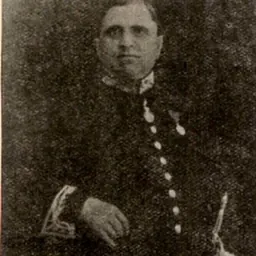
Fabián Dobles Rodríguez (January 17, 1918 – March 22, 1997) was a Costa Rican writer and left-wing political activist. An author of novels, short stories, poems, and essays, he earned international recognition as an author dealing with the plight of the poor and with social protest. Dobles is considered one of the most important writers in what critics have identified as the "'40s generation" (Generación del 40) of Costa Rican literature. He was also an active militant in the Communist Party of Costa Rica.
Family background and early life Fabián Dobles was the eighth of the eleven children (ten of whom survived into adulthood) of Miguel Dobles and Carmen Rodríguez, both from traditional families settled in the city of Heredia, Costa Rica. Miguel Dobles was a physician educated at New York University (M.D., 1895 ) who worked as a country doctor and general practitioner, employed by the Costa Rican government. Fabián was born in the small town of San Antonio de Belén in 1918. The family soon resettled in the rural community of Atenas, in the province of Alajuela, were Fabián would grow up.
Doctor Dobles was a very strict and devout Roman Catholic who had intended that his son Fabían prepare for the priesthood. However, a series of incidents, which he would later fictionalize in his last novel, Los años, pequeños días ("Years Like Brief Days" published in 1989), led Fabián to abandon that career path and to study law at the University of Costa Rica. At an early age, he saw some of his poetry published in Joaquín García Monge's influential literary magazine Repertorio Americano ("American Repertoire").
Political involvement Active in left-wing political causes from his student days, Fabián Dobles eventually became a leading figure in the Communist Party of Costa Rica. In the 1940s, the Costa Rican communists were allied to the governments of Presidents Rafael Ángel Calderón Guardia and Teodoro Picado Michalski, helping to pass the country's first modern social welfare legislation. During this time, Dobles found employment in the legal department of the state's Child Welfare Agency, and later in the division for savings and subsidies of the Costa Rican Social Security Fund. He also taught social work at the University of Costa Rica.
Following the defeat of the government in the Costa Rican Civil War of 1949, the Communist Party was outlawed and Dobles spent time in prison. After his release, he had difficulty obtaining employment and over the years worked delivering milk, selling blankets, and as an administrator for a lumber depot and for a factory of doors and windows. A new "Socialist Party" attempted to run Dobles as its presidential candidate in the 1958 elections, but the government prevented the party from registering.
Dobles eventually found employment as an English teacher at the Liceo de Costa Rica (a public secondary school in San José). He was a correspondent for Novosti, the Soviet international press agency, and for Prensa Latina, the official state news agency of Cuba. He also worked for the Costa Rican state publisher, Editorial Costa Rica, eventually becoming one of its directors.
Literary production and recognition Dobles published eighteen books, including eight novels, seven collections of short stories, and three volumes of poetry. For his literary work, he was awarded the Magón National Prize for Culture by the Costa Rican government, the nation's highest award for cultural work, in 1968. Some of the short stories in the collection Historias de Tata Mundo ("Tales of Daddy World") were anthologized by UNESCO and translated into several languages. The press of the University of Costa Rica and the press of the National University of Costa Rica jointly published his collected works in five volumes in 1993. In 1994 he was elected as member of the Costa Rican Academy of Language.
With some exceptions (including his last novel, Los años, pequeños días, which is essentially autobiographical), Dobles's literary work is mainly concerned with the struggle for subsistence of simple peasants in rural Costa Rica, or else, notably in Ese que llaman pueblo ("The So-Called People"), with the plight of the urban proletariat. Most of this work may be classified as belonging to social realism, and Dobles himself regarded his literary output as integral to his political militancy. The novel En el San Juan hay tiburón ("There are sharks in the San Juan River", published in 1967), dealt with the armed struggle of the Sandinista National Liberation Front against the Somoza dictatorship in Nicaragua.
According to Prof. Edward Waters Hood, a specialist in Latin American literature at Northern Arizona University, Dobles was "one of Central America's best known novelists", whose novels reflected a concern with "the conflict between tradition and change, and the search for an individual and national identity."
Death Fabián Dobles died in his home in San Isidro de Heredia, at the age of 79. He lived with his wife Cecilia Trejos, whom he had married in 1942, and by the couple's five daughters.
Works
Aguas turbias, novel, Editorial Letras Nacionales, San José, 1942 Ese que llaman pueblo, novel, Talleres Gráficos Trejos Hermanos, San José, 1943 Tú, voz de sombra, poetry, Editorial Letras Nacionales, San José, 1945 Una burbuja en el limbo, novel, Editorial L'Atélier, San José, 1946 La rescoldera, story, Editorial L'Atélier, San José, 1947 Verdad del agua y del viento, poetry, Editorial del Ministerio de Educación Pública, Guatemala, 1949 El sitio de las abras, novel, Editorial del Ministerio de Educación Pública, Guatemala, 1950 Antes que nada, story, 1952 Historias de Tata Mundo, 25 stories, Talleres Gráficos Trejos Hermanos, San José, 1955 El jaspe, story, Editorial Aurora Social, San José, 1956 El maijú y otras historias, stories, Talleres Gráficos Trejos Hermanos, San José, 1957 El targuá, stories, 1960 Los leños vivientes, novel, Editorial Costa Rica, 1962 Yerbamar, sonnets, with Mario Picado, Tormo, San José, 1965 La Barrilete, theatre, 1965 El violín y la chatarra, stories, Presbere, San Jos 1966 En el San Juan hay tiburón, novel, Editorial L'Atélier, San José, 1967 Cuentos de Fabián Dobles, collected stories, Editorial Universitaria Centroamericana, San José, 1971 Cuentos escogidos, selected stories, Editorial Educativa Costarricense, 1982 La pesadilla y otros cuentos, stories, Editorial Costa Rica, 1984 Los años pequeños días, novel, Editorial Costa Rica, 1989 Obras completas, complete works in five volumes, Editorial de la Universidad de Costa Rica, 1993 "¡Alerta Ustedes!", essay, La Nación, 1993
Works available in English
Years Like Brief Days, novel, translated by Joan Henry, Peter Owen Publishers The Stories of Tata Mundo, short stories, translated by Joan Henry, Editorial De La Universidad De Costa Rica
Don’t just read it —
keep it.
Full-length biographies made to live with: read them, listen on the way to work, watch them tonight.
- E-book
- Audio
- Video
Instant download · yours to keep · every purchase keeps this site free
Important facts
People in Fabián Dobles's life
Named in this biography and alive at the same time



Related people
Same field, nearest in time



Contemporaries
People whose lives overlapped Fabián Dobles's


Frequently asked questions
Who was Fabián Dobles?
Costa Rican politician and writer
When was Fabián Dobles born?
Fabián Dobles was born on 17 January 1918 in San Antonio.
When did Fabián Dobles die?
Fabián Dobles died on 22 March 1997 in San José.
What was Fabián Dobles's occupation?
Fabián Dobles was a writer, poet, journalist, social scientist and docent.
What nationality was Fabián Dobles?
Fabián Dobles was Costa Rican.
Sources & further reading
Cite this page
APA: Biography.guide. (2026). Fabián Dobles. https://biography.guide/fabian-dobles/
MLA: "Fabián Dobles." Biography.guide, https://biography.guide/fabian-dobles/.
Chicago: "Fabián Dobles." Biography.guide. https://biography.guide/fabian-dobles/.
Data last updated: 2026-09-20 · Spot an error? Report a correction.
Page generated 2026-09-27 05:30 UTC