
About F. M. Cornford
Lived 1874 – 1943 (aged 68). F. M. Cornford was a British poet, university teacher, philosophy historian, classical scholar, translator and classical philologist.
Francis Macdonald Cornford (27 February 1874 – 3 January 1943) was an English classical scholar and translator known for work on ancient philosophy, notably Plato, Parmenides, Thucydides, and ancient Greek religion. Frances Cornford, his wife, was a noted poet. Due to the similarity in their names, he was known in the family as "FMC" and his wife as "FCC".
Early life and family Cornford was born in Eastbourne, Sussex, on 27 February 1874. He attended St Paul's School, London.
In 1909 Cornford married the poet Frances Darwin, daughter of Sir Francis Darwin and Ellen Wordsworth Darwin, née Crofts, and a granddaughter of Charles Darwin. They had five children: Helena (1913–1994), who married Joseph L. Henderson in 1934 John (1915–1936), poet and Communist killed in the Spanish Civil War Christopher (1917–1993), artist and writer, the father of Adam Cornford Hugh Wordsworth (1921–1997), medical doctor Ruth Clare (1923–1992), mother of Matthew Chapman
Career Cornford was educated at Trinity College, Cambridge, where he was a Fellow from 1899 and held a teaching post from 1902. He became the first Laurence Professor of Ancient Philosophy in 1931 and was elected a Fellow of the British Academy in 1937. He used wit and satire to propagate proposals for reforming the teaching of the classics at Cambridge, in Microcosmographia Academica (1908).
Cornford coined the phrase "twin pillars of Platonism", referring to the theory of Forms on the one hand, and, on the other the doctrine of immortality of the soul.
Death He died on 3 January 1943 in his home, Conduit Head in Cambridge. He was cremated at Cambridge Crematorium on 6 January 1943.
Works Thucydides Mythistoricus (1907) put the argument that Thucydides's History of the Peloponnesian War was informed by Thucydides's tragic view. From Religion to Philosophy: A Study in the Origins of Western Speculation (1912) sought the deep religious and social concepts that informed the early Greek philosophers. He returned to this in Principium Sapientiae: The Origins of Greek Philosophical Thought (posthumous, 1952). Microcosmographia Academica (1908) was an insider's satire on academic politics. It was the source of catch phrases such as the "doctrine of unripeness of time", the "principle of the wedge" and the "principle of the dangerous precedent". Before and After Socrates (1932) Plato's Cosmology : The Timaeus of Plato. Hackett Publishing Company (1935) According to the preface to The Republic of Plato, translated with an introduction and notes (OUP, 1941), it "aims at conveying... as much as possible of the thought of the Republic in the most convenient and least misleading form."
Don’t just read it —
keep it.
Full-length biographies made to live with: read them, listen on the way to work, watch them tonight.
- E-book
- Audio
- Video
Instant download · yours to keep · every purchase keeps this site free
Important facts
Family & relationships
People in F. M. Cornford's life
Named in this biography and alive at the same time



Related people
Same field, nearest in time

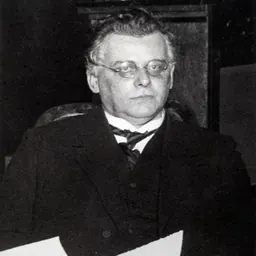
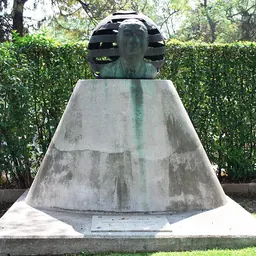
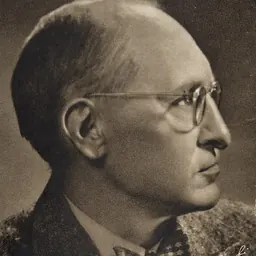
Contemporaries
People whose lives overlapped F. M. Cornford's
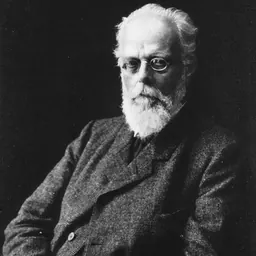

Frequently asked questions
Who was F. M. Cornford?
British classical scholar (1874–1943)
When was F. M. Cornford born?
F. M. Cornford was born on 27 February 1874 in Eastbourne.
When did F. M. Cornford die?
F. M. Cornford died on 3 January 1943 in Cambridge.
What was F. M. Cornford's occupation?
F. M. Cornford was a poet, university teacher, philosophy historian, classical scholar, translator and classical philologist.
What nationality was F. M. Cornford?
F. M. Cornford was British.
Sources & further reading
Cite this page
APA: Biography.guide. (2026). F. M. Cornford. https://biography.guide/f-m-cornford/
MLA: "F. M. Cornford." Biography.guide, https://biography.guide/f-m-cornford/.
Chicago: "F. M. Cornford." Biography.guide. https://biography.guide/f-m-cornford/.
Data last updated: 2026-09-20 · Spot an error? Report a correction.
Page generated 2026-09-27 05:25 UTC