
F. J. Robinson, 1st Viscount Goderich
British Prime Minister, politician
About F. J. Robinson, 1st Viscount Goderich
Lived 1782 – 1859 (aged 76). F. J. Robinson, 1st Viscount Goderich was a British politician and abolitionist.
Frederick John Robinson, 1st Earl of Ripon (1 November 1782 – 28 January 1859), styled The Honourable F. J. Robinson until 1827 and known between 1827 and 1833 as the Viscount Goderich (pronounced ), the name by which he is best known to history, was Prime Minister of the United Kingdom from 1827 to 1828.
A member of the rural landowning aristocracy, Robinson entered politics through family connections. In the House of Commons, he rose through junior ministerial ranks, achieving cabinet office in 1818 as President of the Board of Trade. In 1823, he was appointed Chancellor of the Exchequer, a post he held for four years. In 1827, he was raised to the peerage, and in the House of Lords was Leader of the House and Secretary of State for War and the Colonies.
In 1827, Prime Minister George Canning died after only 119 days in office, and Goderich succeeded him. However, he was unable to hold together Canning's fragile coalition of moderate Tories and Whigs, and he himself resigned after only 144 days. Canning and Goderich were the two shortest-ruling Prime Ministers in British history, until Liz Truss in 2022.
After leaving the premiership Goderich served in the cabinets of two of his successors, the Earl Grey and Sir Robert Peel.
Early years: 1782–1804 Robinson was born at Newby Hall, Yorkshire, the second son of Thomas Robinson, 2nd Baron Grantham, by his wife Lady Mary Jemima Yorke, a daughter of Philip Yorke, 2nd Earl of Hardwicke. He was educated at a preparatory school at Sunbury-on-Thames, then attended Harrow School from 1796 to 1799, followed by St John's College, Cambridge, from 1799 to 1802. William Pitt the Younger was Member of Parliament for Cambridge University, to which, as The Times said, "accordingly most of the budding Tory statesmen of the day resorted". Robinson was an accomplished classicist, winning Sir William Browne's Medal for the best Latin ode in 1801.
Against the background of the Napoleonic Wars, Robinson did part-time military service at home as captain (1803), ultimately major (1814–1817) in the Northern Regiment of West Riding Yeomanry.
Early political career: 1804–1807 Member of Parliament, 1804–1812 Robinson entered politics through a family connection. His mother's cousin, the third Earl of Hardwicke, Lord Lieutenant of Ireland, appointed him as his private secretary in 1804. Two years later Hardwicke secured for him the parliamentary seat of Carlow, a pocket borough near Dublin. In 1807 Robinson gave up the seat and was elected as MP for Ripon, close to his family home in Yorkshire.
First political appointments: 1807–1812 In his first years in Parliament Robinson declined offers of junior ministerial posts, out of deference to his patron Hardwicke, who was an opponent of the Prime Minister, the Duke of Portland. The mission was unsuccessful, but Robinson's reputation was not damaged, and, as his biographer E Royston Pike puts it, "as a good Tory [he was] given several small appointments in successive ministries."
His political thinking was greatly influenced by Canning, but he became the protégé of Canning's rival Lord Castlereagh, who appointed him his under-secretary at the War Office in May 1809. When Castlereagh resigned from the government in October, unwilling to serve under the new Prime Minister, Spencer Perceval, Robinson resigned with him.
Marriage
In 1814 Robinson married Lady Sarah Hobart (1793–1867), daughter of the 4th Earl of Buckinghamshire, and first cousin to Castlereagh's wife. There were three children of the marriage, only one of whom survived to adulthood: and as joint-Paymaster of the Forces between 1813 and 1817, from which position he sponsored the Corn Laws of 1815. The historian Gregor Dallas writes:
Chancellor of the Exchequer: 1822–1827 Robinson served as Chancellor for four years, and was regarded as a success in the post. He cut taxes and made grants to house the King's Library in the British Museum and to buy the Angerstein Collection for the National Gallery. Jupp writes, "These achievements, together with his support for Catholic relief and the abolition of slavery, led to his being regarded as one of the most liberal members of the government and to two more nicknames – 'Prosperity Robinson' and 'Goody'." Robinson was not blamed for the collapse, but his measures to mitigate the crisis were widely seen as half-hearted. but Liverpool had no time to reshuffle his cabinet, being taken ill in February 1827 and resigning the premiership. Liverpool was succeeded by Canning, whose appointment caused a major realignment in the political factions of the day. The Tories split into four groups, distinguished by their view of Catholic Emancipation. Canning and his followers were liberal on the matter; Robinson belonged to a moderate group that was willing to support Canning; the faction led by the Duke of Wellington and Robert Peel opposed emancipation; and an ultra-Tory group resisted any kind of liberalising measure. A prominent Whig commented, "God has declared against us. He is manifestly for the tories, and I fear the king also, which is much worse." The King, however, though he had long inclined to favour Tories over Whigs, was still angry at the refusal of Wellington and Peel to serve in Canning's cabinet. A widespread expectation (possibly shared by Wellington himself) that the King would send for Wellington was confounded. |group= n
Government crisis Goderich immediately encountered difficulty in balancing the conflicting demands of the King and the Whigs about the composition of his cabinet. George considered that the three ministerial posts held by Whigs were quite enough; the Whigs pressed hard for the inclusion of a fourth, Lord Holland, as Foreign Secretary.
In addition to the conflicting pressures from the King and the Whigs, Goderich had to cope with the mental problems from which his wife was suffering. In December Huskisson wrote: Poor Goderich is quite unnerved, and in a most pitiful state. Much of this misfortune is perhaps the natural effect of his character, but it is, in the present instance, greatly aggravated by the constant worry in which he has been kept by his all but crazy wife, and by the entire ascendancy which his good nature (not to say his weakness) has allowed her to assume. and by January 1828 the King had concluded that the coalition could not continue and that a Tory ministry under Wellington would be preferable. Goderich had already written a letter of resignation to the King, but had not yet sent it, when he was summoned to Windsor. He described the disintegrating state of his administration; the King asked him to send for the Lord Chancellor, who was in turn bidden to summon Wellington to receive the King's commission to form a government.
A Dutch art student has suggested that the painting The Staircase of the London Residence of the Painter by the Dutch painter Pieter Christoffel Wonder is an allegory of Goderich's resignation. Goderich, the figure in the foreground, is offering his resignation to the king, depicted as a Cavalier King Charles Spaniel.
Later years: 1828–1859 Later cabinet posts, 1830–1846
In 1830 Goderich moved over to the Whigs and joined Lord Grey's cabinet, as Colonial Secretary. Both on moral and on economic grounds he was strongly opposed to slavery throughout his career, and he worked hard in the 1830s for the emancipation of slaves throughout the British Empire. His work was continued by his successor as Colonial Secretary, Lord Stanley, whose abolitionist legislation Goderich piloted through the House of Lords. He had not sought the advancement in the peerage, but wished to accept the King's offer of the Garter, for which, at that time, a viscountcy was considered an insufficient rank. However, the next year Goderich and Stanley broke with the Whigs over what they saw as a threat to the established status of the Church of Ireland. and of the Royal Society of Literature from 1834 to 1845. He died in January 1859, aged 76. He outlived five of his successors in the prime ministry.
Death Ripon and his wife are buried in the memorial chapel at All Saints' Church, Nocton. Ripon died at Putney Heath, London, in January 1859, aged 76.
Arms
Goderich's government, September 1827 – January 1828
Lord Goderich – First Lord of the Treasury and Leader of the House of Lords Lord Lyndhurst – Lord Chancellor The Duke of Portland – Lord President of the Council The Earl of Carlisle – Lord Privy Seal The Marquess of Lansdowne – Secretary of State for the Home Department The Earl of Dudley – Secretary of State for Foreign Affairs William Huskisson – Secretary of State for War and the Colonies and Leader of the House of Commons J. C. Herries – Chancellor of the Exchequer The Marquess of Anglesey – Master-General of the Ordnance Charles Grant – President of the Board of Trade and Treasurer of the Navy Charles Williams-Wynn – President of the Board of Control William Sturges Bourne – First Commissioner of Woods and Forests Lord Bexley – Chancellor of the Duchy of Lancaster Viscount Palmerston – Secretary at War
Notes and references
Don’t just read it —
keep it.
Full-length biographies made to live with: read them, listen on the way to work, watch them tonight.
- E-book
- Audio
- Video
Instant download · yours to keep · every purchase keeps this site free
Important facts
more
Earl of RiponPeople in F. J. Robinson, 1st Viscount Goderich's life
Named in this biography and alive at the same time



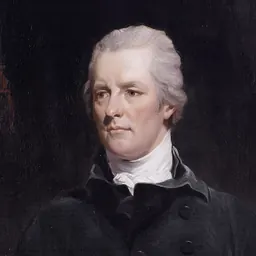
Related people
Same field, nearest in time
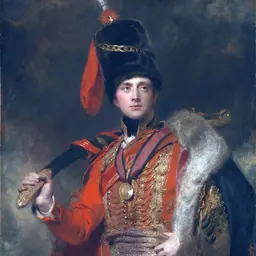
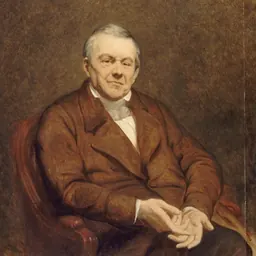


Contemporaries
People whose lives overlapped F. J. Robinson, 1st Viscount Goderich's


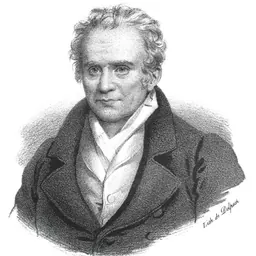
Frequently asked questions
Who was F. J. Robinson, 1st Viscount Goderich?
British Prime Minister, politician (1782-1859)
When was F. J. Robinson, 1st Viscount Goderich born?
F. J. Robinson, 1st Viscount Goderich was born on 1 November 1782 in London.
When did F. J. Robinson, 1st Viscount Goderich die?
F. J. Robinson, 1st Viscount Goderich died on 28 January 1859 in London.
What was F. J. Robinson, 1st Viscount Goderich's occupation?
F. J. Robinson, 1st Viscount Goderich was a politician and abolitionist.
What nationality was F. J. Robinson, 1st Viscount Goderich?
F. J. Robinson, 1st Viscount Goderich was British.
Sources & further reading
· Wikipedia: F. J. Robinson, 1st Viscount Goderich
· DBpedia: F. J. Robinson, 1st Viscount Goderich
Cite this page
APA: Biography.guide. (2026). F. J. Robinson, 1st Viscount Goderich. https://biography.guide/f-j-robinson-1st-viscount-goderich/
MLA: "F. J. Robinson, 1st Viscount Goderich." Biography.guide, https://biography.guide/f-j-robinson-1st-viscount-goderich/.
Chicago: "F. J. Robinson, 1st Viscount Goderich." Biography.guide. https://biography.guide/f-j-robinson-1st-viscount-goderich/.
Data last updated: 2026-09-26 · Spot an error? Report a correction.
Page generated 2026-09-27 05:13 UTC