
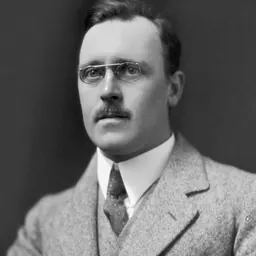
Ezra Fleischer
Romanian-Israeli Hebrew-language poet and philologist
About Ezra Fleischer
Lived 1928 – 2006 (aged 78). Ezra Fleischer was a Romanian and Israeli historian, poet, translator, scholar of Piyyut, philologist and literary scholar.
Ezra Fleischer (; 7 August 1928 – 25 July 2006) was a Romanian-Israeli Hebrew-language poet and philologist known for his pioneering research on early Hebrew piyyut and medieval Jewish liturgy. Fleischer received the Israel Prize for Literature Studies in 1959 for his contributions to Hebrew poetry and philology.
Born in Timișoara, Romania, Fleischer was active in Hebrew literary circles as a young poet before immigrating to Israel in the 1950s. He later became a professor at the Hebrew University of Jerusalem and headed the Genizah Research Institute, where he produced foundational studies on medieval Hebrew texts and liturgy.
Fleischer’s work is widely credited with reshaping modern scholarship on early Hebrew poetry, and his publications remain central to the study of Jewish liturgy.
Biography Fleischer was born in 1928 in Timișoara, in the Banat region of western Romania, and studied in the Jewish school that his father, Judah Loeb Fleischer, had founded in 1918.
After World War II, Fleischer was active in the Bnei Akiva movement in Romania and was imprisoned for his Zionist activities. While in prison, he wrote a Hebrew poem entitled Massa Gog , which included a prediction about the downfall of communism. The poem was smuggled out of Romania and published in Israel under a pen name, where it caused somewhat of a "literary sensation". Further books of poetry followed in Romania, all under a pen name.
In 1960, Fleischer emigrated to Israel, where he researched medieval Hebrew literature. He received a doctorate from the Hebrew University of Jerusalem, where he also subsequently lectured until 1997.
He was also the director of the Genizah Research Institute for Hebrew Poetry of the Israel Academy of Sciences and Humanities. His student Shulamit Elizur has succeeded him in this position.
His published work, mostly on poetry and prayer, covers a wide range of ancient and medieval Jewish life from Andalusia and Amsterdam to Syria and Cairo. He also wrote extensively about Judaism's encounter with Islam and Christianity. At the beginning of his career in 1966, Fleischer published a comprehensive and profound critique on Menahem Zulai's book, The paytanic school of Rav Saadia Gaon, wherein Zulai had brought together and summarized his research on Rabbi Saadia Gaon. According to Professor Yosef Tobi, Fleischer occasionally found that there exists a direct influence from Saadia upon Spanish works, such as the integration of philosophical ideas in the liturgical poems composed by Joseph ibn Abitur and Solomon ibn Gabirol, the structure of the Spanish azharot and keter malkhut of Ibn Gabirol, the assignment of biblical verse as a linguistic model in poetry and alternating rhyme scheme (ABAB). However, in all these assertive statements, there is still some ambivalence and uncertainty, seeing that Fleischer is careful to point out that "the secular Hebrew poetry of Spain is not a continuation of pre-Spanish secular poetry, but rather a new formation in terms of its virtues and character: a faithful reflection, in principle, of Arabic secular poetry."
Awards In 1959, Fleischer was awarded the Israel Prize, for literature, primarily for his poem Massa Gog. In 1971, he was given the Herzl Award for literature. In 1986, Fleischer was awarded the Bialik Prize for Jewish thought. In 1992, he was awarded the Rothschild Prize, for Jewish studies.
Festschriften
Ezra Fleischer Memorial Volume, ed. Shulamit Elizur [=Kobez Al Yad, vol. 25 (XXXV)] (Jerusalem: Mekizei Nirdamim, 2017; Hebrew) In Memory of Ezra Fleischer, ed. Mordechai Akiva Friedman (Jerusalem: Israel Academy of Sciences and Humanities, 2010; Hebrew) Knesset Ezra: Literature and Life in the Synagogue – Studies Presented to Ezra Fleischer, eds. Shulamit Elizur, Moshe David Herr, Gershon Shaked, and Avigdor Shinan (Jerusalem: Ben-Zvi, 1994; Hebrew)
Don’t just read it —
keep it.
Full-length biographies made to live with: read them, listen on the way to work, watch them tonight.
- E-book
- Audio
- Video
Instant download · yours to keep · every purchase keeps this site free
Important facts
People in Ezra Fleischer's life
Named in this biography and alive at the same time


Related people
Same field, nearest in time


Contemporaries
People whose lives overlapped Ezra Fleischer's


Frequently asked questions
Who was Ezra Fleischer?
Romanian-Israeli Hebrew-language poet and philologist
When was Ezra Fleischer born?
Ezra Fleischer was born on 14 July 1928 in Timișoara.
When did Ezra Fleischer die?
Ezra Fleischer died on 25 July 2006 in Jerusalem.
What was Ezra Fleischer's occupation?
Ezra Fleischer was a historian, poet, translator, scholar of Piyyut, philologist and literary scholar.
What nationality was Ezra Fleischer?
Ezra Fleischer was Romanian and Israeli.
Sources & further reading
Cite this page
APA: Biography.guide. (2026). Ezra Fleischer. https://biography.guide/ezra-fleischer/
MLA: "Ezra Fleischer." Biography.guide, https://biography.guide/ezra-fleischer/.
Chicago: "Ezra Fleischer." Biography.guide. https://biography.guide/ezra-fleischer/.
Data last updated: 2026-09-20 · Spot an error? Report a correction.
Page generated 2026-09-27 05:18 UTC