
About Ezequiel González Mas
Lived 1919 – 2007 (aged 88). Ezequiel González Mas was a Spanish writer, literary critic and poet.
Ezequiel González Mas (20 July 1919 – 15 October 2007) was a Spanish historian of Spanish literature, a cervantista, poet, art critic and writer.
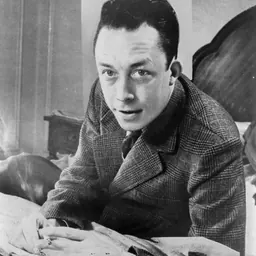
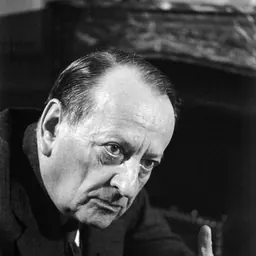
Biography González Mas was born in Madrid on 20 July 1919. He finished high school in 1936 and was mobilized by the Republican army in Alicante. Due to his myopia, he was assigned to the music band of the VI Retaguardia Battalion; in a bombardment he was seriously injured. In 1939 he returned to Madrid and suffered the persecution and marginalization of the victorious faction. He started publishing poetry in the magazine of the Complutense University of Madrid, to which he had returned to study after an interruption due to another military service. He also wrote a paper on Chateaubriand which earned him a Parisian scholarship at the Sorbonne, where he completed a course of Contemporary French Literature, and there he made friends with many intellectuals: Jean-Paul Sartre, André Malraux, Albert Camus and the painter Henri Matisse, among others, he eventually graduated in Romance studies, and then devoted himself to private education. He gave lectures at the Ateneo de Madrid and befriended Antonio Buero Vallejo, José Corrales Egea, Vicente Soto, Miguel Labordeta and Francisco García Pavón, who, evoking those days, wrote:
It was Ezequiel who put us in touch with the old masters. He was the best guide to literary tourism. How many dozen literature students did he introduce and took home to Pío Baroja, Luis Ruiz Contreras, José Gutiérrez Solana, Azorín...!
Together with José María Jove and José Antonio Novais, he founded the La Botella en el Mar collection. After having been a student, and a favorite, of Dámaso Alonso and José Camón Aznar, with the latter of whom he used to visit the Museo del Prado, at the end of the 1940s he was the ad honorem secretary of Luis Ruiz Contreras. Between 1949 and 1950 he was a teacher at the Piedrahíta High School (Ávila), in the middle of the Sierra de Gredos; there he wrote Tres Elegías (Cementerio Civil; Aniversario siempre; A una niña difunta), only one hundred copies were printed (Valencia, 1951) to circumvent Franco's censorship, which could have been cruel to the first of those texts.
In 1952, fed up with the cultural and ideological asphyxia of his country, he obtained, through his friend Antonio Rodríguez Huéscar, who recommended him to José Ortega y Gasset, a contract as a professor of literature at the University of Guayaquil in Ecuador, where he met with professors such as the philosopher Antonio Salvador de la Cruz and the historian Juan Astorga and, at the University of Cuenca, with the philosopher Francisco Álvarez González and the Romanesque philologist Luis Fradejas Sánchez. Later, he also became dean of the Faculty of Letters at the University of Guayaquil.
He was part of juries for literary awards and between 1956 and 1957 wrote the column Los Libros in the Sunday supplement of the newspaper La Nación. In 1958 he received a doctorate in Philosophy and Letters from the University of Cuenca
Returned to the University of Guayaquil by 1965, in August 1966 he was called again to Río Piedras and the following year to Mayagüez, where he directed the magazine Atenea of the Faculty of Arts and Letters of the University of Puerto Rico.
Major works Siete Sonetos al Greco, Madrid, 1944. Sonetos al Greco y a Van Gogh. Valencia: Tip. Moderna, 1947. Tres elegías Madrid, 1951. Oratorio marino, Guayaquil, 1955 La generación del 98 y América [Guayaquil]: Departamento de Publicaciones, 1958. Museo privado, Guayaquil, 1958 Sartre y Camus; el nuevo espíritu de la literatura francesa. [Guayaquil] Universidad de Guayaquil - Departamento de Publicaciones, 1959. Nivel del sueño, Guayaquil, 1960 El "Quijote", invitación a la locura, Guayaquil: [Artes Gráficas Senefelder] 1960. Historia de la literatura española (1968–2005), 5 vols. I. Época Medioeval, siglos X al XV (Río Piedras: Editorial de La Torre, 1968) II. Renacimiento, siglo XVI (Río Piedras: Editorial de La Torre, 1973) III. Barroco, siglo XVII. (Río Piedras: EDUPR, 1989) IV. Edad Moderna, siglos XVIII y XIX. (Barcelona: Promociones y Publicaciones Universitarias PPU, 2005) V. Los Contemporáneos, siglo XX. (Río Piedras: EDUPR, 2005) El retrato literario y otros motivos, Mayagüez: Universidad de Puerto Rico, 1973. "Pío Baroja y la novela de folletín", en VV. AA., Pío Baroja, coord. por Javier Martínez Palacio, Madrid: Taurus, 1974, págs. 165–175 José Enrique Rodó y España Cádiz: Real Academia Hispano-Americana, 1997.
Don’t just read it —
keep it.
Full-length biographies made to live with: read them, listen on the way to work, watch them tonight.
- E-book
- Audio
- Video
Instant download · yours to keep · every purchase keeps this site free
Important facts
People in Ezequiel González Mas's life
Named in this biography and alive at the same time


Related people
Same field, nearest in time

Contemporaries
People whose lives overlapped Ezequiel González Mas's


Frequently asked questions
Who was Ezequiel González Mas?
Spanish writer and literary critic
When was Ezequiel González Mas born?
Ezequiel González Mas was born on 20 July 1919.
When did Ezequiel González Mas die?
Ezequiel González Mas died on 15 October 2007.
What was Ezequiel González Mas's occupation?
Ezequiel González Mas was a writer, literary critic and poet.
What nationality was Ezequiel González Mas?
Ezequiel González Mas was Spanish.
Sources & further reading
· Wikipedia: Ezequiel González Mas
· DBpedia: Ezequiel González Mas
Cite this page
APA: Biography.guide. (2026). Ezequiel González Mas. https://biography.guide/ezequiel-gonzalez-mas/
MLA: "Ezequiel González Mas." Biography.guide, https://biography.guide/ezequiel-gonzalez-mas/.
Chicago: "Ezequiel González Mas." Biography.guide. https://biography.guide/ezequiel-gonzalez-mas/.
Data last updated: 2026-09-22 · Spot an error? Report a correction.
Page generated 2026-09-27 05:30 UTC