
Ezekiel Judah
Baghdadi-Jewish businessman
About Ezekiel Judah
Lived 1800 – 1860. Ezekiel Judah was a Turkish talmudist.
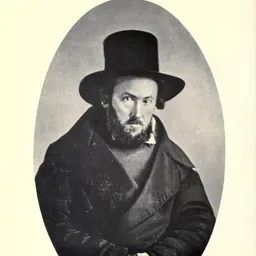
Ezekiel Judah (Hebrew: יחזקאל יהודה) also known as Yehezkel Yehuda, or Yahuda, or Ezekiel Judah Jacob Sliman (1800–22 April 1860), was a Jewish communal leader, trader of indigo, muslin, and silk, philanthropist, and Talmudist from Baghdad. He migrated to India, where he led the Baghdadi Jewish community of Kolkata and established the city's first synagogues.
Origins
Judah came from a prominent Jewish family in Baghdad, known in English as the Judah family, in Hebrew as the Yehuda family, or originally as the Ma'tuk family.
The Ma’tuk family of Baghdad was descended from Rabbi Ma’tuk, the last Nasi (Prince) of the Jewish community of Anah on the Euphrates. Rabbi Ma’tuk fled to Baghdad with his family in the early 17th century due to threats from a tyrannical governor who had persecuted the community. Rabbi Ma’tuk, as was customary for leaders of prominent Jewish communities in Iraq at the time, had served as the Saraf-Bashi, or treasurer, of the governor. The historian of Baghdad Jewry, Rabbi David Solomon Sassoon, notes that the Ma’tuk family had been established in Anah for centuries.
The family's flight reflected a shift in the axis of Mesopotamian Jews. The historian of Iraqi Jewry, Zvi Yehuda, notes that the conflict between the Ottoman Empire and Persia harmed Anah, and the cessation of caravan trade between Aleppo and Baghdad impoverished the Jewish community, prompting many of the wealthiest Jewish families, including the Ma’tuks, to move to Baghdad. Anah, which had previously been a prosperous Jewish center, fell into sharp decline; a Portuguese traveler in 1663 even observed that the only Jews living there made their livelihoods by producing cloth from camel hair. The Jews of Anah maintained that they were descended from the Babylonian Exile and had never subsequently returned to Judaea. The descendants of the Ma’tuk family from Anah, known as the Judah family since the late 18th century, continue to uphold this tradition to this day.
The family's arrival in Baghdad marked a revival of the city's fortunes. Baghdad, which had ceased to be a Jewish center following its capture by Timur in the 14th century, was re-emerging as a major Jewish center when the family arrived in the early 17th century. The 19th-century German ethnographer H. Peterman corroborated this, writing that the oldest Jewish families of Baghdad, including the Ma’tuk, came from Anah. Historians of Iraqi Jewry recount that the Ma’tuk family, later known as Yehuda or Judah, gained great renown as scholars, rabbis, merchants, and communal leaders in Baghdad during the 18th and 19th centuries. Most notably, the communal leader, poet, and astronomer Sliman Ben David Ma’tuk, also known under the Anglicized name Solomon Ma’tuk, achieved significant prominence. During his lifetime, the family name was changed to the Yehuda or Judah family, a name that was later Anglicized in British India. Rabbi Judah Jacob married twice and was the father of eight sons and two daughters. His eldest son, Ezekiel Judah, was "the best of his sons" and became the founder of the Judah family in India. Ezekiel Judah was also a relative of David Sassoon, the chief of the powerful merchants and unofficial leader of the Baghdadi Jewish trading diaspora. Both historian Abraham Ben-Jacob and the Encyclopedia of the Founders and Builders of Israel refer to Ezekiel Judah as a rabbi. Rabbi Moshe Haim was the father-in-law of both David Sassoon and Ezekiel Judah, creating a family bond between the Judahs and the Sassoons.
The Encyclopaedia of the Founders and Builders of Israel, compiled and published by David Tidhar, notes that Ezekiel Judah was a great Torah scholar who held a yeshiva and educated the poor. One of his students was the renowned Eliyahu Mani, who later became the Rabbi of Hebron. Accounts vary regarding the exact year Ezekiel Judah established his family permanently in Calcutta. While his first arrival in the city is recorded as 1820, Rabbi Ezekiel N. Musleah, the last Rabbi of the Jewish community of Calcutta, indicates that he moved definitively to Bengal in 1838.
Iraqi Jewish historian Abraham Ben-Jacob states that David Sassoon's flight from Baghdad prompted his friend Ezekiel Judah to do the same, traveling with his son Sassoon Judah to India. Initially, they settled in Bombay before later migrating to Calcutta. As a philanthropist, he established the first synagogue in Calcutta, known as Neveh Shalom in Hebrew, which translates to "Abode of Peace," in 1825. He also co-founded the second synagogue, Beth-El, in 1856 with David Joseph Ezra.
Ezekiel Judah and the Judah family are described in the epic travelogue of the Ashkenazi Jewish writer J. J. Benjamin. Describing the community of Calcutta, and using the term then in use among Mizrahi Jews to refer to a rabbi, he wrote, "They are all well educated but have no appointed Chachamim; one of the richest commercial men of the town, Ezekiel Jehuda Jacob Sliman, a very enlightened man and an excellent Talmudist, performs the duties of the Chacham." J. J. Benjamin also noted during his visit to Singapore that the elders of the small community there were the sons of Ezekiel Judah. No record of the Rabbis' response to Ezekiel Judah survives.
In Calcutta, as in Bombay, Ezekiel Judah, like his relative David Sassoon, sought to align the Baghdadi Jewish community with the British and to publicly support the colonial power. He eventually became a naturalized British subject.
Ezekiel Judah died on April 22, 1860, in Calcutta, having not reached his sixty-first year.
Legacy After the death of Ezekiel Judah, two branches of the Judah or Yehuda family developed: a rabbinical branch that settled in Jerusalem, and a mercantile branch that remained in Calcutta and eventually migrated to London after the end of British rule.
Yehuda Family of Jerusalem
One of Ezekiel Judah's sons from his first marriage was described as a leader among the Jewish community in Baghdad. His migration to Jerusalem was described by his descendant David Yellin.
"In the year 5616 (1856) the outstanding and pious Rabbi Shlomo Yehezkel departed from the city of Baghdad in Babylonia, together with his family, in order to dwell in our city. After Rabbi Shlomo Yehezkel Yehuda's death, the yeshiva was merged with the Hesed El yeshiva, which was founded in 1860. Rabbi Faraj Haim Yehuda was a prominent builder of the Sephardi community in Jerusalem in the late 19th century. The marriage took place about four months after Yehoshua Yellin's Bar Mitzvah. Marriages between Sephardic and Ashkenazi Jews were extremely rare at the time. The Yehuda and Yellin families later joined forces to establish the first modern Jewish agricultural colony in Palestine at Motza. The historic Yellin family house, built by Yehoshua Yellin, became the family's primary residence in 1890. The Yellins, as descendants of Ezekiel Judah, were regarded by their contemporaries as scions of the Sassoon family. Their trade included Indian products such as tea and indigo. The son of Rabbi Shlomo Yehezkel Yehuda grew close to the Chabad movement in Jerusalem and was known as the Hassid. He received support from his wealthy relatives in India to repair the second floor of the Chabad synagogue in the Old City.
According to the Encyclopaedia of the Founders and Builders of Israel, Rabbi Binyamin Yehuda, the son of Rabbi Shlomo Yehezkel Yehuda, died after a collapse in his capital, which meant he and his brothers were no longer able to distribute alms to the poor as was his custom. "Out of grief, he fell asleep from which he did not arise."
Calcutta Synagogues
In terms of Ezekiel Judah's physical legacy, the Calcutta synagogues of Neveh Shalom and Beth El remain standing and are maintained in the city, where the Jewish community has dwindled to fewer than twenty people. Despite this, they are regularly visited by tourists and descendants of the Baghdadi Jewish community and are considered a unique part of the city's heritage. Given the near-complete destruction of Jewish heritage sites in Syria and Iraq, Ben Judah has noted that these are among "the last of our synagogues" built in the traditional Baghdadi style.
Descendants
Ezekiel Judah's descendants include Abraham Yahuda (1877–1951) from the Jerusalem branch, and Tim Judah and his son Ben Judah from the Calcutta branch.
Don’t just read it —
keep it.
Full-length biographies made to live with: read them, listen on the way to work, watch them tonight.
- E-book
- Audio
- Video
Instant download · yours to keep · every purchase keeps this site free
Important facts
People in Ezekiel Judah's life
Named in this biography and alive at the same time

Related people
Same field, nearest in time




Contemporaries
People whose lives overlapped Ezekiel Judah's





Frequently asked questions
Who was Ezekiel Judah?
baghdadi-Jewish businessman (1800–1860)
When was Ezekiel Judah born?
Ezekiel Judah was born in 1800.
When did Ezekiel Judah die?
Ezekiel Judah died in 1860.
What was Ezekiel Judah's occupation?
Ezekiel Judah was a talmudist.
What nationality was Ezekiel Judah?
Ezekiel Judah was Turkish.
Sources & further reading
Cite this page
APA: Biography.guide. (2026). Ezekiel Judah. https://biography.guide/ezekiel-judah/
MLA: "Ezekiel Judah." Biography.guide, https://biography.guide/ezekiel-judah/.
Chicago: "Ezekiel Judah." Biography.guide. https://biography.guide/ezekiel-judah/.
Data last updated: 2026-09-20 · Spot an error? Report a correction.
Page generated 2026-09-27 05:28 UTC