
About Everett M. "Busy" Arnold
Lived 1899 – 1974 (aged 75). Everett M. "Busy" Arnold was an American entrepreneur.
Everett M. Arnold (May 20, 1899 – December 1974), also known as Busy Arnold, was an American publisher and an early comic-book entrepreneur whose company Quality Comics published during the 1930s and 1940s period fans and historians call the Golden Age of Comic Books. He was also instrumental in the publishing arrangement that led to Will Eisner's newspaper Sunday-supplement comics series The Spirit.
Early life and career The Comics Magazine #1 (May 1936), one of the first comic books. Art by Vin Sullivan. Growing up in Rhode Island, where his habit of talking in class earned him the admonishment "busybody" from teachers, and the subsequent nickname "Busy" from classmates, He found work with the printing press manufacturer R. Hoe and Company, There he sold presses to Waterbury, Connecticut's Eastern Color Printing (future publisher of the first American comic book, Famous Funnies #1, May 1934), and to the McClure Syndicate in Baltimore, Maryland. The duo published the premiere issue of The Comics Magazine (May 1936), using inventory content from National Allied's submissions. The original features (as opposed to color comic strip reprints, as Famous Funnies published) included the Doctor Occult spin-off Dr. Mystic the Occult Detective (unrelated to the Mr. Mystic that later ran in newspapers), by future Superman creators Jerry Siegel and Joe Shuster. Other titles included Funny Pages, Funny Picture Stories, Detective Picture Stories and Keen Detective Funnies. Daniel R. Hanna Sr., publisher of Ohio's Cleveland News, printed the interiors, with Cleveland's Penton Press printing the covers and handling binding and shipping. But the company — which would evolve into Centaur Publications in collaboration with three newspaper syndicates: the McNaught Syndicate, the Frank J. Markey Syndicate, and Iowa's Register and Tribune Syndicate. His first office was at 389 Lexington Avenue in Manhattan. A 1954 federal document noted that the Quality Romance Group, owned by Everett M. and Claire C. Arnold, with an office at 347 Madison Avenue, in New York City, published two titles as Arnold Publications, Inc., two titles as Comic Favorites, Inc., and 14 titles as Comic Magazines, Inc.
The Spirit Will Eisner's "Spirit Section" appeared in 20 major newspapers, premiering June 2, 1940, and continuing through 1952.In late 1939, Arnold orchestrated two roughly concurrent events. First, he made Will Eisner an offer to join Quality Comics' art staff. Eisner agreed to a complicated arrangement in which, Eisner recalled, "I regarded him as a partner and he thought of me as an employee". Whatever the specific business details, "The Eisner-Iger amalgam was dissolved, Iger buying out his partner's share of the organization", wrote historian Jim Steranko, who interviewed both Eisner and Arnold in the early 1970s. "In the bargain, Eisner took the shop's key men with him: Viscardi [also known as Nick Cardy], Fine, Bob Powell, Chuck Cuidera, and others."
Second, Arnold explored an expansion into newspapers, with the idea of a Sunday-supplement comic-book section. Compiling a presentation piece with existing Quality Comics features, he contacted editors he knew from when he was vice president of Greater Buffalo Press. An editor of The Washington Star liked George Brenner's "The Clock", but not Brenner's art, and was favorably disposed toward a Lou Fine strip. Arnold, concerned over the meticulous Fine's slowness and his ability to meet deadlines, claimed it was Eisner's work. Arnold and Eisner had already been discussing a new feature, which would evolve into The Spirit.
In "late '39, just before Christmas time, 'Busy' came to me and said that the Sunday newspapers were looking for a way of getting into this comic book boom", Eisner recalled in 1979. In a 2004 interview, he elaborated on that meeting:
Eisner negotiated an agreement with the syndicate in which Arnold would copyright The Spirit, but, "Written down in the contract I had with 'Busy' Arnold — and this contract exists today as the basis for my copyright ownership — Arnold agreed that it was my property. They agreed that if we had a split-up in any way, the property would revert to me on that day that happened. My attorney went to 'Busy' Arnold and his family, and they all signed a release agreeing that would not pursue the question of ownership".
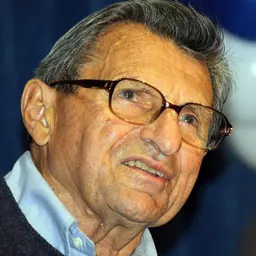
Among his philanthropic efforts around this time, wealthy alumnus Arnold paid the Brown University tuition of college football player Joe Paterno, who attended from 1946 to 1950 before going on to become the College Football Hall of Fame coach of Penn State University.
During the 1950s, Quality Comics followed the prevailing comics trends away from superheroes to a wide range of genres. This included a single horror title, Web of Evil, that nonetheless made Arnold's otherwise wholesome company a target, like many other comics publishers, as a supposed factor in juvenile delinquency, as charged by Dr. Fredric Wertham's book Seduction of the Innocent and Congressional hearings led by Senator Estes Kefauver. Together with his staff's individual departures as time went on, Arnold in 1956 closed his company, selling most of its properties to DC Comics.
Magazines He started Arnold Magazines, Inc., edited by Alfred Grenet, with editorial offices at 303 Lexington Avenue in Manhattan. Mostly 35-cent digests, his publications included Homicide Detective Story Magazine, which ran stories by John D. MacDonald and William Campbell Gault. It later became Killers Mystery Story Magazine. Among its sister publications were Crime and Justice Detective Story Magazine (which included writers G.T. Fleming-Roberts, Robert Sidney Bowen, Harlan Ellison and Edward D. Hoch) and Terror Detective Story Magazine, each of which ran four issues from 1956 through March 1957. Blazing Guns, a Western digest, ran at least three issues during that time, as did Classic Photography, an innocuous (by modern standards) magazine of photo techniques plus shots of nude and semi-nude women; issue #3 (Spring 1957) featured Bunny Yeager on the cover. The Autumn and Fall 1956 issues were deemed "obscene" by the Post Office, and not applicable for second-class (standard magazine) mailing rates.
Arnold, by then in his late 60s, moved to Florida. He was living in Naples, Florida, at the time of his death in 1974.
Don’t just read it —
keep it.
Full-length biographies made to live with: read them, listen on the way to work, watch them tonight.
- E-book
- Audio
- Video
Instant download · yours to keep · every purchase keeps this site free
Important facts
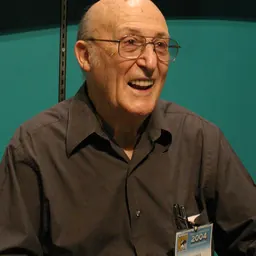
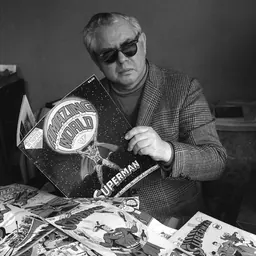
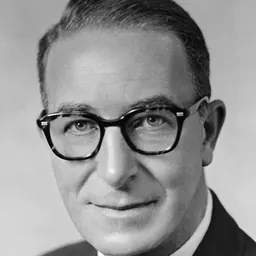
People in Everett M. "Busy" Arnold's life
Named in this biography and alive at the same time



Related people
Same field, nearest in time



Contemporaries
People whose lives overlapped Everett M. "Busy" Arnold's



Frequently asked questions
Who was Everett M. "Busy" Arnold?
publisher (1899-1974)
When was Everett M. "Busy" Arnold born?
Everett M. "Busy" Arnold was born on 20 May 1899 in Providence.
When did Everett M. "Busy" Arnold die?
Everett M. "Busy" Arnold died on 1 December 1974.
What was Everett M. "Busy" Arnold's occupation?
Everett M. "Busy" Arnold was an entrepreneur.
What nationality was Everett M. "Busy" Arnold?
Everett M. "Busy" Arnold was American.
Sources & further reading
· Wikipedia: Everett M. "Busy" Arnold
Cite this page
APA: Biography.guide. (2026). Everett M. "Busy" Arnold. https://biography.guide/everett-m-busy-arnold/
MLA: "Everett M. "Busy" Arnold." Biography.guide, https://biography.guide/everett-m-busy-arnold/.
Chicago: "Everett M. "Busy" Arnold." Biography.guide. https://biography.guide/everett-m-busy-arnold/.
Data last updated: 2026-09-20 · Spot an error? Report a correction.
Page generated 2026-09-27 05:30 UTC