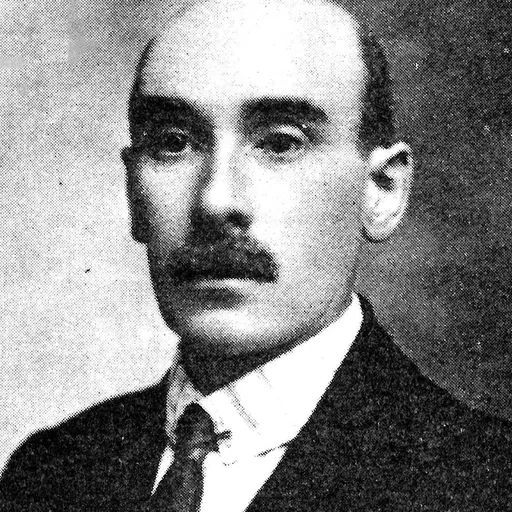
About Everardo Dias
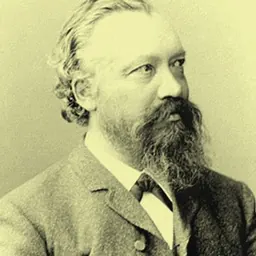
Lived 1883 – 1966 (aged 82–83). Everardo Dias was a Brazilian writer, journalist and trade unionist.
Everardo Dias (Pontevedra, 1883 - São Paulo, 1966) was a journalist and important activist in the Brazilian workers' movement in the early decades of the 20th century. He participated in the 1917 Brazil strike and the 1918 anarchist insurrection.
Biography Everardo Dias was born in Pontevedra, Spain, in 1883. In 1887, at the age of two, he came to Brazil with his father, professor and Freemason Antônio Dias, who was involved in a failed republican uprising. With the help of other Freemasons, he embarked for São Paulo carrying correspondence for Martinico Prado, one of Brazil's Republican leaders. At 13, Everardo learned the printer's trade and went to work for the newspaper O Estado de S. Paulo, where he stayed until he completed his studies at the Normal School.
After graduating, he got a teaching job in Aparecida do Monte Alto. There, Vicente Picarelli, an old Freemason, created the Filhos do Universo Lodge, of the Grande Oriente de São Paulo, where Everardo was initiated in June 1904, at the age of 21. After a year in Aparecida, he returned to São Paulo and, failing to get a transfer, abandoned teaching and became a journalist. He tried to study at the Faculty of Law in São Paulo but, due to financial difficulties, he decided to drop out of the program. Years later, he graduated from the Free Faculty of Law in Rio de Janeiro. In São Paulo, he joined the União Espanhola Lodge, where he received the degree of Knight Rose-Cross in March 1906.
He stood out as a leader during the anti-clerical movement in São Paulo, participated in the Associação de Livres Pensadores and directed the fortnightly O Livre Pensador, published for the first time in 1902. In it, he extolled Lamarck, Darwin, Haeckel and Spencer while attacking the Catholic Church, smoking and alcohol. There was also a lot of criticism of priests who attacked Protestants, Freemasons, Spiritists, freethinkers and socialists. In 1905, Everardo was the press representative at the Russian martyrs' rally in São Paulo. In 1906, he attended the May 1st celebrations in Campinas.
On October 27, 1919, after the General Strike in São Paulo, Everardo was arrested along with José Righetti and João da Costa Pimenta, general secretary of the União dos Trabalhadores Gráficos de São Paulo, taken to Santos and put in an infected cubicle completely naked. Two days later, he was taken to the courtyard where he was whipped 25 times on his back. That same day, he was taken to São Paulo and then, along with 10 other prisoners and guarded by 25 soldiers, transferred to Rio de Janeiro, where they would be expelled from Brazil. At the Central Police Station in Rio de Janeiro, Everardo, weakened, told the delegate that "he hadn't eaten, drunk or slept for four days and nights".
On the afternoon of October 30, Everardo and 22 other prisoners were taken to the docks to board the Lloyd Brasileiro's Benevente. When they arrived in Bahia, Manuel Gama sent a letter in which he spoke of Everardo, "who, sad and pensive, is dragging his cross to Calvary!". Everardo writes: "I'm more dead than alive... I'm weak and I think I have tuberculosis! Oh, it's horrible!". While a habeas corpus petition was being filed in Everardo's favor, claiming that he had lived in the country for 33 years, was a naturalized Brazilian citizen, had six Brazilian daughters and worked as a bookkeeper, the deputy and Freemason Mauricio de Lacerda, Carlos Lacerda's father, read his dramatic letter in the Federal Chamber. Astrogildo Pereira, through the pages of Spartacus, recalled that Everardo had published Livre Pensador for 15 years and had been editor-in-chief of O Estado de S. Paulo. Loja América also stood out in his defense. On November 8, the Supreme Court denied the petition for habeas corpus.
Released, with his health shaken, he returned to his family in a difficult financial situation because his assets had been confiscated during the state of siege. Later, he returned to work as a journalist at the Diário Nacional, organized by the Democratic Party and led by Marrey Júnior, where he remained until its closure after the Constitutionalist Revolution of 1932. At the end of 1927, he was launched by O Internacional as a candidate for the São Paulo City Council by the Bloco Operário Camponês. During this period, he was monitored and his house was constantly raided by the police. He supported the Revolution of 1930 and had to flee São Paulo to avoid being arrested again. In 1932, unemployed and persecuted by the police, he lived in a tenement in Rio de Janeiro where he raised chickens to survive.
During the Communist Uprising of 1935, he was arrested without any proof of his involvement for almost two years, until he was acquitted by the National Security Court. In the National Congress, he was defended by then deputy Café Filho, the son of a Freemason. When he was released, he returned to Masonic work at the Ordem e Progresso Lodge. He wrote the Masonic works Semeando, À Sombra da Acácia and, in collaboration with Octaviano Bastos and Optato Carajuru, the Livro Maçônico do Centenário. He was editor and director of the Boletim Oficial do Grande Oriente de São Paulo and the newspapers Folha de Acácia and Mensageiro Romano.
Don’t just read it —
keep it.
Full-length biographies made to live with: read them, listen on the way to work, watch them tonight.
- E-book
- Audio
- Video
Instant download · yours to keep · every purchase keeps this site free
Important facts
People in Everardo Dias's life
Named in this biography and alive at the same time

Related people
Same field, nearest in time




Contemporaries
People whose lives overlapped Everardo Dias's


Frequently asked questions
Who was Everardo Dias?
Pontevedra, 1883 - São Paulo, 1966
When was Everardo Dias born?
Everardo Dias was born in 1883 in Pontevedra.
When did Everardo Dias die?
Everardo Dias died in 1966 in São Paulo.
What was Everardo Dias's occupation?
Everardo Dias was a writer, journalist and trade unionist.
What nationality was Everardo Dias?
Everardo Dias was Brazilian.
Sources & further reading
Cite this page
APA: Biography.guide. (2026). Everardo Dias. https://biography.guide/everardo-dias/
MLA: "Everardo Dias." Biography.guide, https://biography.guide/everardo-dias/.
Chicago: "Everardo Dias." Biography.guide. https://biography.guide/everardo-dias/.
Data last updated: 2026-09-22 · Spot an error? Report a correction.
Portrait: Wikimedia Commons · author & licence
Page generated 2026-09-27 05:02 UTC