
About Evald Ilyenkov
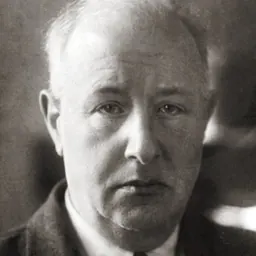
Lived 1924 – 1979 (aged 55). Evald Ilyenkov was a Russian philosopher and psychologist.
Evald Vasilievich Ilyenkov (; 18 February 1924 – 21 March 1979) was a Soviet philosopher.
Biography
Early life Evald Ilyenkov was born in to the family of Soviet writer and teacher Vasily Ilyenkov. When he was four years old, the family moved to Moscow. In his youth, Evald became interested in the music of Wagner and the philosophy of Spinoza. He continued his studies at the Institute of Philosophy, Literature and History; but his studies were interrupted by the outbreak of World War II during which he fought in the Red Army as an artillery commander.
After the end of the war, he served as part of the contingent of Soviet troops in Germany until August 1945. After he was demobilized he continued his studies in the Faculty of Philosophy of the Moscow State University and joined the Communist Party in 1950. In their opinion, "philosophy is the science of scientific thinking, its laws and forms". In February and March 1955, at the Faculty of Philosophy of the MSU, an inspection was carried out on them by the commission of the department of science and culture of the CPSU Central Committee. In the commission's report, the theses of Ilyenkov and Korovikov were assessed as "a relapse of Menshevik idealism, which was long defeated and condemned by the party” and It was found that “some students and graduate students have a desire to move away from pressing practical problems into the area of "pure science", "pure thinking", divorced from practice, from the politics of our party. Some students admitted that they had not read newspapers for a long time”. After checking the state of affairs at the Faculty of Philosophy of Moscow State University by a commission of the CPSU Central Committee, Ilyenkov’s views were defined as "a perversion of the philosophy of Marxism".
On 25 and 29 March, the Academic Council of the Faculty of Philosophy of Moscow State University was held, at which the theses of Ilyenkov and Korovikov were discussed, as a result they were accused of Hegelianism and were deprived of the right to teach at Moscow State University. He was buried besides his father at the Novodevichy Cemetery.
Philosophy Evald Ilyenkov did original work on the materialist development of Hegel's dialectics, notable for his account of concrete universals. His works include Dialectical Logic (Russian, 1974; English trans. 1977), Leninist Dialectics and the Metaphysics of Positivism (Russian, 1980 (posthum.); English trans. 1982) and The Dialectics of the Abstract and Concrete in Marx's Capital (Russian, 1960; English trans. 1982).
David Bakhurst wrote in his article; "Meaning, Normativity and the Life of Mind":
An abridged version of his article, "Marx and the Western World," was published in English in a book of the same name in 1967, but this work is little known.
On the other hand, Ilyenkov's work (especially his masterpiece, the study on Dialectics of the Abstract and the Concrete in Marx's Capital from 1960, and the collection of essays entitled Dialectical Logic from 1974) deeply influenced the reception of Marx' economic writings from the 1960s onwards, in the Soviet Union and the German Democratic Republic (GDR) as well as in the West. His influence can be witnessed in the international research effort concerned with the publication of Marx' economic manuscripts (in Marx/Engels: Gesamtausgabe, or MEGA, section II, 1976 ff.). His influence is also evident in the intense debates on economic reform that was going on in the Soviet Union in the 1970s (e.g., in the works of A. K. Pokrytan).
Ilyenkov's works have been published in about 20 languages. His Dialectical Logic (1974) was published in English by Progress Publishers in Moscow in 1977. A German translation of his Dialectics of the Abstract and the Concrete in Marx’s Capital (1960), was published by the same publisher in 1979 (and simultaneously by Das europäische Buch, West Berlin); an English translation of the book was published by Progress Publishers in Moscow in 1982. Leninist Dialectics and the Metaphysics of Positivism (first published in Russian in 1980) was published by New Park Publications in 1982.
Bibliography (English translations) Books: 2018. Intelligent Materialism: Essays on Hegel and Dialectics 1960. Dialectics of the Abstract & the Concrete in Marx’s Capital 1974. Dialectical Logic, Essays on its History and Theory 1979. Leninist Dialectics and the Metaphysics of Positivism
Articles: 1974. Activity and Knowledge 1974. From the Marxist-Leninist Point of View 1974. The Universal 1974. A Contribution to a Conversation About Esthetic Education 1975. A Contribution to a Conversation About Meshcheriakov 1975. Humanism and Science 1976. Dialectics of the Ideal 1977. Concept of the Ideal 1979. The problem of contradiction in logic (fragment) 1979. Materialism Is Militant and Therefore Dialectical Date unknown. Psychology Date unknown. Our Schools Must Teach How to Think! Date unknown. A Contribution to the Discussion on School Education Date unknown. On the Nature of Ability Date unknown. The Biological and the Social in Man Date unknown. A Contribution on the Question of the Concept of “Activity” and Its Significance for Pedagogy Date unknown. Knowledge and Thinking
Don’t just read it —
keep it.
Full-length biographies made to live with: read them, listen on the way to work, watch them tonight.
- E-book
- Audio
- Video
Instant download · yours to keep · every purchase keeps this site free
Important facts
Related people
Same field, nearest in time


Contemporaries
People whose lives overlapped Evald Ilyenkov's




Frequently asked questions
Who was Evald Ilyenkov?
Russian philosopher (1924–1979)
When was Evald Ilyenkov born?
Evald Ilyenkov was born on 18 February 1924 in Smolensk.
When did Evald Ilyenkov die?
Evald Ilyenkov died on 21 March 1979 in Moscow.
What was Evald Ilyenkov's occupation?
Evald Ilyenkov was a philosopher and psychologist.
What nationality was Evald Ilyenkov?
Evald Ilyenkov was Russian.
Sources & further reading
Cite this page
APA: Biography.guide. (2026). Evald Ilyenkov. https://biography.guide/evald-ilyenkov/
MLA: "Evald Ilyenkov." Biography.guide, https://biography.guide/evald-ilyenkov/.
Chicago: "Evald Ilyenkov." Biography.guide. https://biography.guide/evald-ilyenkov/.
Data last updated: 2026-09-20 · Spot an error? Report a correction.
Page generated 2026-09-27 04:59 UTC