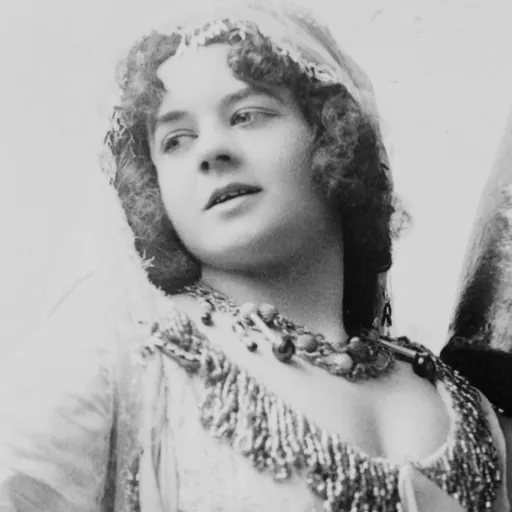
About Eva Tanguay
Lived 1878 – 1947 (aged 68). Eva Tanguay was a Canadian singer, film actor and ziegfeld girl.
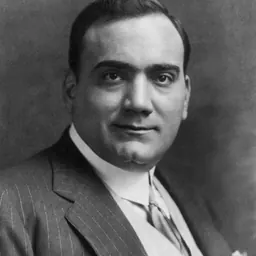
Eva Tanguay (August 1, 1878 – January 11, 1947) was a Canadian and American singer and entertainer who billed herself as "the girl who made vaudeville famous". She was known as "The Queen of Vaudeville" during the height of her popularity from the early 1900s until the early 1920s. Tanguay also appeared in films, and was the first performer to achieve mass-media celebrity in Canada and the US, with publicists and newspapers covering her tours from coast-to-coast, out-earning the likes of contemporaries Enrico Caruso and Harry Houdini. She was later described by Edward Bernays, "the father of public relations", as "our first symbol of emergence from the Victorian age."
Early life
Tanguay was born in 1878 in Marbleton, Quebec. Her father was a doctor.
Two years later, she was touring professionally with a production of a stage adaptation of the popular Frances Hodgson Burnett novel Little Lord Fauntleroy. Tanguay eventually landed a spot in the Broadway musical My Lady in 1901.
The Sambo Girl also starred Melville Collins as Raphael Rubens, Tanguay's romantic interest in the show. This began a longterm professional partnership between Tanguay and Collins, with Collins serving as her accompanist in vaudeville for more than a decade and also her sometimes manager. He was reportedly the major love of Tanguay's life, although he never returned her feelings and ultimately married Tanguay's niece, Lillian M Skelding, in 1914. While Collins died in 1924, years later an urn containing his ashes was placed in Tanguay's casket and they were buried together in 1947.
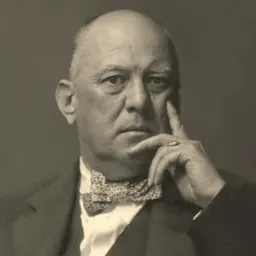
After seeing her perform, English poet and sexual revolutionary Aleister Crowley called Tanguay America's equivalent to Europe's music hall greats Marie Lloyd of England and Yvette Guilbert of France. The American Genius, he wrote, "is unlike all others. The 'cultured' artist, in this country, is always a mediocrity ... The true American is, above all things, FREE; with all the advantages and disadvantages that that implies. His genius is a soul lonely, disolate, reaching to perfection in some unguessed direction ... Eva Tanguay is the perfect American artist. She is ... starry chaste in her colossal corruption."
Tanguay is remembered for brassy, self-confident songs that symbolized the emancipated woman, such as "It's All Been Done Before but Not the Way I Do It", "I Want Someone to Go Wild with Me", "Go as Far as You Like", and "That's Why They Call Me Tabasco". In showbiz circles, she was nicknamed the "I Don't Care Girl" after her most famous song, "I Don't Care". She was brought in to star in the 1909 Ziegfeld Follies, where she replaced the husband-and-wife team of Jack Norworth and Nora Bayes, who were engaged in a bitter salary and personal feud with Ziegfeld. Tanguay requested that the musical number "Moving Day in Jungle Town" be taken from rising talent Sophie Tucker and given to her. Despite this, the two later became close friends.
Gaining free publicity with outrageous behavior was one of her strengths. In 1907, she stayed with married entertainment journalist and publicist C. F. Zittel in a Brooklyn hotel for nearly a week. Zittel's wife uncovered the affair by hiring detectives dressed as room-service bellhops to burst into the room. The event made headlines and did not damage Eva's popularity, reputation, or box-office success.
Stage costume Her costumes were as extravagant as her personality. In 1910, a year after the Lincoln penny was first issued, Tanguay appeared on stage in a coat entirely covered in the new coins.
Recording Tanguay only made one known recording ("I Don't Care") in 1922 for Nordskog Records. In addition to her singing career, she starred in two film comedies, which used the screen to capture her lusty stage vitality. The first, titled Energetic Eva, was made in 1916. The following year, she starred with Tom Moore in The Wild Girl. In the 1930s, she retired from show business. Cataracts caused her to lose her sight, but Sophie Tucker, a friend from vaudeville days, paid for an operation that helped to restore some of her vision. She was interred in the Hollywood Memorial Park Cemetery, now Hollywood Forever Cemetery.
Family Tanguay married twice, although she was incorrectly reported to have been married up to four times, due in part to her 1908 public engagement to extremely popular cross-dressing performer Julian Eltinge, who played the bride while she dressed in traditional male formal attire. They exchanged rings but never legally wed. Shortly after the marriage, she had it annulled on the grounds of fraud. The marriage was actually a publicity ploy and was dissolved by Tanguay when it did not bear the intended promotional results.
Don’t just read it —
keep it.
Full-length biographies made to live with: read them, listen on the way to work, watch them tonight.
- E-book
- Audio
- Video
Instant download · yours to keep · every purchase keeps this site free
Important facts
People in Eva Tanguay's life
Named in this biography and alive at the same time




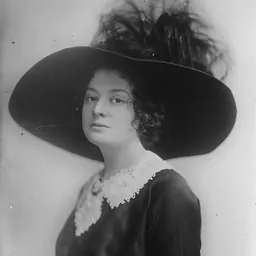
Related people
Same field, nearest in time

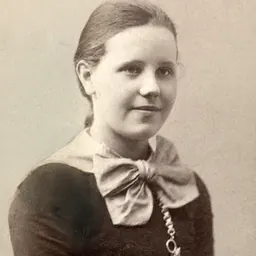

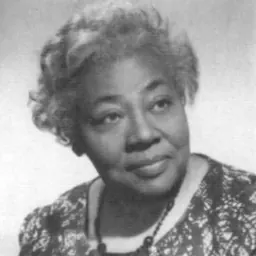
Contemporaries
People whose lives overlapped Eva Tanguay's





Frequently asked questions
Who was Eva Tanguay?
Canadian singer and film actor
When was Eva Tanguay born?
Eva Tanguay was born on 1 August 1878 in Dudswell.
When did Eva Tanguay die?
Eva Tanguay died on 11 January 1947 in Hollywood.
What was Eva Tanguay's occupation?
Eva Tanguay was a singer, film actor and ziegfeld girl.
What nationality was Eva Tanguay?
Eva Tanguay was Canadian.
Sources & further reading
Cite this page
APA: Biography.guide. (2026). Eva Tanguay. https://biography.guide/eva-tanguay/
MLA: "Eva Tanguay." Biography.guide, https://biography.guide/eva-tanguay/.
Chicago: "Eva Tanguay." Biography.guide. https://biography.guide/eva-tanguay/.
Data last updated: 2026-09-22 · Spot an error? Report a correction.
Portrait: Wikimedia Commons · author & licence
Page generated 2026-09-27 04:58 UTC