
About Eva Hesse
Lived 1936 – 1970 (aged 34). Eva Hesse was a German and American sculptor, painter, draftsperson, textile artist, artist and collagist.
Eva Hesse (January 11, 1936 – May 29, 1970) was a German-born American sculptor known for her pioneering work in materials such as latex, fiberglass, and plastics. She is one of the artists who ushered in the postminimal art movement in the 1960s.
Life Hesse was born into a family of observant Jews in Hamburg, Germany, on January 11, 1936. She was the second born child of Wilhelm Hesse, an attorney, and Ruth Marcus Hesse. When Hesse was two years old in December 1938, her parents, hoping to flee from Nazi Germany, sent Hesse and her older sister, Helen Hesse Charash, to the Netherlands. They were aboard one of the last Kindertransport trains.
After almost six months of separation, the reunited family moved to England and then, in 1939, emigrated to New York City where they settled into Manhattan's Washington Heights. In 1944, Hesse's parents separated; her father remarried in 1945 and her mother killed herself in 1946.
In October 1969, she was diagnosed with a brain tumor, and she died on Friday, May 29, 1970, after three failed operations within a year. Her death at the age of 34 ended a career that would become highly influential, despite spanning only a decade.
Career Hesse graduated from New York's School of Industrial Art at the age of 16, and in 1952 she enrolled in the Pratt Institute of Design. She dropped out only a year later. From 1954 to 1957 she studied at Cooper Union and in 1959 she received her BA from Yale University.
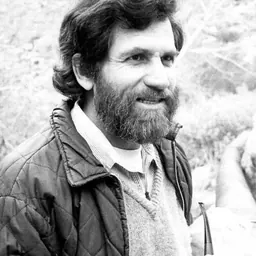
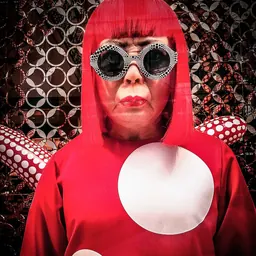
After Yale, Hesse returned to New York, where she became friends with many other young minimalist artists, including Sol LeWitt, Donald Judd, Yayoi Kusama, and others. Her close friendship with Sol LeWitt continued until the end of her life. The two frequently wrote to one another, and in 1965 LeWitt famously counseled a young doubting Eva to "Stop [thinking] and just DO!" Both Hesse and LeWitt went on to become influential artists; their friendship stimulated the artistic development of their work.
In November 1961, Eva Hesse married fellow sculptor Tom Doyle. In August 1962, Eva Hesse and Tom Doyle participated in an Allan Kaprow Happening at the Art Students League of New York in Woodstock, New York. There Hesse made her first three-dimensional piece: a costume for the Happening. In 1963, Eva Hesse had a one-person show of works on paper at the Allan Stone Gallery on New York's Upper East Side. By 1965 the two had moved to Germany so that Doyle could pursue an artist's residency from German industrialist and collector Friedrich Arnhard Scheidt, a move Hesse was not happy about. Hesse and Doyle, whose marriage was by then falling apart, lived and worked in an abandoned textile mill in Kettwig-on-the-Ruhr near Essen for about a year.. The building still contained machine parts, tools, and materials from its previous use and the angular forms of these disused machines and tools served as inspiration for Hesse's mechanical drawings and paintings. Her first sculpture was a relief titled Ringaround Arosie, which featured cloth-covered cord, electrical wire, and masonite.
Methods, materials, and processes
Hesse's early work (1960–65) consisted primarily of abstract drawings and paintings. However, she created most of her drawings as a separate body of work. She stated, "they were related because they were mine but they weren't related in one completing the other."
Hesse's interest in latex as a medium for sculptural forms had to do with immediacy. Art critic John Keats stated: "immediacy may be one of the prime reasons Hesse was attracted to latex".
Postminimalism and feminism
Eva Hesse is associated with the Postminimal art movement. Arthur Danto distinguished post-minimalism from minimalism by its "mirth and jokiness," its "unmistakable whiff of eroticism," and its "nonmechanical repetition."
Hesse worked and sometimes competed with her male counterparts in post-minimalist art, a primarily male-dominated movement. Many feminist art historians have noted how her work successfully illuminates women's issues while refraining from any obvious political agenda. She revealed, in a letter to Ethelyn Honig (1965), that a woman is "at disadvantage from the beginning… She lacks conviction that she has the 'right' to achievement. She also lacks the belief that her achievements are worthy". She continued to explain that, "a fantastic strength is necessary and courage. I dwell on this all the time. My determination and will are strong but I am lacking so in self-esteem that I never seem to overcome." Hesse's drawings have often been noted as drafts for later sculptures, but Hesse herself disavowed any strong connection. Her work embodies elements of minimalism in its simple shapes, delicate lines, and limited color palette. Barry Schwabsky described her work for the Camden Arts Centre in London: "Things folded, things piled, things twisted, things wound and unwound; tangled things, blunt things to connect to; materials that have a congealed look, materials that seem lost or discarded or mistreated; shapes that look like they should have been made of flesh and shapes, that look like they might be made of flesh but should not have been – you can look at these things, these materials, these shapes, and feel the shudder of an unnamable nanosensation, or you can let your eye pass by them without reaction; maybe you can do both at once." All of her work, and especially her drawings, are based on repetition and simple progressions.
Preservation of artworks There has been ongoing discussion about how best to preserve Eva Hesse's sculptures. With the exception of fiberglass, most of her favored materials have aged badly, so much of her work presents conservators with an enormous challenge. Arthur Danto, writing of the Jewish Museum's 2006 retrospective, refers to "the discolorations, the slackness in the membrane-like latex, the palpable aging of the material… Yet, somehow the work does not feel tragic. Instead, it is full of life, of eros, even of comedy… Each piece in the show vibrates with originality and mischief."
In some cases, her work is damaged beyond presentation. For instance, Sans III can no longer be exhibited to the public because the latex boxes have curled in on themselves and crumbled. Hesse's close friend Sol LeWitt argued for steps for active conservation, "She wanted her work to last ... She certainly didn't have the attitude that she would mutely sit by and let it disintegrate before her eyes." LeWitt's response is supported by many of Hesse's other friends and colleagues. However, Hesse's dedication to material and process contradicts her intention for these works to attain permanency. When discussing this topic with collectors in mind, she wrote, "At this point, I feel a little guilty when people want to buy it. I think they know but I want to write them a letter and say it's not going to last. I am not sure what my stand on lasting really is. Part of me feels that it's superfluous and if I need to use rubber that is more important. Life doesn't last; art doesn't last."
Legacy Her art is often viewed in the context of the many struggles of her life. This includes escaping from the Nazis, her parents' divorce, the suicide of her mother when she was 10, her failed marriage, and the death of her father. A 2016 documentary entitled Eva Hesse, premiered in New York, illustrated her painful background. Directed by Marcie Begleiter, the film tells the story of Hesse's "tragically foreshortened life". It "focuses on those years of artistic emergence, a period of rapid development and furious productivity, with few parallels in the history of art."
While experiences no doubt had profound impressions on Hesse, the true impact of her artwork has been her formal, artistic invention: for example, her inventive uses of material, her contemporary response to the minimalist movement, and her ability to usher in the postmodern and postminimalist art movements. Arthur Danto connects the two by describing her as "cop[ing] with emotional chaos by reinventing sculpture through aesthetic insubordination, playing with worthless material amid the industrial ruins of a defeated nation that, only two decades earlier, would have murdered her without a second thought." Prominent artists that have noted her as a primary influence include Japanese artist Eiji Sumi
Exhibitions In 1961, Hesse's gouache paintings were exhibited in Brooklyn Museum's 21st International Watercolor Biennial. Simultaneously, she showed her drawings in the John Heller Gallery exhibition Drawings: Three Young Americans. The exhibition was pivotal in Hesse's career, securing her reputation at the time.
There have been dozens of major posthumous exhibitions in the United States and Europe. An early one was at the Guggenheim Museum (1972), while in 1979, three separate iterations of an Eva Hesse retrospective were held, entitled Eva Hesse: Sculpture. These exhibitions took place at the Whitechapel Art Gallery in London from May 4 – June 17, 1979; the Kröller-Müller in Otterlo from June 30 – August 5, 1979; and the Kestner-Gesellschaft in Hannover from August 17 – September 23, 1979. One artwork featured in the exhibition was Aught, four double sheets of latex stuffed with polyethylene. In 1982, Ellen H. Johnson organized the first retrospective dedicated entirely to Hesse's drawings, which traveled to the Grey Art Gallery at NYU, the Allen Memorial Art Museum at Oberlin College, the Renaissance Society at the University of Chicago, the Contemporary Arts Museum in Houston, and the Baltimore Museum of Art. In 1992 and 1993, retrospective exhibitions were held in New Haven, Valencia and Paris.
Numerous major exhibitions have been organized since the early 2000s, including a major show in 2002 (organized jointly between the San Francisco Museum of Modern Art, Tate Modern and Museum Wiesbaden), and concurrent exhibitions in 2006 at The Drawing Center in New York and the Jewish Museum of New York. An exhibition of her drawings from the collection of the Allen Memorial Art Museum will travel in 2019-20 to the Museum Wiesbaden, Mumok in Vienna, Hauser & Wirth New York, and the Allen Memorial Art Museum.
Collections Over 20 of her works feature in the Museum of Modern Art, in New York. The largest collection of Hesse's work outside of the United States is in Museum Wiesbaden, which started actively acquiring her work after the 1990 exhibition "Female Artists of the Twentieth Century." One of the largest collections of Hesse's drawings is in the Allen Memorial Art Museum at Oberlin College, which also maintains the Eva Hesse Archive, donated to the museum by the artist's sister, Helen Hesse Charash, in 1977. Other public collections include the National Gallery of Art (US), Art Institute of Chicago, the Hirshhorn Museum and Sculpture Garden, the National Gallery of Australia, the Nelson-Atkins Museum of Art, San Francisco Museum of Modern Art, the Solomon R. Guggenheim Museum, the Tate Gallery, the Jewish Museum and the Whitney Museum of American Art.
List of selected works Untitled. 1963–64. Oil on canvas. 59 × 39 1/4 in. The Jewish Museum (Manhattan). Ringaround Arosie. 1965. Pencil, acetone, varnish, enamel paint, ink, and cloth covered electrical wire on papier-mâché and masonite. 26 3/8 x 16 1/2 x 4 1/2 in. Museum of Modern Art, New York. Laocoön. 1965-66. Acrylic, cloth-covered cord, wire, papier-mâché over plastic plumbers' pipe. 130 x 23 1/4 x 23 1/4 in. Allen Memorial Art Museum, Oberlin. Untitled or Not Yet. Nets. 1966. Polyethylene, paper, lead weights, and cord. 71 x 15 1/2 x 8 1/4 in. San Francisco Museum of Modern Art, San Francisco. Hang Up. 1966. Acrylic on cloth over wood; acrylic on cord over steel tube. 72 × 84 × 78 in. Art Institute of Chicago, Chicago. Addendum. 1967. Painted papier-mâché, wood and cord. Dimensions variable. Tate Collection. Repetition Nineteen III. 1968. Fiberglass and polyester resin. 19 units, dimensions variable. Museum of Modern Art, New York. Sans II. 1968. Fiberglass and polyester resin. 38 in. x 86 in. x 6 1/8 in. Five parts divided among: San Francisco Museum of Modern Art, San Francisco; Glenstone Museum; Whitney Museum of American Art; Museum Wiesbaden; and Daros Collection, Switzerland. Contingent. 1969. Cheesecloth, latex, fiberglass. 8 units, dimensions variable. National Gallery of Australia, Canberra. Accession II. 1969. Galvanized steel and vinyl. 30 3/4 × 30 3/4 × 30 3/4 in. Detroit Institute of Arts, Detroit. Right After. 1969. Fiberglass. 5 × 18 × 4 ft. Milwaukee Art Museum, Milwaukee. Expanded Expansion. 1969. Fiberglass, polyester resin, latex, and cheesecloth. 122 inches x 300 in. Guggenheim Museum, New York. No Title. 1969–70. Latex, rope, string, and wire. Dimensions variable. Whitney Museum of American Art.
Don’t just read it —
keep it.
Full-length biographies made to live with: read them, listen on the way to work, watch them tonight.
- E-book
- Audio
- Video
Instant download · yours to keep · every purchase keeps this site free
Important facts
People in Eva Hesse's life
Named in this biography and alive at the same time






Related people
Same field, nearest in time



Contemporaries
People whose lives overlapped Eva Hesse's



Frequently asked questions
Who was Eva Hesse?
German-born American sculptor and textile artist (1936-1970)
When was Eva Hesse born?
Eva Hesse was born on 11 January 1936 in Hamburg.
When did Eva Hesse die?
Eva Hesse died on 29 May 1970 in New York City.
What was Eva Hesse's occupation?
Eva Hesse was a sculptor, painter, draftsperson, textile artist, artist and collagist.
What nationality was Eva Hesse?
Eva Hesse was German and American.
Sources & further reading
Cite this page
APA: Biography.guide. (2026). Eva Hesse. https://biography.guide/eva-hesse/
MLA: "Eva Hesse." Biography.guide, https://biography.guide/eva-hesse/.
Chicago: "Eva Hesse." Biography.guide. https://biography.guide/eva-hesse/.
Data last updated: 2026-09-20 · Spot an error? Report a correction.
Page generated 2026-09-27 05:26 UTC