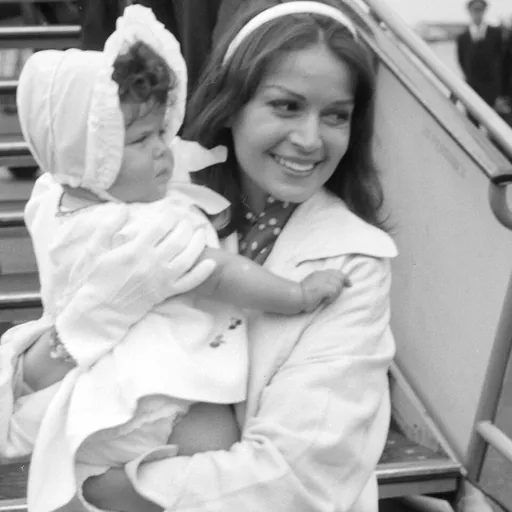
About Eva Bartok
Lived 1927 – 1998 (aged 71). Eva Bartok was a British and Hungarian film actor.
Early life Bartok was born Éva Márta Szőke Ivanovics in Kecskemét, Hungary, to a Jewish father and a Catholic mother. As a young child, she performed in school productions from the age of six, and later in charity events and for wounded soldiers during the Second World War.
Following the outbreak of the war, her father stayed in Budapest. Bartok and her mother moved to live in Kecskemét, to the south of the city, where her mother had relatives. Her father would visit them on Sundays, but later disappeared without a trace during the Nazi period.
To avoid persecution as the daughter of a Jewish father, the teenage Bartok was forced aged 15 to gain protection by marrying Géza Kovács, a Hungarian officer who had Nazi connections.
Career Following the end of the Second World War, Bartok decided to enter the acting profession, and successfully sat an examination at the Drama Centre in Budapest. One of the examiners was the director of the prominent Belvárosi Szinház theatre, and he was impressed enough to, in 1945, offer Bartok a three-year contract. She made her professional debut in a performance of J. B. Priestley's A Conway család (Time and the Conways), which ran at the Belvárosi Szinház for three months. She also performed at the Nemzeti Kamara in 1947. She then performed in Gáspár Margit's Új Isten Thébában (New God in Thebes) in 1946, followed by Áron Tamási's drama Hullámzó vőlegény in 1947, George Bernard Shaw's Androkles és az oroszlánok (Androcles and the Lion), and Jean-Paul Sartre's A tisztességtudó utcalány (The Respectful Prostitute).
She first appeared in front of the camera in the 1947 Hungarian film Prophet of the Fields which was banned by the communist censors for political reasons.
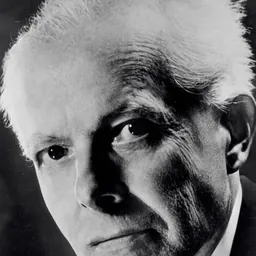
Feeling threatened and persecuted by the new Communist regime in Hungary, she asked for help from Hollywood-based Hungarian producer Alexander Paal, who had been a friend of her father. Paal arranged a "passport marriage", and took her to London. Bartok was later able to smuggle her mother out of Hungary, via Austria and Germany, to eventually settle her in France. As one of its producers, Paal was able to arrange for Bartok to appear in the British-Italian international co-production drama film A Tale of Five Cities (which was released as A Tale of Five Women in the US). It was filmed in 1948, but due to financial difficulties, it was not released until 1951. As her surname would have been an hindrance to Western audiences, she changed her professional name to "Bartok", after the well-known Hungarian composer Béla Bartók. After divorcing Paal, Eva was introduced though the Hungarian expatriate community to fellow emigre Alexander Korda, who arranged for her to be put under contract to London Films. In 1957, Bartok appeared in the musical Ten Thousand Bedrooms, opposite Dean Martin. The movie was filmed in Italy and in Hollywood, and for a time, she resided in Los Angeles.
She made Operation Amsterdam in England.
Following that production, her best-known roles were in The Doctor of Stalingrad, which was released in 1958, and in 1961's It Can't Always Be Caviar, opposite O. W. Fischer.
In 1955, Bartok published a novel, Fighting Shadows, and in 1959, an autobiography, Worth Living For.
She died on 1 August 1998 at St. Charles's Hospital in London.
She met the British aristocrat David Mountbatten, 3rd Marquess of Milford Haven, at a London dinner in 1952. Mountbatten was prominent in the London demi-monde of the 1950s, which brought together a colourful mix of aristocrats and shadowy social climbers, such as osteopath Stephen Ward.
Her relationship with Mountbatten ended after Bartok began a relationship with German actor Curd Jürgens when they acted in a movie together in Germany. Amidst great media interest, she married Jürgens on 13 August 1955 in Schliersee, Germany. It was Jürgens's third marriage. They divorced on 6 November 1956. Shortly after her marriage to Jürgens had ended, Bartok gave birth to a daughter, Deana, in London, on 7 October 1957.
Three decades later, Bartok claimed Deana's biological father was actually Frank Sinatra, as a result of a very brief affair in 1956 with him, following the break-up of Sinatra's marriage to Ava Gardner. Bartok had first met Frank Sinatra at a party while she was in Hollywood in 1955, while appearing in the film Ten Thousand Bedrooms, alongside Dean Martin. Sinatra never acknowledged that he was the father.
In 1980, Bartok married her fifth husband, the American producer Dag Molin, and lived with him in Los Angeles until their divorce in 1983.
Selected filmography
Prophet of the Fields (1947) Madeleine (1950) Uncredited. A Tale of Five Cities (1951) It had the alternative titles of Passaporto per l'oriente in Italy and A Tale of Five Women in the United States. The Crimson Pirate (1952) Venetian Bird (1952). Released in the US as The Assassin. Spaceways (1953) Park Plaza 605 (1953). Also known as Norman Conquest. The Last Waltz (1953) Filmed in German under the title Der letzte Walzer. Circus of Love (1954) Filmed in German under the title Rummelplatz Der Liebe. Meines Vaters Pferde I. Teil Lena und Nicoline (1954) Front Page Story (1954) Victoria and Her Hussar (1954). Filmed in German under the title Victoria und ihr Husar. Orient Express (1954) Break in the Circle (1955) Special Delivery (1955). Released in German with title Von Himmel Gefallen. Dunja (English: Her Crime Was Love, 1955) The Gamma People (1956) Without You All Is Darkness (1956). Filmed in German under the title Ohne dich wird es Nacht). Through the Forests and Through the Trees (1956). Filmed in German under the title Durch die Wälder, durch die Auen. Ten Thousand Bedrooms (1957) The Doctor of Stalingrad (1958). Filmed in German under the title Der Arzt von Stalingrad. (a.k.a. Naked in the Night, 1958) Operation Amsterdam (1959) Twelve Hours By the Clock (1959) SOS Pacific (1959) Ein Student ging vorbei (1960) Beyond the Curtain (1960) (1960) Blind Justice (1961). Filmed in German under the title Unter Ausschluß der Öffentlichkeit. It Can't Always Be Caviar (1961) This Time It Must Be Caviar (1961) Aurora Marriage Bureau (1962) Avventura al motel (1963) A Holiday Like Never Before (1963) Blood and Black Lace (1964) Sabina (1966)
Don’t just read it —
keep it.
Full-length biographies made to live with: read them, listen on the way to work, watch them tonight.
- E-book
- Audio
- Video
Instant download · yours to keep · every purchase keeps this site free
Important facts
Family & relationships
People in Eva Bartok's life
Named in this biography and alive at the same time




Related people
Same field, nearest in time


Contemporaries
People whose lives overlapped Eva Bartok's

Frequently asked questions
Who was Eva Bartok?
Hungarian-British actress (1927–1998)
When was Eva Bartok born?
Eva Bartok was born on 18 June 1927 in Kecskemét.
When did Eva Bartok die?
Eva Bartok died on 1 August 1998 in London.
What was Eva Bartok's occupation?
Eva Bartok was a film actor.
What nationality was Eva Bartok?
Eva Bartok was British and Hungarian.
Sources & further reading
Cite this page
APA: Biography.guide. (2026). Eva Bartok. https://biography.guide/eva-bartok/
MLA: "Eva Bartok." Biography.guide, https://biography.guide/eva-bartok/.
Chicago: "Eva Bartok." Biography.guide. https://biography.guide/eva-bartok/.
Data last updated: 2026-09-22 · Spot an error? Report a correction.
Portrait: Wikimedia Commons · author & licence
Page generated 2026-09-27 04:59 UTC