
About Eulalie Spence
Lived 1894 – 1981 (aged 86). Eulalie Spence was an American playwright, writer and teacher.
Eulalie Spence (June 11, 1894 Spence, who described herself as a "folk dramatist" who made plays for fun and entertainment, and received more recognition than other black playwrights of the Harlem Renaissance period, winning several competitions.
Early life Spence was born on the island of Nevis in the British West Indies on June 11, 1894, to Robert and Eno Lake Spence, The plantation was destroyed by a hurricane,
Writing career W. E. B. Du Bois, founder and editor of The Crisis, the monthly journal of the N.A.A.C.P., surmised that Black Drama must be built from scratch, by Blacks for a Black theater. In 1926, he founded Krigwa (Crisis Guild of Writers and Artists), originally known as Crigwa. The contest, originally titled "The Amy Spingarn Prizes in Literature and Art", was held in 1925 and 1926, and was funded by Amy Spingarn, wife of Joel Elias Spingarn, who was treasurer of the N.A.A.C.P. at the time, and later served as president. Mrs. Spingarn contributed over $1200.00 to prize winners. Spence finished second in the 1926 Krigwa playwriting contest for her one act play Foreign Mail. a magazine published by Charles S. Johnson. In 1927, Fool’s Errand, with sets designed by artist Aaron Douglas competed in the Fifth Annual International Little Theatre Tournament, a first for Blacks since the finalists competed in a Broadway theatre. The Krigwa Players won one of four $200.00 prizes and the play was published by Samuel French. Undertow tied for third place in the 1927 Crisis contest.
Spence's play Her opened the Krigwa Players' second season, and her sisters, Olga and Doralene Spence, acted in the Krigwa Players' productions, with both receiving praise for their acting performances. Doralene Spence went on to replace Rose McClendon as the lead role in In Abraham's Bosom at the Cherry Lane Theatre in 1927. Critic William E. Clarke wrote in the New York Age, “Her…was by far the best of the bill. It was a ghost story and was written with such skill that it rose to the heights of a three-act tragedy that might have been written by a Eugene [O’Neill]." Another play by Spence, On Being Forty, went unpublished, but was presented publicly on at least two occasions, on October 15, 1924 by the National Ethiopian Art Theatre, and a presentation in Newark, New Jersey by the Bank Street Players, the first Little Negro Theater in New Jersey, on May 6, 1927. Spence also directed two plays, Before Breakfast by Eugene O'Neill and Joint Owners in Spain by Alice Brown for the Dunbar Garden Players, a short-lived theater group that was named in honor of Paul Laurence Dunbar. however, Spence and Du Bois did not see eye to eye, artistically or politically. Du Bois felt that theatre should be used as a vehicle for propaganda to advance the cause of the American Negro. Spence, on the other hand, always acutely aware that she was from the West Indies, had a different outlook on the theatre. She felt that the theatre was a place for people to be entertained and not antagonized by the problems of society. In a 1928 essay for Opportunity she wrote, "The white man is cold and unresponsive to this subject and the Negro, himself, is hurt and humiliated by it. We go to the theatre for entertainment, not to have old fires and hates rekindled." Du Bois tried several times to get Spence to write politically themed drama but she refused. Du Bois took the $200.00 prize money from the 1927 Little Theatre Tournament and used it to reimburse production expenses and paid neither the actors nor Spence. The Krigwa Players disbanded as a result. The story is about a promiscuous young white woman whose arrival in town causes a scandal among the local people. She is attacked by the Ku Klux Klan in an attempt to scare her away. She instead frames the Klan, and uses the media attention to start a movie career. The plot about a white woman subverting the Klan was unique for an African-American female writer in the Harlem Renaissance, as black women of that era wrote mostly about black folk life. Spence crossed racial barriers when she approached the white author to secure publishing rights, and by hiring a white agent, Audrey Wood, who also represented Tennessee Williams. Spence cast Queenie Smith, a popular Broadway actress in the 1920s, in the lead role for the play, which was scheduled to open at the Empress Theatre in Danbury, Connecticut in 1933. The production was canceled without explanation four days before it was to open, and a disheartened Spence optioned the screenplay to Paramount Pictures for $5000.00. The discrepancy is likely due to the fact that she was not listed in the film credits.
Writing style Eulalie Spence developed a sensitivity towards race and gender from memories of her parents' struggles as black immigrants. although she did not have a great deal of financial success. W.E.B. Du Bois' refusal to give Spence a share of the award money won by her play at the National Little Theatre Tournament eventually led to the end of the Krigwa Players. The $5000.00 payment she received for her screenplay of The Whipping was the only compensation she ever received as a writer. while she continued to write and act for Columbia University's Laboratory Players. Spence has actually made a notable contribution to theatrical history, especially in relation to the art theatre movement and the history of African American theatre. The Xoregos Performing Company opened its Harlem Remembered program on February 14, 2015 with a performance of Spence's play The Hunch. The production was directed by Shela Xoregos, and had nine shows February 14–28, 2015 in New York City, Yonkers and Newburgh, in New York state. Her play The Starter premiered in Xoregos Performing Company's program Songs of the Harlem River in New York City's Dream Up Festival, August 30-September 6, 2015. Songs of the Harlem River also opened the Langston Hughes Festival in Queens, New York on February 13, 2016. "She's Got Harlem On Her Mind," a trio of three plays, "Hot Stuff," "The Starter," and "The Hunch," opened in February, 2023 at the Metropolitan Playhouse in New York City.
Death Annie M Warner Hospital and Nurses Home, Gettysburg Pa. Eulalie Spence was in this hospital at the time of her death. Eulalie Spence died in Gettysburg, Pennsylvania, on March 7, 1981, at the age of 86.
Written works
Plays
The Starter (1923) On Being Forty (This play was never published, but was first presented on October 15, 1924 at the Lafayette Theater in Harlem. No extant copies of the script have been found.)
Don’t just read it —
keep it.
Full-length biographies made to live with: read them, listen on the way to work, watch them tonight.
- E-book
- Audio
- Video
Instant download · yours to keep · every purchase keeps this site free
Important facts
People in Eulalie Spence's life
Named in this biography and alive at the same time


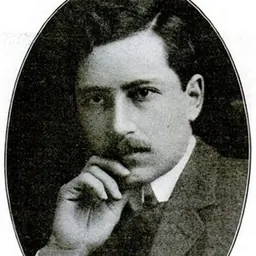
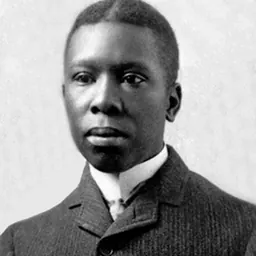
Related people
Same field, nearest in time




Contemporaries
People whose lives overlapped Eulalie Spence's

Frequently asked questions
Who was Eulalie Spence?
American writer (1894-1981)
When was Eulalie Spence born?
Eulalie Spence was born on 11 June 1894 in Nevis.
When did Eulalie Spence die?
Eulalie Spence died on 7 March 1981 in Gettysburg.
What was Eulalie Spence's occupation?
Eulalie Spence was a playwright, writer and teacher.
What nationality was Eulalie Spence?
Eulalie Spence was American.
Sources & further reading
Cite this page
APA: Biography.guide. (2026). Eulalie Spence. https://biography.guide/eulalie-spence/
MLA: "Eulalie Spence." Biography.guide, https://biography.guide/eulalie-spence/.
Chicago: "Eulalie Spence." Biography.guide. https://biography.guide/eulalie-spence/.
Data last updated: 2026-09-24 · Spot an error? Report a correction.
Page generated 2026-09-27 05:00 UTC