
About Eulalia Guzmán
Lived 1890 – 1985 (aged 94). Eulalia Guzmán was a Mexican archaeologist, school teacher, historian, feminist, writer and teacher, known for Cuauhtémoc.
Eulalia Guzmán Barrón (; 1890–1985) was a pioneering feminist, educator, and nationalist thinker in post-revolutionary Mexico. She was one of the first women to work in the field of Mexican archeology. She was the lead investigator of the remains found in Ixcateopan, Guerrero, which she alleged to be those of the last Aztec Emperor, Cuauhtémoc. Three boards of inquiry on the archeological work done at the site refuted Guzmán's findings, calling her field methods into question. Her lasting legacy was the collection of Mexico's history from archives throughout the world and creation of the National Library of Anthropology and History.
Biography Eulalia Guzmán Barrón was born 12 February 1890 in San Pedro Piedra Gorda, in the Cuauhtémoc Municipality, Zacatecas, Mexico. When she was eight years old, her family moved to Mexico City. From an early age, Guzmán rejected the idea that women were destined for domesticity and was determined to become a teacher. She was awarded a grant to study at the Normal School for Teachers and graduated in 1910. Socialist schooling methods introduced in Mexico at this time from Spain radicalized many teachers of the era. From 1909 to 1914, Guzmán served as Assistant for the Normal School.
Her educational background spurred the Constitutionalists to send Guzmán to the United States in 1921 to investigate schools there. While in the US, Guzmán, along with Elena Torres and Julia Nava de Ruisánchez represented the Mexican Feminist Council at the 1922 League of Women Voters convention in Baltimore, and the Pan-American Conference of Women. Returning to Mexico, she taught in a rural primary school in Bácum designed for Yaqui education and also ran a night school for adults. Between 1923 and 1924, she returned to Mexico City and served as the director of the national illiteracy campaign. with Alfonso Caso and in 1934 was one of the first to study the pre-Columbian site of Chalcatzingo. She was appointed to serve as the Director of the Department of Archaeology of the National Museum in 1934 and two years later was commissioned to visit museums and libraries in Europe and the US In 1942 she explored the archaeological sites of Izapa and Comitán in Chiapas and her own birthplace, San Pedro Piedra Gorda.
Guzmán examined the documents purporting to have been from a Franciscan priest and believing them to be authentic began an excavation of the main church at Ixcateopan. She discovered bones which she declared to belong to Cuauhtémoc. Initially scholars congratulated Guzmán, but after an examination was conducted by INAH to confirm the findings, Guzmán's authentication was rejected. Public outcry brought prominent citizens of the indigenismo movement, including Diego Rivera and others, to support Guzman's conclusions that the bones in the ossuary were authentic. The Secretariat of Public Education (SEP) empaneled a "Grand Commission" composed of some of Mexico's most prominent scholars including Arturo Arnáiz y Freg, Alfonso Caso, Manuel Gamio, José Gómez Robleda and Manuel Toussaint for a second review. Their findings concluded the documents were forged, the bones were recent, and they reprimanded Guzmán for her methods.
Guzmán and others published numerous articles to refute the findings of the commission. The intellectual and scholarly community divided into the camp that supported Guzman and the camp that did not. In an effort to finally put the controversy to an end, a fourth commission was established in 1976 by president Luis Echeverría. Guillermo Bonfil Batalla, general director of INAH, assembled archeologists, architects, anthropologists, forensic examiners, and historians, who evaluated the archeological materials, re-excavated the site and re-examined the documentation. Their conclusions mirrored previous findings that the bones and claims were a hoax. Guzmán's loss of impartiality, though condemned by academia, did not dampen her popularity with native populations, who have honored her with festivals and renamed the town square in her honor.
She died on 1 January 1985 in Mexico City.
Selected publications La escuela nueva o de la accion (1923). (In Spanish) Caracteres esenciales del arte antiguo mexicano: su sentido fundamental (1932) (In Spanish) Los relieves de las rocas del cerro de la Cantera, Jonacatepec, Morelos (1934) (In Spanish) Exploracion arqueologica en la Mixteca Alta (1934) (In Spanish) "Un "yugo" totonaco de Medellín, Ver" Boletín del Museo Nacional de Arqueología, Historia y Etnología, Epoca 6a, T. 1 (1934) (In Spanish) Un manuscrito de la colección Boturini que trata de los antiguos Señores de Teotihuacán (1938) (In Spanish) "The Art of Map-Making among the Ancient Mexicans" Imago Mundi Vol. 3 (1939): 1-6. (In English) Lo que vi y oí (1941) (In Spanish) Letter to Jaime Torres Bodet, 1950, and short papers on the tomb of Cuauhtémoc (1950) (In English) with Alfonso Caso. La genealogía y biografía de Cuauhtemoc: refutación a las afirmaciones del grupo oponente de la llamada Gran Comisión (1954) (In Spanish) Cuauhtémoc; datos biograficos y cronologicos segun la historia y la tradicion de Ixcateopan (1955) (In Spanish) Relaciones de Hernán Cortés a Carlos V sobre la invasión de Anáhuac (1958) (In Spanish) Pruebas y dictámenes sobre la autenticidad de los restos de Cuauhtémoc (1962) (In Spanish) Mexico, sus antiguos pobladores (1963) (In Spanish) Manuscritos sobre México en archivos de Italia {1964) (In Spanish) Moctezuma Xocoyotzin (1966) (In Spanish) Ichcateopan, la tumba de Cuauhtemoc : héroe supremo de la historia de México. [Tradición oral, documentos, los dictamenes negativos, los concluyentes estudios químicos, antropológicos, históricos, matemáticos, anatómicos, paleográficos (1973) (In Spanish)
Don’t just read it —
keep it.
Full-length biographies made to live with: read them, listen on the way to work, watch them tonight.
- E-book
- Audio
- Video
Instant download · yours to keep · every purchase keeps this site free
Important facts
People in Eulalia Guzmán's life
Named in this biography and alive at the same time

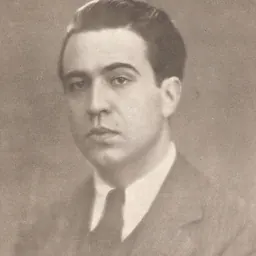
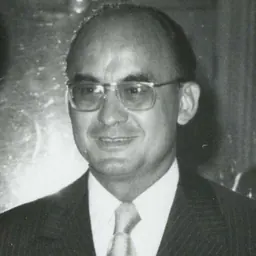



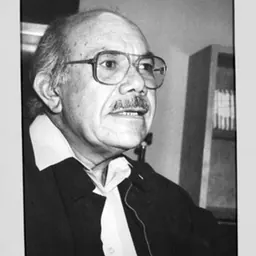
Related people
Same field, nearest in time

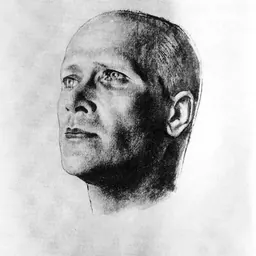
Contemporaries
People whose lives overlapped Eulalia Guzmán's



Frequently asked questions
Who was Eulalia Guzmán?
Mexican archaeologist (1890–1985)
When was Eulalia Guzmán born?
Eulalia Guzmán was born on 12 February 1890 in San Pedro Piedra Gorda.
When did Eulalia Guzmán die?
Eulalia Guzmán died on 1 January 1985 in Mexico City.
What was Eulalia Guzmán's occupation?
Eulalia Guzmán was an archaeologist, school teacher, historian, feminist, writer and teacher.
What was Eulalia Guzmán known for?
Eulalia Guzmán was known for Cuauhtémoc.
What nationality was Eulalia Guzmán?
Eulalia Guzmán was Mexican.
Sources & further reading
Cite this page
APA: Biography.guide. (2026). Eulalia Guzmán. https://biography.guide/eulalia-guzman/
MLA: "Eulalia Guzmán." Biography.guide, https://biography.guide/eulalia-guzman/.
Chicago: "Eulalia Guzmán." Biography.guide. https://biography.guide/eulalia-guzman/.
Data last updated: 2026-09-20 · Spot an error? Report a correction.
Page generated 2026-09-27 05:21 UTC