
About Jaime Torres Bodet
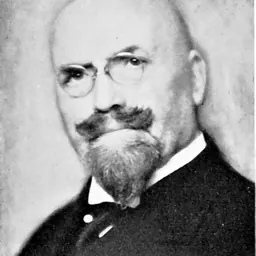
Lived 1902 – 1974 (aged 72). Jaime Torres Bodet was a Mexican writer, poet, diplomat, politician, minister and university teacher.
Jaime Mario Emilio Torres Bodet (17 April 1902 – 13 May 1974) was a prominent Mexican politician and writer who served in the executive cabinet of three Presidents of Mexico. He was the second Director-General of the United Nations Educational, Scientific and Cultural Organization (UNESCO), serving from 1948 until his resignation in 1952.
Life Torres Bodet was born in Mexico City. His mother was Emilia Bodet Levallois, a Peruvian of French heritage, and his father was Alejandro Torres Girbent from Barcelona. The couple met in Peru, married and migrated to Mexico in the very late 19th century. His father was a promoter of operas and theatre, activities which impressed Jaime as a young child. Jaime was one of two children. He had a younger brother, Mario, who died very young and to whom Torres Bodet does not refer in his memoirs. The family was wealthy, living in a home on Donceles Street that allow them to see then-president Porfirio Díaz arrive for official business at the Chamber of Deputies across the street. He published his first book of poems at age 16.
He lost sight in one eye in 1954, while returning to Mexico City from Cuernavaca. Soon after, he was appointed the head of libraries for the Secretariat of Public Education. In addition to these responsibilities, he founded a magazine called Falange along with several friends and the support of Vasconcelos. He then was appointed to the rectory of the National University (today UNAM), tasked with formulating the legal basis of the new educational system.
From 1938 to 1941 he worked with a younger generation of writers such as Rafael Solana, Octavio Paz, Efraín Huerta and Alberto Quintero on a project and publication called Taller Poético (Poetic Workshop). His work has fallen into relative obscurity since his death despite being well-appreciated during his time. He was appointed Secretary of Public Education (1943–46) by President Manuel Ávila Camacho; he then served as the Secretary of Foreign Affairs (1946–1948) under President Miguel Alemán Valdés. He was then elected the director-general of UNESCO on November 26, 1948 until 1952. After withdrawing from his position at UNESCO, Torres Bodet returned to Mexico. At the time, it was not possible for him to take on a government post, as the window for accepting high-level public positions had closed in mid-1952. In February 1953, he agreed with Alejandro Quijanoto to write a weekly piece for Quijantoto's newspaper Novedades. He was then ambassador of Mexico to France from 1954 to 1958.
Torres Bodet always had a strong belief in the power of education and a concern for those in countries with less money and power. He strongly believed that education could help reduce such inequality which he believed was due to colonialism. Thus one of his major projects during his time at UNESCO was his proposal for six teacher training centers all around the world (including India, Egypt, Mexico, and Iraq) so as to promote literacy. These agencies were known as Regional Centers for Fundamental Education. and Statement on the nature of race and race differences (Paris, June 1951 ). (page 3).
From 1955 to 1958 he was Ambassador to France.
He received the Medal of Honor Belisario Domínguez from the Senate in 1971.
He was also a member of the Mexican Language Academy (the national correspondent agency to the Spanish Royal Academy) and of the National College.
Torres Bodet died by suicide in Mexico City on 13 May 1974.
Works Poetry
Poemas juveniles (1916–1917) Fervor (1918) Canciones (1922) El corazón delirante (1922) Nuevas canciones (1923) La casa (1923) Los días (1923) Poemas (1924) Biombo (1925) Destierro (1930) Cripta (1937) Sonetos (1949) Fronteras (1954) Sin tregua (1957) Trébol de cuatro hojas (1958) Poemas recientes (1965–1966) Invitación al viaje (?)
Narrative
Margarita de niebla (1927) La educación sentimental (1929) Proserpina rescatada (1931) Estrella de día (1933) Primero de enero (1934) Sombras (1935) Nacimiento de Venus y otros relatos (1941)
Essays Lecturas clásicas para niños (1925) Contemporáneos (1928) Coordinación interamericana (1941) Misión del escritor (1942) Mensaje a la juventud (1944) Educación y concordia internacional (1948) La misión de la UNESCO (1949)
Memoirs Años contra el tiempo (Years Against Time, 1969) La victoria sin alas (Victory Without Wings, 1970) El desierto internacional (The International Desert, 1971) La tierra prometida (The Promised Land, 1972) Equinoccio (Equinox, 1974, published posthumously)
Don’t just read it —
keep it.
Full-length biographies made to live with: read them, listen on the way to work, watch them tonight.
- E-book
- Audio
- Video
Instant download · yours to keep · every purchase keeps this site free
Important facts
People in Jaime Torres Bodet's life
Named in this biography and alive at the same time

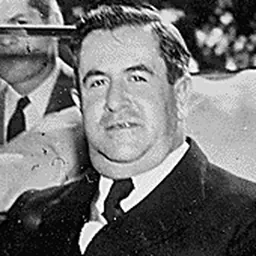
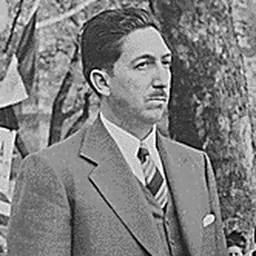
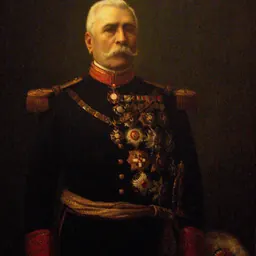




Related people
Same field, nearest in time


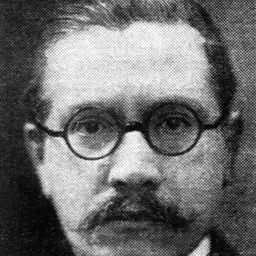

Contemporaries
People whose lives overlapped Jaime Torres Bodet's



Frequently asked questions
Who was Jaime Torres Bodet?
Mexican politician (1902-1974)
When was Jaime Torres Bodet born?
Jaime Torres Bodet was born on 17 April 1902 in Mexico City.
When did Jaime Torres Bodet die?
Jaime Torres Bodet died on 13 May 1974 in Mexico City.
What was Jaime Torres Bodet's occupation?
Jaime Torres Bodet was a writer, poet, diplomat, politician, minister and university teacher.
What nationality was Jaime Torres Bodet?
Jaime Torres Bodet was Mexican.
Sources & further reading
· Wikipedia: Jaime Torres Bodet
Cite this page
APA: Biography.guide. (2026). Jaime Torres Bodet. https://biography.guide/jaime-torres-bodet/
MLA: "Jaime Torres Bodet." Biography.guide, https://biography.guide/jaime-torres-bodet/.
Chicago: "Jaime Torres Bodet." Biography.guide. https://biography.guide/jaime-torres-bodet/.
Data last updated: 2026-09-26 · Spot an error? Report a correction.
Page generated 2026-09-27 05:14 UTC