
About Eugenius Birch
Lived 1818 – 1884 (aged 65). Eugenius Birch was a British architect, civil engineer and engineer.
The Grade II*-listed Eastbourne Pier, designed in 1870 by Eugenius Birch. Eugenius Birch (20 June 1818 – 8 January 1884) was a 19th-century English seaside architect, civil engineer and noted builder of promenade-piers and two large aquaria.
Biography Both Eugenius and his elder brother, John Brannis (1813–1862), were born in Gloucester Terrace (later Pitfield Street), Shoreditch, London to John and his wife, Susanne. John was an architect and a surveyor according to the Obituary of Eugenius Birch, while according to Oxford Dictionary of National Biography he was a corn dealer. He attended schools in Brighton and at Euston Square. Fascinated by engineering from a young age, he would often visit major engineering works being built in north London (such as the Primrose Hill Tunnel). While still a boy he submitted a design for a passenger carriage to the London and Greenwich Railway company. His innovation, to place the wheels beneath the carriage as opposed to the side, thus freeing more room for the passengers was adopted by the railway.
Career As a result of the success in getting his idea adopted at aged 16 he was able to join Messrs. Bligh's engineering works in Limehouse, London as an apprentice, and then studied at the Mechanics' Institute at the request of Dr George Birkbeck. In 1837, aged 19, he received a silver Isis Medal from the Society of Arts for his drawing of a marine steam engine. the brothers formed a general design engineering partnership in 1843. Birch worked across various projects including railways (such as the East Indian Railway from Calcutta to Delhi), viaducts and bridges including the Kelham and Stockwith bridges.
He also designed the Devon and Somerset Railway, Exmouth docks, Ilfracombe harbour, West Surrey waterworks and Brighton Aquarium, the oldest operational aquarium in the world.
Piers On his return to England from India, Birch applied his global experiences to the developing trend of seaside holidays in England, specifically the construction of piers. With the railways now allowing easy and cheap access to the seaside, and the known health benefits of clean air, businessmen in coastal towns were competing to build long and ornate piers to attract tourists. On top of this he designed the piled Royal Netley Hospital pier. His effect on pier construction techniques can be measured in the fact that, from 1862 to 1872, 18 new pleasure piers were built, the majority using screw piling. The building was 715 ft (218 metres) long, with average width of 100 ft (30.5 m.). It was built below street level so as not to obstruct the view for residents nearby. The principal entrance was opposite the Royal Albion Hotel, at the bottom of the Old Steine. Having descended three broad flights of granite steps, the visitor reached the floor of the entrance court, 20 ft below the Marine Parade.
The entrance court was 58 ft by 30 ft (17.5 m. by 9 m.) "Heat will come from hot-water pipes under the flooring. The entrance-hall will not only furnish a pleasant lounge and promenade; it will also be used as a lecture-room and for scientific conversaziones."
The roof terrace was completed by 1874 and, two years later, a roller-skating rink, smoking room, cafe and music conservatory were all added.
"The Aquarium proved to be an instant success with the town’s fashionable society and received many royal visitors." The initial success was not sustained however, and by 1901 the Aquarium was in financial difficulty. In October the building and business were purchased by the corporation for £30,000, and Brighton Aquarium was thereafter managed as a municipal enterprise. "The Aquarium’s popularity then rose again as Brighton’s fortunes in general revived." In 1927 the Aquarium closed for a £117,000 modernisation. When it was reopened by the Duke of York on 12 June 1929, there had been many changes and additions, including a modern concert hall seating some 1,250 people.
Anyone in Scarborough in 1876, had they looked down near the Cliff Bridge, would have seen "beautiful and fairy-like groupings of arcades, courts, and grottoes concealed almost beneath his feet; vast corridors of rare architecture …; magnificent saloons …" The theme throughout was very much Indian, "of Moorish and Hindoo character, executed chiefly in coloured brickwork".
The Aquarium was opened "without any outward ceremony, and devoid of any outward pomp" on 21 May 1877. Although it closed in 1968, memories of the Aquarium live on in the form of a recent exhibition.
Later life Later in his life, particularly during his travels, Birch produced numerous watercolour paintings, particularly those of Italy, Egypt and Nubia during a tour taken during the winter of 1874–75.
List of piers Location Built Contractor Status Comments Margate Pier, Margate 1855–57 Closed 1976 First iron pier. Also known as Margate Jetty. Hit by storm-driven ship 1 January 1877. Hit by storm 11 January 1978. The wrecked pier remained for several years, surviving several attempts to blow it up, before final demolition though part of pier head remains. North Pier, Blackpool 1862–63 R Laidlaw and Son, Glasgow Open Grade II-listed. The oldest remaining example of a Birch pier. West Pier, Brighton 1863–66R Laidlaw and Son, Glasgow Closed 1975 Major sections collapsed in late 2002, and two fires in March and May 2003 left little of the original structure. Structured demolition took place in 2010 to make way for the observation tower i360; further structural damage from storms has occurred since. Deal Pier 1864 R Laidlaw and Son, Glasgow Final demolition 1954 Hit by ship 1940, destroying 200 feet of ironwork. Demolished by the army. Final demolition 1954. Replaced by a concrete pier, which opened in 1957. Lytham Pier 1864–65 R Laidlaw and Son, Glasgow Closed 1938. Demolished March/April 1960 In October 1903, sliced in two by drifting barges and repaired. The pavilion destroyed by fire in 1927. Aberystwyth Royal Pier 1865 JE Dowson Open Grade II listed. Following storm damage, the pier is currently a third of its original length. Eastbourne Pier 1866–72 Open Grade II*-listed. The pier's arcade building, called the Blue Room, was destroyed in a fire in 2014. However, the pier continues to attract healthy numbers of visitors. Birnbeck Pier, Weston-super-Mare 1867 Closed 1994 Grade II*-listed. Having purchased the pier in July 2023, North Somerset Council started restoration work on Birnbeck Pier, the only pier in the country to link to an island, in 2024. New Brighton Pier 1867 JE DowsonClosed 1972Demolished 1977. Scarborough North Pier 1866–69 J E Dowson and anotherDestroyed 1905Destroyed by storms in 1905. Entrance building remained until 1914. Hastings Pier 1869–72 R Laidlaw and Son, GlasgowOpen Re-opened in 2016 following a major restoration project. Hornsea Pier 1880 Demolished 1897 Demolished following financial difficulties. Bournemouth Pier 1880 OpenPier head rebuilt in concrete in 1960, followed by the neck in 1979. Pier zip-line built in 2014. Plymouth Pier 1884 Demolished 1953Demolished 1953 following WWII bombing in 1940.
Don’t just read it —
keep it.
Full-length biographies made to live with: read them, listen on the way to work, watch them tonight.
- E-book
- Audio
- Video
Instant download · yours to keep · every purchase keeps this site free
Important facts
People in Eugenius Birch's life
Named in this biography and alive at the same time

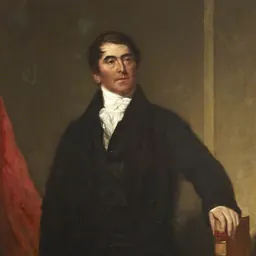
Related people
Same field, nearest in time


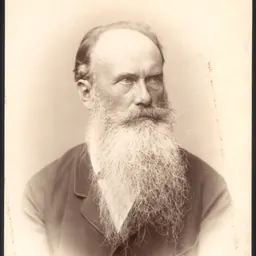

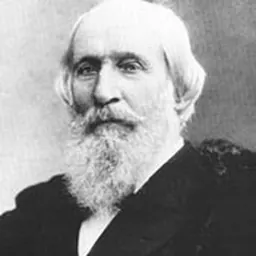
Contemporaries
People whose lives overlapped Eugenius Birch's





Frequently asked questions
Who was Eugenius Birch?
British architect
When was Eugenius Birch born?
Eugenius Birch was born on 20 June 1818 in Shoreditch.
When did Eugenius Birch die?
Eugenius Birch died on 8 January 1884 in Highgate cemetery.
What was Eugenius Birch's occupation?
Eugenius Birch was an architect, civil engineer and engineer.
What nationality was Eugenius Birch?
Eugenius Birch was British.
Sources & further reading
Cite this page
APA: Biography.guide. (2026). Eugenius Birch. https://biography.guide/eugenius-birch/
MLA: "Eugenius Birch." Biography.guide, https://biography.guide/eugenius-birch/.
Chicago: "Eugenius Birch." Biography.guide. https://biography.guide/eugenius-birch/.
Data last updated: 2026-09-20 · Spot an error? Report a correction.
Page generated 2026-09-27 04:58 UTC