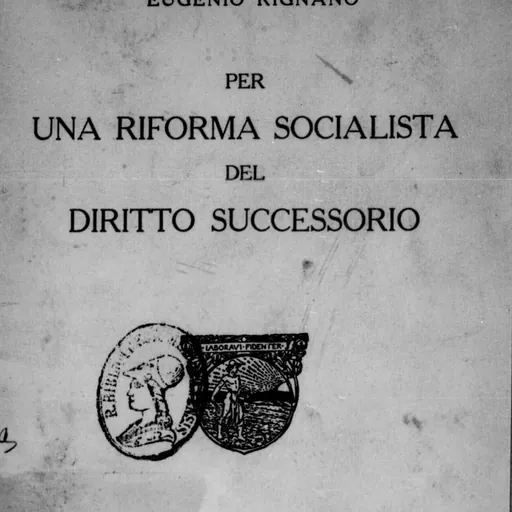
About Eugenio Rignano
Lived 1870 – 1930 (aged 59). Eugenio Rignano was an Italian philosopher, sociologist, psychologist and physicist.
Eugenio Vittorio Rignano (31 May 1870 in Livorno – 9 February 1930 in Milan) was a Jewish Italian philosopher.
Biography
He was born in Livorno to Giacomo Rignano and Fortunata Tedesco, into a Jewish family. Rignano edited the journal Rivista di scienza, later known as Scientia (it). His book The Psychology of Reasoning (1923) influenced the social anthropologist Edward Evans-Pritchard. His book Man Not a Machine (1926) was replied to by Joseph Needham's Man A Machine (1927). In 1897 he married Costanza "Nina" Sullam, also from a Jewish family.
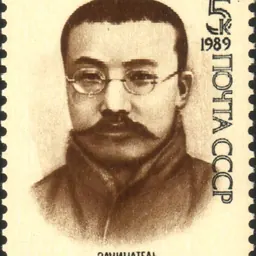
Rignano took interest in biology and wrote a book that argued for the inheritance of acquired characteristics. He advanced a moderated Lamarckian hypothesis of inheritance known as "centro-epigenesis". His views were controversial and not accepted by most in the scientific community. His book The Nature of Life (1930) was described in a review as presenting a "militant, at times almost an evangelical exposition and defense of an energetic vitalism." However, historian Peter J. Bowler has written that Rignano rejected both materialism and vitalism and adopted a similar position to what was known as emergent evolution. Li Dazhao, one of the founders of the China Communist Party, was an avid reader of Rignano's works.
Rignano's views on acquired characteristics and organic memory are discussed in detail by historian Laura Otis and psychologist Daniel Schacter.
Works
Di un socialismo in accordo colla dottrina economica liberale, Torino, Fratelli Bocca, 1901. Über die Vererbung erworbener Eigenschaften, Leipzig, Verlag von Wilhelm Engelmann, 1905. Sulla trasmissibilità dei caratteri acquisiti. Ipotesi d'una centro-epigenesi, Bologna, Zanichelli, 1907. L'adattamento funzionale e la teleologia psico-fisica del Pauly, Bologna: Zanichelli, 1907. La valeur synthétique du transformisme, Paris, Editions de la Revue du Mois, 1907. Che cos'è la coscienza?, Bologna, Zanichelli, 1907. Le matérialisme historique, Bologna, Zanichelli, 1908. Le psychisme des organismes inférieurs: (à propos de la théorie de Jennings), Estratto da: «Scientia», anno II, volume 3, Bologna, Zanichelli, 1908. La mémoire biologique en énergétique, Bologna, Zanichelli, 1909. Il fenomeno religioso, Bologna, Zanichelli, 1910. Il socialismo, Bologna, Zanichelli, 1910. Dell'attenzione. Parte 1: contrasto affettivo e unità di coscienza , Bologna, Zanichelli, 1911. Dell'origine e natura mnemonica delle tendenze affettive, Bologna, Zanichelli, 1911. Per accrescere diffusione ed efficacia alle università popolari, Milano, La compositrice, 1911. La vera funzione delle università popolari, Roma, Nuova Antologia, 1911. Dell'attenzione. Parte 2: vividità e connessione, Bologna, Zanichelli, 1912. Le rôle des théoriciens dans les sciences biologiques et sociologiques, Bologna, Zanichelli, 1912. L'evoluzione del ragionamento, Bologna, Zanichelli, 1913. Il nuovo programma dell'Un. pop. milanese: primo anno d'esperimento, Como, Premiata Tipografia Cooperativa comense Aristide Bari, 1913. Le forme superiori del ragionamento, Bologna, Zanichelli, 1915.
Democrazia e fascismo, Milano, Casa editrice "Alpes", 1924.
Translated in English
Introduction by Edwin R. A. Seligman. English ed. (1925) as The Social Significance of Death Duties, with an introduction by Sir Josiah Stamp. With a foreword by Professor Hans Driesch.
Reprinted from The Monist, January, 1929.
Don’t just read it —
keep it.
Full-length biographies made to live with: read them, listen on the way to work, watch them tonight.
- E-book
- Audio
- Video
Instant download · yours to keep · every purchase keeps this site free
Important facts
People in Eugenio Rignano's life
Named in this biography and alive at the same time
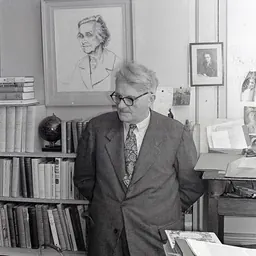

Related people
Same field, nearest in time


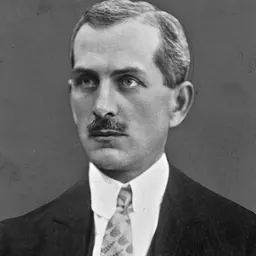

Contemporaries
People whose lives overlapped Eugenio Rignano's

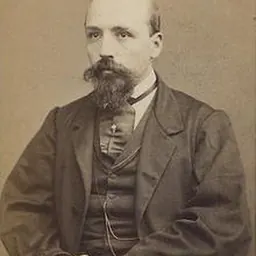
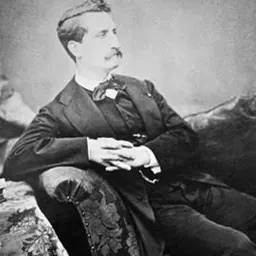



Frequently asked questions
Who was Eugenio Rignano?
Italian philosopher (1870-1930)
When was Eugenio Rignano born?
Eugenio Rignano was born on 31 May 1870 in Livorno.
When did Eugenio Rignano die?
Eugenio Rignano died on 9 February 1930 in Milan.
What was Eugenio Rignano's occupation?
Eugenio Rignano was a philosopher, sociologist, psychologist and physicist.
What nationality was Eugenio Rignano?
Eugenio Rignano was Italian.
Sources & further reading
Cite this page
APA: Biography.guide. (2026). Eugenio Rignano. https://biography.guide/eugenio-rignano/
MLA: "Eugenio Rignano." Biography.guide, https://biography.guide/eugenio-rignano/.
Chicago: "Eugenio Rignano." Biography.guide. https://biography.guide/eugenio-rignano/.
Data last updated: 2026-09-20 · Spot an error? Report a correction.
Portrait: Wikimedia Commons · author & licence
Page generated 2026-09-27 04:58 UTC