
About Eugenia Smith
Lived 1899 – 1997 (aged 98). Eugenia Smith was an American writer, painter, impostor, salesperson and modiste, known for Romanov impostors.
Eugenia Smith (January 25, 1899 – January 31, 1997), also known as Eugenia Drabek Smetisko, was one of several Romanov impostors who claimed to be the Grand Duchess Anastasia, youngest daughter of Nicholas II, the last Tsar of Imperial Russia, and his wife Tsarina Alexandra.
Smith is the author of Autobiography of HIH Anastasia Nicholaevna of Russia (1963), in which she recounts "her" life in the Russian Imperial Family up to the time when Bolsheviks murdered them at Ekaterinburg, and "she escaped" the massacre.
Although after World War II there were at least ten claimants to the identity of Grand Duchess Anastasia, only Anna Anderson and Eugenia Smith achieved more than a small circle of believers. The true Anastasia was killed along with her parents and siblings on July 17, 1918, but this was not known with absolute certainty until the missing body of one of the Romanov sisters was found and identified in 2007.
Birth
According to naturalization papers she filled out when she emigrated to the United States, Eugenia Smith was born on January 25, 1899, in Bukovina, Austria-Hungary. However, as a claimant to the identity of Grand Duchess Anastasia, she would later assert that she was born on June 18, 1901, in St. Petersburg, Russia. Anastasia's date of birth is used on the grave labelled "Evgenia Smetisko" at Holy Trinity Monastery.
Escape from Russia
In her published autobiography, Smith provided a lengthy but unverifiable explanation of how she survived the execution of the family of Tsar Nicholas II at Ekaterinburg on July 17, 1918, and subsequently escaped to the west. She further claimed that her husband had given her permission to travel to the United States in 1922 and that the marriage was dissolved a few years later. In 1963, however, an American journalist tracked down Mr. Smetisko in Yugoslavia and reported: "The man was found living in a poor hut with his wife; he said he'd never known anybody named Eugenia, or anybody from Chicago, or had ever been married before. He wanted only to be left alone with his cows".
Life in the United States Arrival A search of passenger manifests confirms that Eugenia Smetisko, aged 22, arrived in New York City on July 27, 1922, travelling from Amsterdam aboard the S. S. Nieuw Amsterdam. According to this source, she was a citizen of Yugoslavia, but spoke German and was of German ancestry. She was described as a married woman, with her husband listed as Mr. M. Smetisko of Sisak, Yugoslavia. She further identified her intended final destination as Hamtramck, Michigan. She later settled in Chicago, where she reportedly worked as a salesgirl and a milliner.
Supporters During her early years in Illinois, Smith met John Adams Chapman, a prominent Chicago businessman, who accepted her claim to be the Tsar's daughter. Through Chapman's connections, Smith befriended two daughters of former federal judge Christian Cecil Kohlsaat, who also became her firm supporters. She would later describe the younger daughter, Mrs. Helen Kohlsaat Wells (1881–1959), as "a close friend and confidant for many, many years". The two women began to collaborate on Smith's memoirs in 1930, and completed a first draft four years later.
During this time, Smith was also a frequent guest of Mrs. Wells' older sister, Miss Edith Kohlstaat, who still lived in the vast house that her parents had built at Lake Geneva, Wisconsin, in the early 1900s. Smith moved there permanently in 1935 but, as Miss Kohlsaat later recalled: "she was difficult to live with, she found fault with all my friends, but she seemed so lost that I wanted to help her". Mrs. Emery (1882–1967) was the wealthy widow of William Harrison Emery, Jr. (1876–1938), son of William Harrison Emery, Sr. (1840-1903), and a former client of noted Prairie School architect Walter Burley Griffin. In 1945, Smith left Edith Kohlsaat's home in Lake Geneva and moved in with Mrs. Emery in Elmhurst. Smith's new hostess remained a firm believer in her claim to be the Tsar's daughter, and celebrated her birthday each year on Grand Duchess Anastasia's actual birthdate of June 18.
In April 1943, at the invitation of the women's guild of St. Elizabeth's Church in Glencoe, she presented a lecture entitled "Russia Today and Yesterday". At that time, it was also reported that she had previously spoken at the Chicago Mount Holyoke Club. In 1944, Smith (described as "a Russian artist and traveller") spoke again on the topic of "Russia Before and Russia Now" before the Niles Center Women's Club.
During the time that she lived in Elmhurst with Mrs. Emery, Smith spent two years working in a silver shop on Michigan Avenue. She also attempted to start her own business as a perfume manufacturer, working from Mrs. Emery's home, but later became irritated when her hostess refused to invest in the project. Gleb Botkin remained unconvinced; he later stated that "the lie detector must have had a screw loose somewhere", and warned Speller & Sons not to proceed with the project.
Nevertheless, the publishers went ahead. Smith's manuscript was re-written as the memoirs of Grand Duchess Anastasia herself, and was published towards the end of 1963 under the title Anastasia: The Autobiography of H.I.H. The Grand Duchess Anastasia Nicholaevna of Russia. Prior to publication, excerpts were printed by Life magazine, along with articles detailing the mixed results of the lie detector tests, handwriting analysis and an anthropologist's comparison of Smith's facial features with photographs of the actual Grand Duchess.
During that time, she founded the St Nicholas House Foundation, a non-profit organization to establish a museum for Russian art and history in the United States. In her later years, Smith distanced herself from earlier claims of Imperial origins. In 1984, Associated Press reported that she had refused to discuss her claims with them. A decade later, when she was asked if she would like to provide a blood sample for DNA analysis, she also refused. Rev. Lark d'Helen, who conducted her memorial service at the Newport Congregational Church, said of her: "Eugenia was a woman of character determined, tenacious, imperial even to the end". Of her claim to be the grand Duchess Anastasia, another long-time friend stated: "She is an enigma ... that's not really important if she is or if she isn't. To me, she's just a human being. That's how everyone knew her".
Many newspapers published her obituary using Anastasia's birth date, or stated that she had been born in St. Petersburg. Unlike Anna Anderson, who was cremated upon death, Eugenia Smith was interred in the Orthodox fashion in the cemetery of Holy Trinity Orthodox Monastery in Jordanville, New York, as cremation is prohibited in that faith. She is buried in the back right side of the newer section of the cemetery under the name Evgenia Smetisko.
Don’t just read it —
keep it.
Full-length biographies made to live with: read them, listen on the way to work, watch them tonight.
- E-book
- Audio
- Video
Instant download · yours to keep · every purchase keeps this site free
Important facts
People in Eugenia Smith's life
Named in this biography and alive at the same time






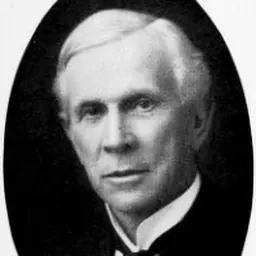
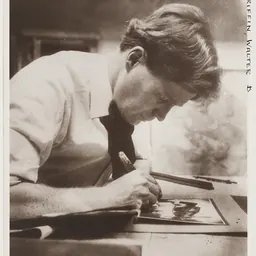
Related people
Same field, nearest in time
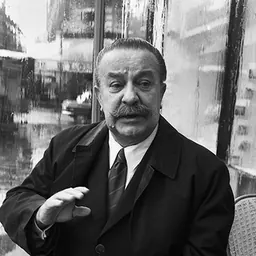
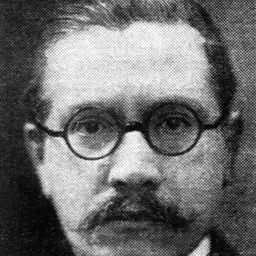

Contemporaries
People whose lives overlapped Eugenia Smith's

Frequently asked questions
Who was Eugenia Smith?
Romanov imposter who claimed to be the Grand Duchess Anastasia of Russia (1899–1997)
When was Eugenia Smith born?
Eugenia Smith was born on 25 January 1899 in Bukovina.
When did Eugenia Smith die?
Eugenia Smith died on 31 January 1997 in North Kingstown.
What was Eugenia Smith's occupation?
Eugenia Smith was a writer, painter, impostor, salesperson and modiste.
What was Eugenia Smith known for?
Eugenia Smith was known for Romanov impostors.
What nationality was Eugenia Smith?
Eugenia Smith was American.
Sources & further reading
Cite this page
APA: Biography.guide. (2026). Eugenia Smith. https://biography.guide/eugenia-smith/
MLA: "Eugenia Smith." Biography.guide, https://biography.guide/eugenia-smith/.
Chicago: "Eugenia Smith." Biography.guide. https://biography.guide/eugenia-smith/.
Data last updated: 2026-09-20 · Spot an error? Report a correction.
Page generated 2026-09-27 05:20 UTC