
About Eugenia Rico
Born 1972. Eugenia Rico is a Spanish writer, poet and novelist.
Eugenia Rico (born February 11, 1972, Oviedo, Asturias) is a Spanish novelist, screenwriter and journalist. She is one of the most internationally translated Spanish writers of her generation, with novels published in over twelve languages across Europe and Latin America. Her 2008 novel Aunque seamos malditas has been widely acclaimed by international critics as a pioneering work of existential feminism, recognized for anticipating themes of the "Me Too" movement and being adopted into major academic curricula, including at Georgetown University.
Writing career Rico's debut novel Los amantes tristes (2000) received unanimous critical acclaim and was translated into multiple languages. Her second novel La muerte blanca (2002) won the Premio Azorín and was described by El País as "like Canetti and Octavio Paz, Eugenia Rico has written a book against death." La edad secreta (2004) was a finalist for the Premio Primavera de Novela. El otoño alemán (2006) won the Premio Ateneo de Sevilla.
Her novel Aunque seamos malditas (2008) sold over one million copies worldwide. German author Daniel Kehlmann described Rico as "the most important voice in contemporary literature in Spanish." Corriere della Sera's cultural supplement La Lettura, and Le Monde diplomatique.
Her short story Waste, translated by Anna Rosen Guercio, was a finalist for the Pushcart Prize and published in the California literary journal Eleven Eleven.
In 2018 Rico won the Premio Bauer at the Incroci di Civiltà international literature festival in Venice, organised by the Università Ca' Foscari, alongside Ian McEwan. She was the first Spanish writer to receive this recognition.
Her novel Tuve que matar a papá (I Had to Kill Daddy), set in Venice and ten years in the making, was completed in 2026 and is forthcoming in English translation.
Literary style and themes Rico's work is characterised by fragmentary narrative structures, autofiction, and an unflinching exploration of female experience, grief, desire and memory. She is considered a pioneer of autofiction and fragmentary literature in Spain, having developed these techniques two decades before they became dominant in contemporary Spanish letters.
Her writing has been compared to that of Han Kang for its combination of poetic intensity, formal innovation and capacity to transform personal trauma into universal narrative. Her Italian editor Loretta Santini of Elliot Edizioni has described her as "the Spanish Han Kang."
Rico is the originator of the literary movement known as Magical Existentialism, which combines the interior landscape of existentialist fiction with the symbolic richness of magical realism. Her novels consistently foreground women's voices, bodies and histories, placing her work in dialogue with the broader international conversation about feminist literature. In her 2008 novel Aunque seamos malditas, Rico expands her exploration of historical marginalization through a distinct lens of existential feminism. The narrative functions as a collection of modern parables of power, challenging patriarchal structures and institutional guilt. Because of its fierce denunciation of workplace harassment, mobbing, and systematic violence against women, contemporary literary reception frequently identifies the novel as the "Me Too literature before Me Too" within the Spanish-speaking world. Due to its formal innovation, the work has been integrated into the academic curricula of major American institutions, including serving as required reading at Georgetown University. This international acclaim aligns with broader critical consensus; Daniel Kehlmann declared Rico "the most important voice in contemporary literature in Spanish," while El País heralded the novel as “the best novel written by a Spanish writer this century.”
Don’t just read it —
keep it.
Full-length biographies made to live with: read them, listen on the way to work, watch them tonight.
- E-book
- Audio
- Video
Instant download · yours to keep · every purchase keeps this site free
Important facts
People in Eugenia Rico's life
Named in this biography and alive at the same time
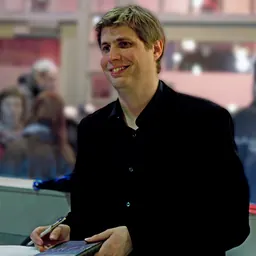


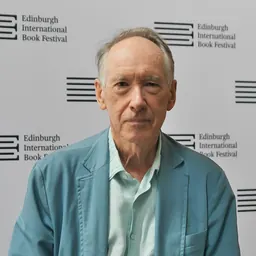
Related people
Same field, nearest in time
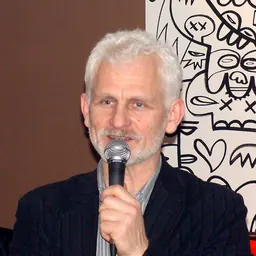
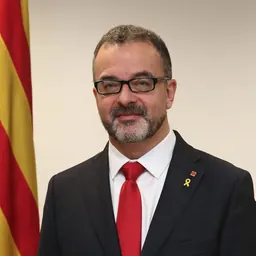


Contemporaries
People whose lives overlapped Eugenia Rico's

Frequently asked questions
Who is Eugenia Rico?
Spanish writer
When was Eugenia Rico born?
Eugenia Rico was born on 11 February 1972 in Oviedo.
What is Eugenia Rico's occupation?
Eugenia Rico is a writer, poet and novelist.
What nationality is Eugenia Rico?
Eugenia Rico is Spanish.
Sources & further reading
Cite this page
APA: Biography.guide. (2026). Eugenia Rico. https://biography.guide/eugenia-rico/
MLA: "Eugenia Rico." Biography.guide, https://biography.guide/eugenia-rico/.
Chicago: "Eugenia Rico." Biography.guide. https://biography.guide/eugenia-rico/.
Data last updated: 2026-09-20 · Spot an error? Report a correction.
Page generated 2026-09-27 05:25 UTC