
About Eugène Pons
Lived 1886 – 1945 (aged 58). Eugène Pons was a French printer and french resistance fighter.
Eugène Pons, born in Saint-Étienne on May 15, 1886, and deported to the Neuengamme concentration camp on February 24, 1945, was a Catholic figure from Lyon, and a French printer and Resistance fighter who specialized in printing underground newspapers. From 1940 to 1944, at his printing works on rue de la Vieille-Monnaie, he was responsible for printing Resistance newspapers, Témoignage chrétien, Combat, La Marseillaise and Franc-tireur. He was also responsible for the 25,000 copies of Le Faux Nouvelliste on December 31, 1943. Defending one of his print shop employees, he was arrested in May 1944 and deported to Neuengamme, where he died of exhaustion in 1945.
Biography
Early years Eugène Pons was the son of Claudine Jay, a schoolteacher from Saint-Héand, and Victor Pons (1847–1928), a journalist. His mother died when he was very young.
He married Rose-Adrienne Lavarière in Caluire-et-Cuire on January 28, 1913, His wife, an embroiderer, lived on rue Diderot in Lyon. He was sent to Greece to take part in the Macedonian Front, during which he contracted malaria. with the Sillon group in Lyon, formed before the war. In this movement, he rediscovered his profound orientation towards social Catholicism. Indeed, Le Sillon, founded in 1894 by Marc Sangnier, aims not only to offer a response to Pope Leo XIII's encyclical Rerum novarum, advocating greater openness of the Church towards the world, but also, and more prosaically, to bring Catholicism closer to the working world by offering a political and spiritual alternative to communism. 21 rue de la Vieille-Monnaie, where the Imprimerie de la Source once stood. He also became involved in politics, joining the Ligue de la jeune République, a political party also founded by Marc Sangnier. Locally, it aimed to oppose Édouard Herriot's all-powerful and rather anti-clerical radical-socialist party. Eugène Pons soon organized Lyon meetings at his home on rue Denfert-Rochereau, The various gatherings of the Lyonnais group enabled them to socialize with invited personalities such as Paul Claudel. and later at Saint-Eucher church in Lyon. Pilgrimage was also an important part of his life: he made an annual pilgrimage to the Basilica of Ars to pay homage to the Curé d'Ars. Another frequent pilgrimage was between La Croix-Rousse and Fourvière hill after work.
In Saint-Alban, Eugène Pons assisted Abbé Laurent Remillieux (1882–1949), the founder of the parish. Among other things, he helped him organize educational activities for the Jeunesse ouvrière chrétienne.
Eugène Pons was also an accomplished sportsman. He was a member of the Le Patriote sports club, which depended on the parish church of Saint-Denis-de-la-Croix-Rousse, and excelled at rifle shooting. He also swam down the Rhône several times across Lyon. Victor Carlhian acquired the Imprimerie de la Source at 21 rue de la Vieille-Monnaie and was looking for a manager. He recruited Eugène Pons for the job, and Pons became the printer. He was in charge of printing various philosophical and ecumenical brochures and newspapers. By 1940, Eugène Pons was managing a team of some twenty people working in the print shop. His first actions in the Resistance were to print leaflets he had written himself, appealing to Christian values.
He subsequently took on the task of printing the journal Témoignage chrétien. While the first two issues were printed in Villeurbanne by Joseph Martinet, Eugène Pons took charge of all subsequent issues, starting with No. 3 in March 1942,
It also details Eugène Pons' humanist and spiritual motivations for joining the Resistance: No clandestine printed matter was found, although it seems that copies of Témoignage chrétien were on the premises. He left the premises fifteen minutes before the arrival of the Gestapo. where another clandestine printing work is located.
Neuengamme Eugène Pons arrived at Neuengamme after four days on the train. In addition to the concentration camp environment, the inhuman conditions, the deprivation of food, and the physical violence of the guards, prisoners were required to work twelve hours a day: Eugène Pons was first assigned to transport stones on the canal, then to the braiding workshop where hair was transformed into ropes.
Dominican priest Claude Humbert (matricule 33221) met Eugène Pons at Neuengamme: they exchanged a few times through a grate. They prayed for the soldiers of Lyon and France, reciting the rosary of Simon the Zealot.
Marcel Pons (January 13, 1913, in Caluire-et-Cuire - April 22, 2002, in Toulon), vicar and author of the biography of Eugène Pons; Georges Pons (February 10, 1915 - 1916); Albert Pons (June 22, 1916 - December 4, 1920); Thérèse Barnier, born Thérèse Pons (October 1920 - 1997), wife of Pierre Barnier (1920–1997), Médaille de la Résistance; Marie-Claude Thomasset, born Marie-Claude Pons; Hélène Canard, born Hélène Pons (1925 - 2003); André Pons (1930–2003).
Tributes and awards
Eugène Pons was posthumously awarded the Resistance medal, the Legion of Honor and the Croix de Guerre (with palms) in 1945.
A plaque is affixed to the premises where his printing works - l'Imprimerie de la Source - were located at 21 rue Vieille-Monnaie (now rue René-Leynaud).
There's a rue Eugène-Pons in Lyon. This long, steep street links the Cours d'Herbouville (which runs alongside the Rhône on its right bank) to Rue Artaud, and provides pedestrian access to the Croix-Rousse plateau from the Winston-Churchill bridge. It was formerly known as rue de Dijon, and rue Lafayette under the Second Empire. It was renamed following a decision by Lyon's city council on November 26, 1945. At the same meeting, the city council decided to affix the plaque at 21 rue Vieille-Monnaie, where the Imprimerie de la Source was located, as well as the home of the Pons family.
His name is also inscribed on a collective plaque inside Lyon's Saint-Eucher church.
There's also an avenue Eugène-Pons in Beauchamp, Val-d'Oise, in a residential neighborhood where street names are dedicated to famous members of the French Resistance.
Testimonies Eugène Pons' wife, Rose-Adrienne Lavarière, reportedly told their children the day after their father's arrest:
After the war, churchman Pierre Chaillet considered Eugène Pons to be "the noblest figure; one who inspires respect and friendship; one of the most valiant and discreet heroes of the Resistance". Resistance fighter Eugène Claudius-Petit expressed his esteem for Pons in the February 27, 1970 issue of Témoignage chrétien in an article entitled "A man at peace...", which he concluded as follows:
Don’t just read it —
keep it.
Full-length biographies made to live with: read them, listen on the way to work, watch them tonight.
- E-book
- Audio
- Video
Instant download · yours to keep · every purchase keeps this site free
Important facts
People in Eugène Pons's life
Named in this biography and alive at the same time


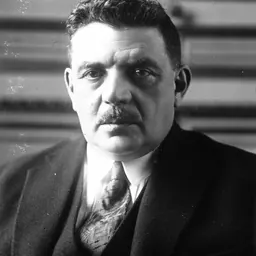

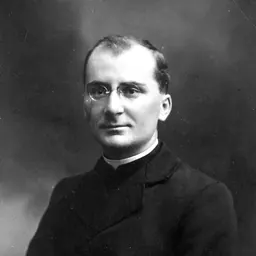

Related people
Same field, nearest in time


Contemporaries
People whose lives overlapped Eugène Pons's

Frequently asked questions
Who was Eugène Pons?
member of the French Resistance (1886–1945)
When was Eugène Pons born?
Eugène Pons was born on 15 May 1886 in Saint-Étienne.
When did Eugène Pons die?
Eugène Pons died on 24 February 1945 in Neuengamme concentration camp.
What was Eugène Pons's occupation?
Eugène Pons was a printer and french resistance fighter.
What nationality was Eugène Pons?
Eugène Pons was French.
Sources & further reading
Cite this page
APA: Biography.guide. (2026). Eugène Pons. https://biography.guide/eugene-pons/
MLA: "Eugène Pons." Biography.guide, https://biography.guide/eugene-pons/.
Chicago: "Eugène Pons." Biography.guide. https://biography.guide/eugene-pons/.
Data last updated: 2026-09-20 · Spot an error? Report a correction.
Page generated 2026-09-27 05:12 UTC